Category: Cultural Stories
-
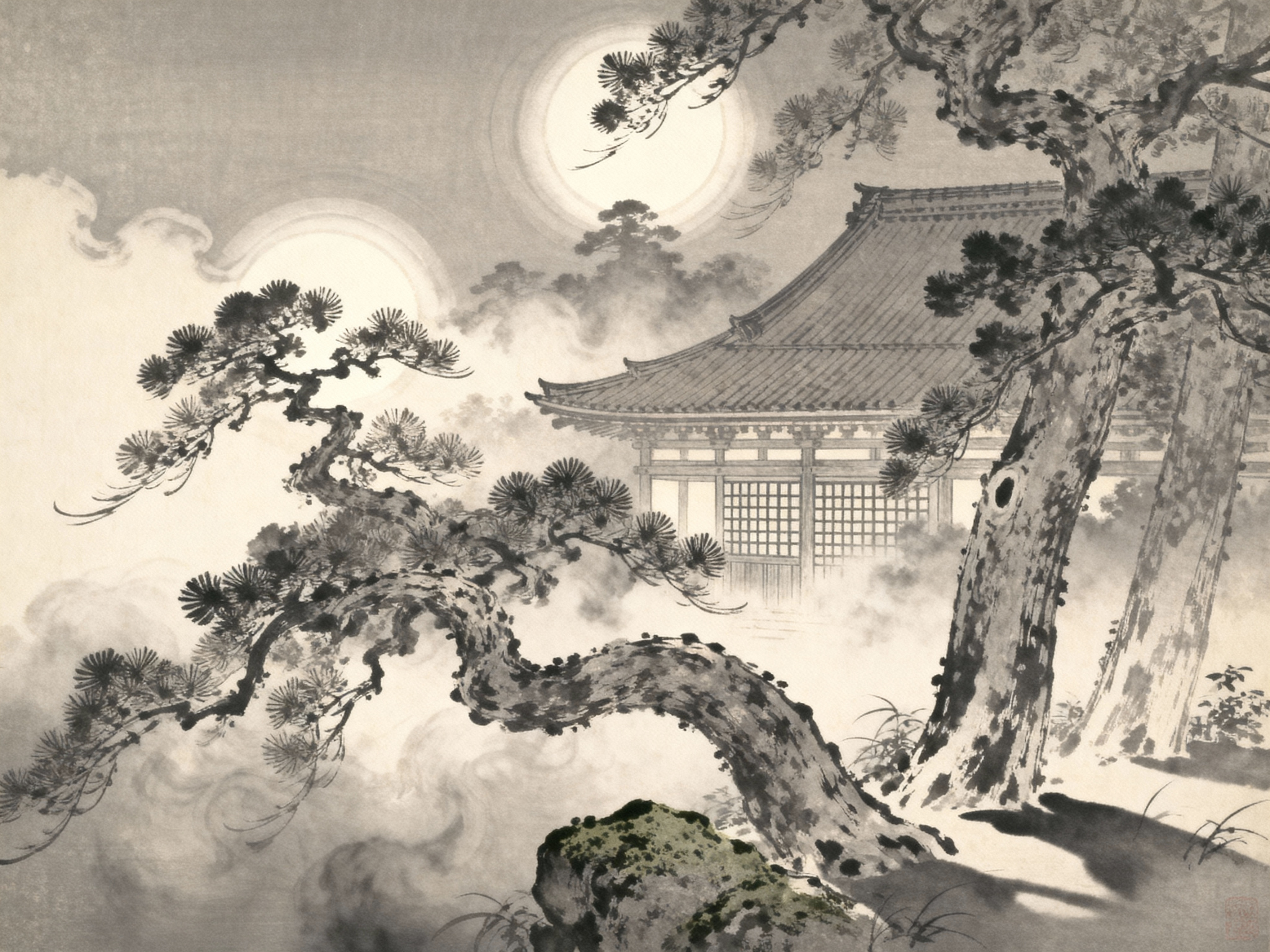
Brushstrokes of Eternity: Hasegawa Tohaku’s Masterpiece Paintings at Chishaku-in
Within the sacred halls of Chishaku-in Temple, visitors encounter one of Japanese art’s most breathtaking achievements—the sublime sliding door paintings by Hasegawa Tohaku (長谷川等伯, 1539-1610), where cherry blossoms seem to float in eternal spring and maple trees glow with autumnal fire so realistic they appear to rustle in an invisible…
-

Divine Winds and Sacred Thunder: The Legendary Screens of Kennin-ji Temple
In the treasure halls of Kennin-ji Temple, visitors encounter one of Japanese art’s most electrifying masterpieces—the legendary Wind God and Thunder God folding screens, where divine beings dance across golden clouds with such dynamic energy that they seem ready to leap from the painted surface into the viewer’s world. Fujin (風神), the…
-
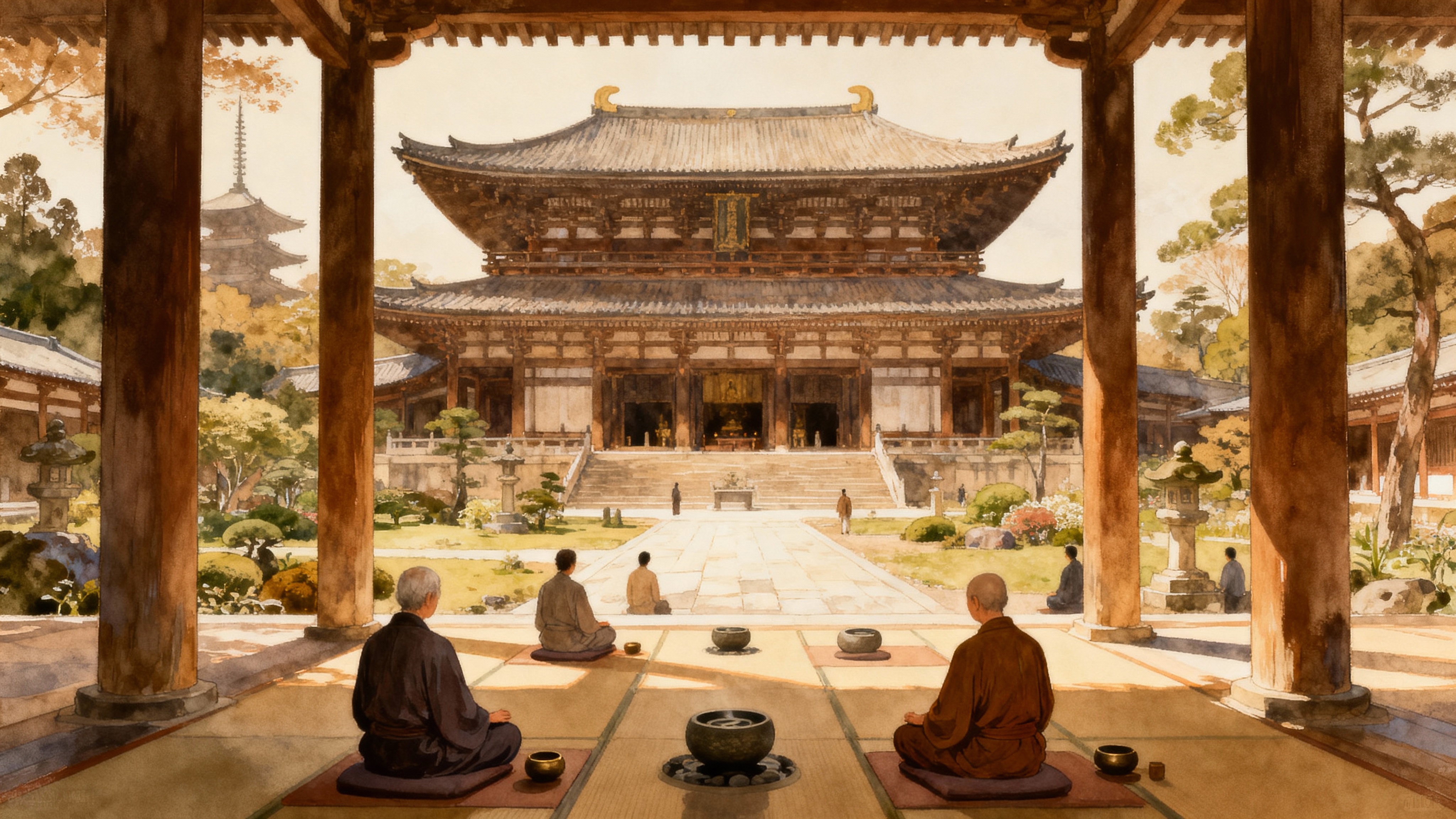
The Democratic Path to Paradise: Higashi Hongan-ji and Shinran’s Revolutionary Buddhism
In the vast halls of Higashi Hongan-ji, where thousands of believers gather to chant the simple phrase “Namu Amida Butsu,” echoes a spiritual revolution that transformed not only Japanese Buddhism but offered a radical vision of religious democracy that continues to resonate worldwide. Here stands the monument to Shinran Shonin (親鸞聖人, 1173-1263),…
-

Floating on Golden Clouds: Nishi Hongan-ji’s Hiunkaku and the Splendor of Momoyama Culture
Rising from the sacred grounds of Nishi Hongan-ji like a vision from paradise itself, the Hiunkaku (飛雲閣) or “Flying Cloud Pavilion” represents the pinnacle of Japanese architectural artistry—a three-story masterpiece that seems to defy gravity as it floats above its reflection in the sacred pond. Built during the height of Japan’s…
-

Landscapes of Enlightenment: Tenryu-ji and Muso Soseki’s Garden Philosophy
Gazing across the perfectly composed landscape of Tenryu-ji Temple, where ancient pines frame distant mountains and a sacred pond reflects both earthly beauty and celestial wisdom, visitors encounter one of humanity’s most sophisticated attempts to create enlightenment through environmental design. The garden’s creator, Muso Soseki (夢窓疎石, 1275-1351), didn’t simply arrange stones and…
-
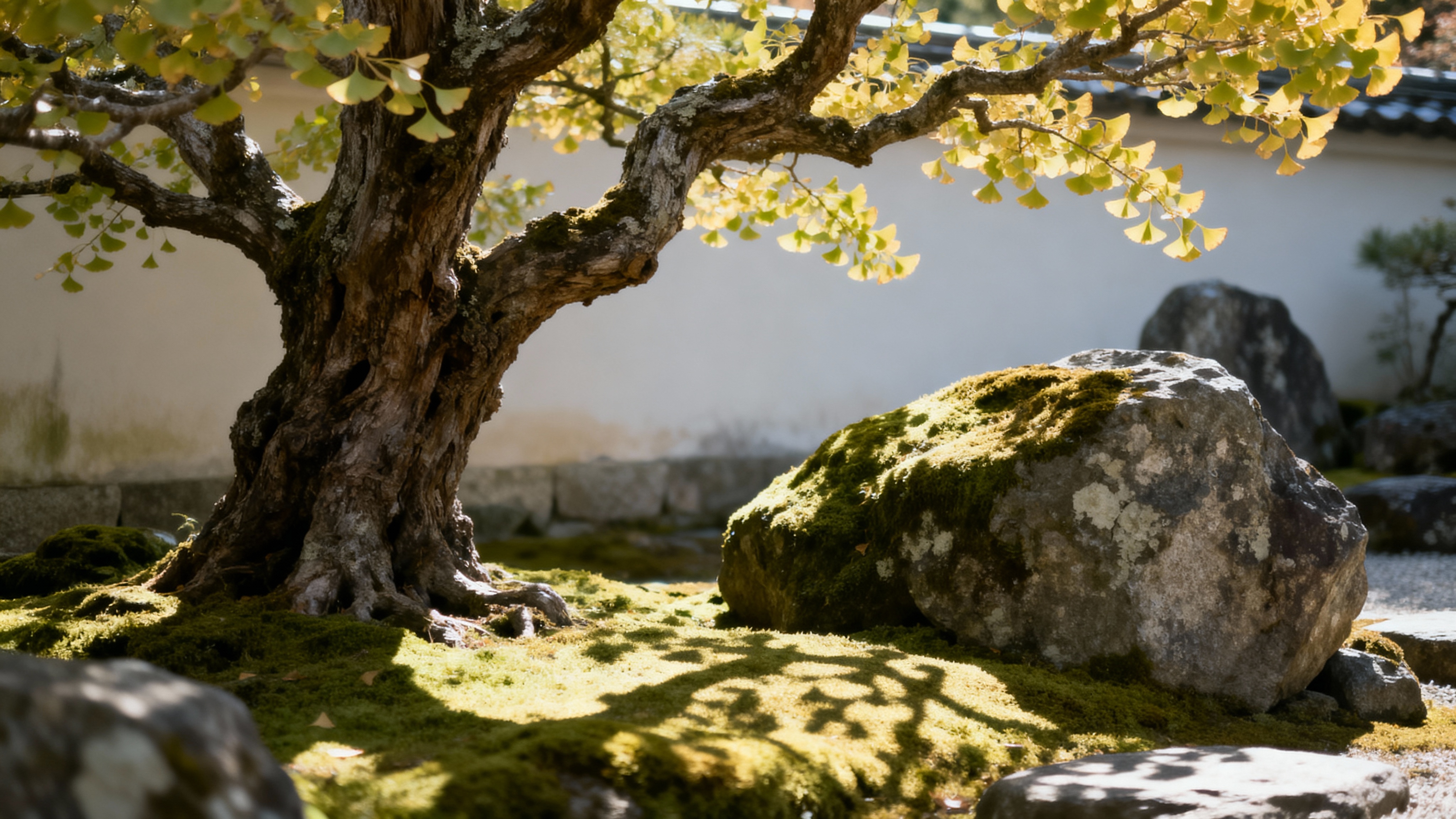
The Aesthetic Revolution: How Ginkaku-ji Gave Birth to Wabi-Sabi
Standing before Ginkaku-ji, the Silver Pavilion, visitors often experience a moment of beautiful confusion—expecting gleaming silver but finding weathered wood, anticipating symmetrical perfection but discovering deliberate asymmetry, seeking ostentatious display but encountering profound restraint. This apparent contradiction reveals the pavilion’s revolutionary secret: it represents the birthplace of wabi-sabi (侘寂), the aesthetic philosophy…
-
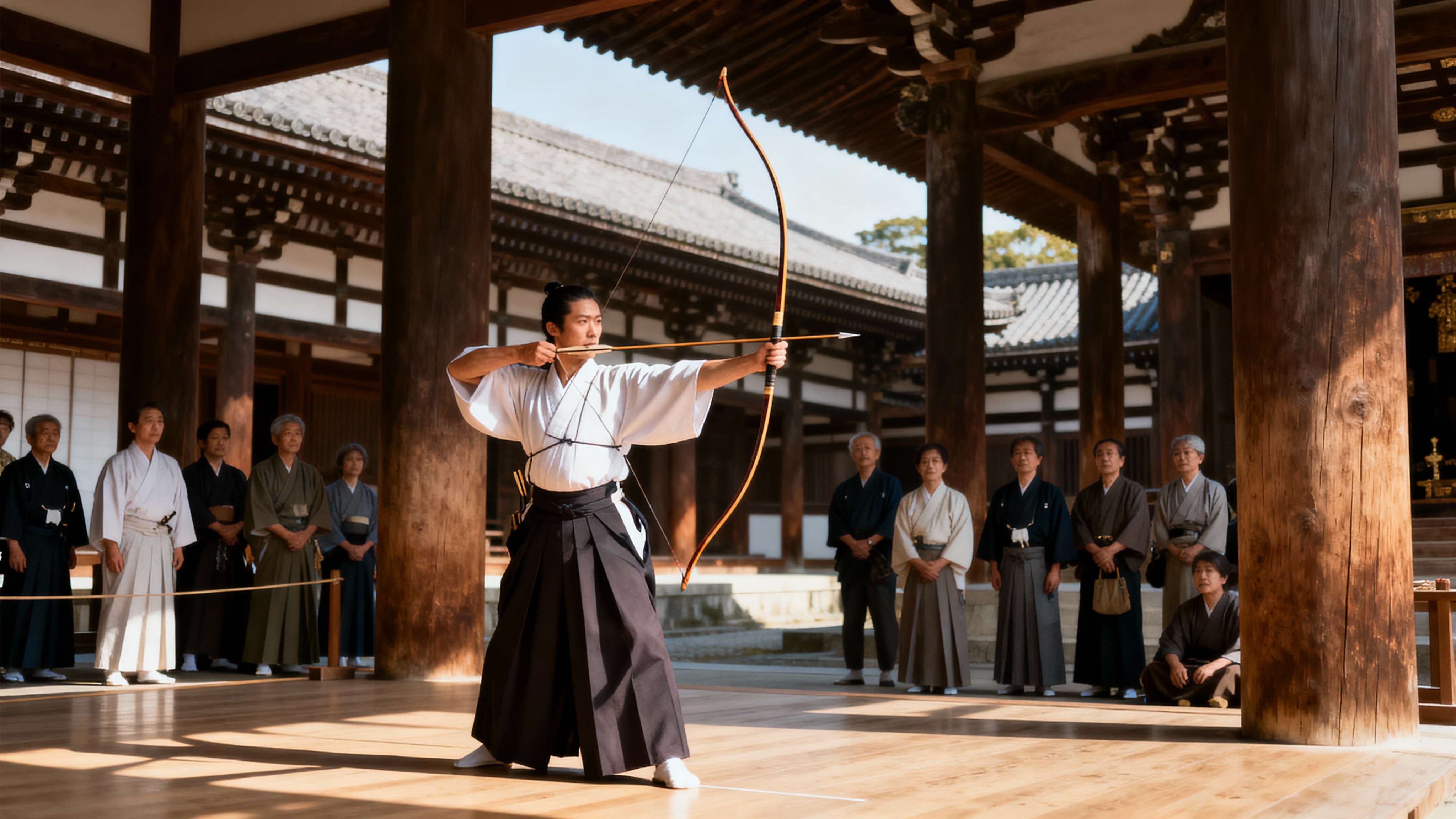
Arrows of Endurance: The Legendary Toshiya Archery Contests at Sanjusangen-do
Imagine standing at one end of Sanjusangen-do’s 120-meter hall, surrounded by 1,001 golden statues of Kannon, preparing to shoot arrows the entire length of the building—not once, but potentially thousands of times over 24 consecutive hours. For over 400 years, this sacred Buddhist space witnessed one of Japan’s most extraordinary tests…
-

The Living Buddha’s Journey: Seiryo-ji Temple and the Miraculous Shakyamuni Statue
Deep within Seiryo-ji Temple in Kyoto’s serene Arashiyama district stands a statue so extraordinary that believers call it the “Living Buddha”—a wooden sculpture of Shakyamuni that contains actual silk organs, sacred relics, and spiritual presence so powerful it has performed miracles for over 1,000 years. This remarkable image didn’t simply appear…
-

Sacred Horses and Imperial Pageantry: The Ancient Origins of Kamigamo Shrine’s Aoi Festival
Every May 15th, Kyoto transforms into a living museum of imperial elegance as the Aoi Festival unfolds—a magnificent procession of court nobles in silk robes, sacred horses adorned with hollyhock leaves, and ox-drawn carriages recreating ceremonies that have connected earthly power with divine protection for over 1,500 years. But hidden within…
-

The Primeval Sacred: Shimogamo Shrine and the Mysteries of Tadasu Forest
Deep in the heart of modern Kyoto lies a fragment of ancient Japan—a primeval forest where towering trees have witnessed over 2,000 years of human history and spiritual practice. Tadasu no Mori (糺の森), the sacred grove surrounding Shimogamo Shrine, represents Japan’s oldest continuously protected woodland, where Shinto kami dwell among centuries-old trees and…