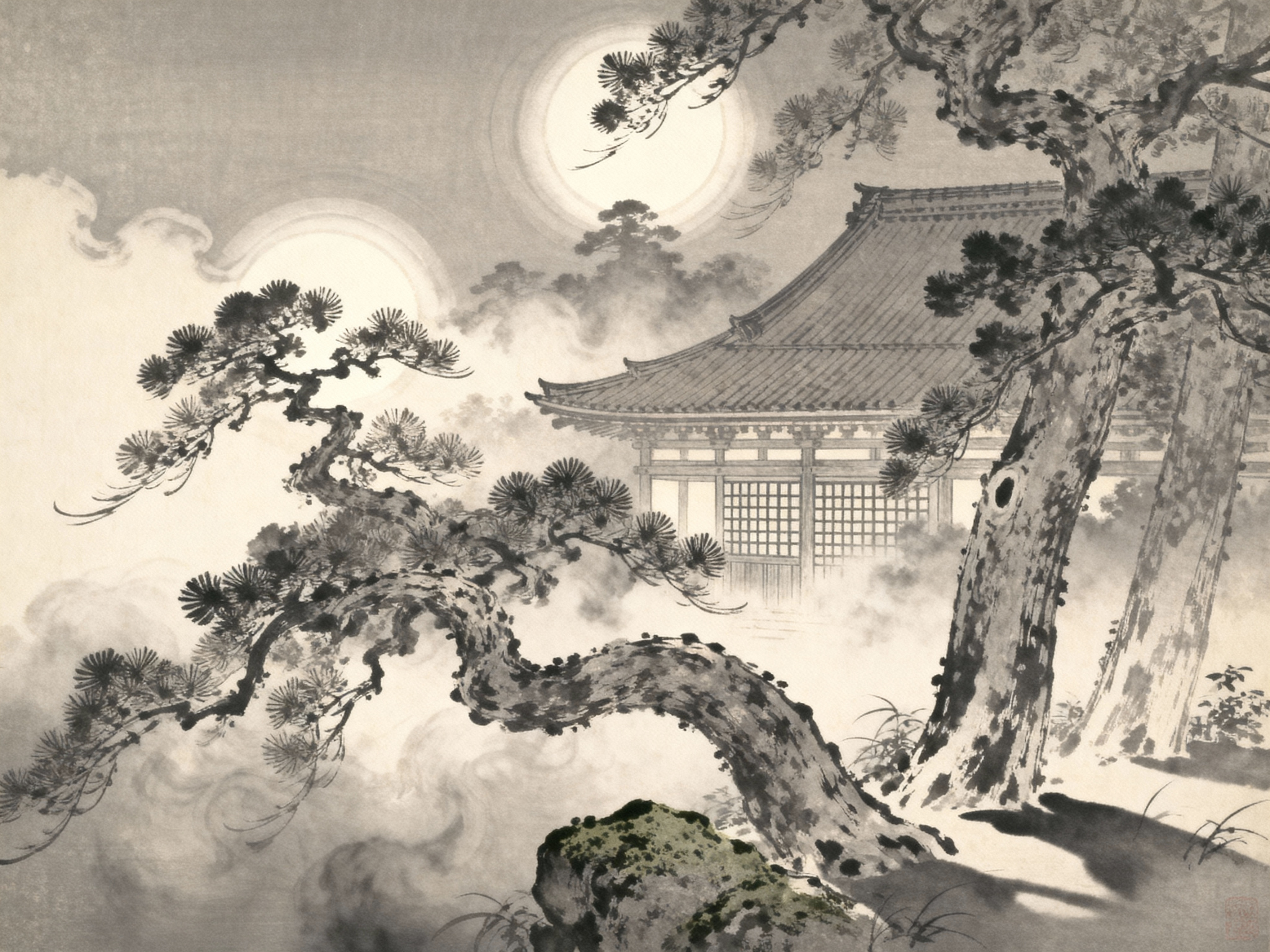
Within the sacred halls of Chishaku-in Temple, visitors encounter one of Japanese art’s most breathtaking achievements—the sublime sliding door paintings by Hasegawa Tohaku (長谷川等伯, 1539-1610), where cherry blossoms seem to float in eternal spring and maple trees glow with autumnal fire so realistic they appear to rustle in an invisible breeze. These National Treasure paintings represent the pinnacle of Buddhist temple art, where Tohaku’s revolutionary techniques transformed architectural surfaces into windows onto transcendent realms of beauty that continue to inspire artists and spiritual seekers over 400 years later.
More than decorative art, these paintings embody the sophisticated integration of Buddhist philosophy with artistic mastery that characterized Japan’s golden age of temple culture, creating spaces where aesthetic beauty serves spiritual awakening.
The Master Artist: Hasegawa Tohaku’s Revolutionary Vision
From Provincial Painter to National Treasure Creator
Tohaku’s journey from regional artist to master of Buddhist temple painting reveals extraordinary artistic evolution:
Noto Peninsula Origins: Born in remote Ishikawa Prefecture, Tohaku initially worked as a Buddhist painter serving local temples and communities.
Kyoto Transformation: Moving to the capital around 1571, he encountered sophisticated artistic traditions and wealthy patrons that expanded his artistic horizons.
Technical Innovation: Developed revolutionary approaches to ink painting, color application, and spatial composition that influenced generations of artists.
Buddhist Integration: Mastered the art of creating paintings that served both aesthetic and spiritual functions within temple architecture and religious practice.
The Chishaku-in Masterpieces: Sacred Art in Temple Context
The Cherry Blossom Paintings: Spring Eternal
Tohaku’s cherry blossom screens represent some of Japanese art’s most beloved masterpieces:
Technical Mastery: Innovative use of color gradation and brushwork creates three-dimensional depth and atmospheric perspective on flat surfaces.
Symbolic Richness: Cherry blossoms embody Buddhist teachings about beauty, impermanence, and the preciousness of fleeting moments.
Architectural Integration: Paintings designed specifically for temple architecture, creating harmony between artistic and spiritual elements.
Seasonal Teaching: The eternal spring of the paintings provides year-round reminder of renewal, hope, and spiritual awakening possibilities.
Frequently Asked Questions
Q: Are Tohaku’s original paintings always visible at Chishaku-in? A: The original National Treasure paintings are displayed during specific periods to preserve them. High-quality reproductions may be visible at other times.
Q: What makes Tohaku’s paintings special compared to other temple art? A: His revolutionary techniques, integration of Buddhist philosophy with artistic mastery, and the exceptional preservation of complete room sets make them unique.
Q: How do the paintings relate to Buddhist teaching? A: They embody Buddhist principles of impermanence, interconnectedness, and the potential for enlightenment through aesthetic experience.
Planning Your Artistic Pilgrimage:
- Hours: 9:00 AM – 4:30 PM daily
- Admission: ¥500 for temple grounds and painting viewing
- Access: Keihan Main Line to Shichijo Station, 10-minute walk
- Best Times: Spring and autumn for seasonal resonance with painting themes
- Allow: 1-2 hours for contemplative art appreciation
Continue Your Temple Art Journey: Ready to explore more Buddhist masterpieces? Discover “The Zen Spirit of Myoshin-ji Temple” or learn about “The Democratic Buddhism of Higashi Hongan-ji.”
Leave a Reply