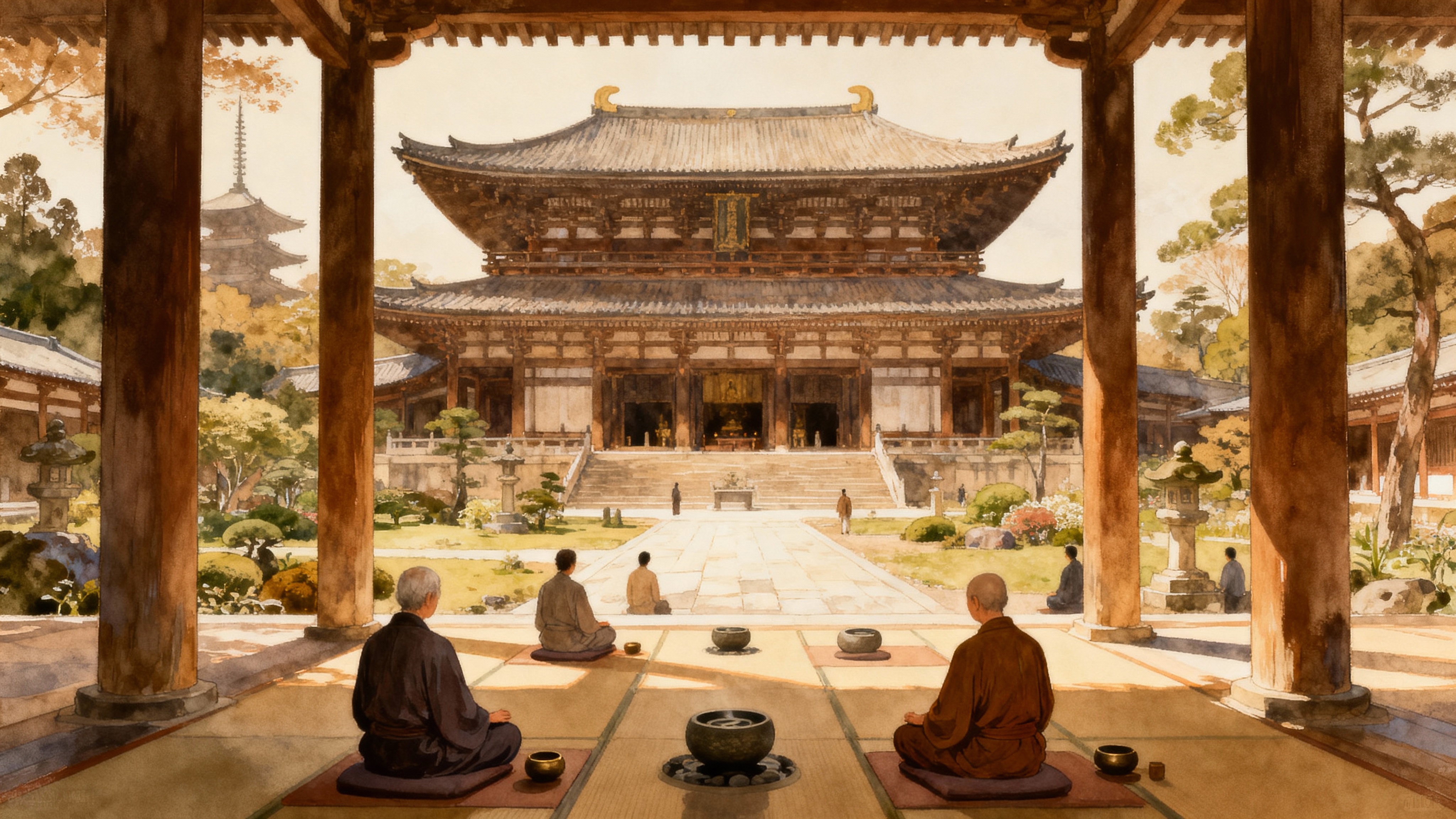
In the vast halls of Higashi Hongan-ji, where thousands of believers gather to chant the simple phrase “Namu Amida Butsu,” echoes a spiritual revolution that transformed not only Japanese Buddhism but offered a radical vision of religious democracy that continues to resonate worldwide. Here stands the monument to Shinran Shonin (親鸞聖人, 1173-1263), the monk who dared to proclaim that salvation was available to everyone—not through years of meditation, elaborate rituals, or monastic discipline, but through simple faith in Amida Buddha’s infinite compassion.
Shinran’s revolutionary teaching, known as Jodo Shinshu (浄土真宗) or “True Pure Land Buddhism,” challenged every assumption about religious authority, spiritual practice, and the path to enlightenment, creating a form of Buddhism that embraced married clergy, welcomed all social classes, and found the sacred in ordinary family life.
The Revolutionary: Shinran’s Radical Departure
From Elite Monk to Democratic Teacher
Shinran’s spiritual journey led him to challenge Buddhism’s fundamental assumptions:
Aristocratic Origins: Born into the Fujiwara clan, Shinran initially followed traditional Buddhist paths available to educated elites.
Mount Hiei Training: Twenty years of rigorous Tendai Buddhist practice on Mount Hiei convinced him that traditional methods were insufficient for most people.
Spiritual Crisis: Despite intensive meditation and study, Shinran felt unable to achieve the purity and concentration that traditional Buddhism demanded.
Revolutionary Insight: He came to believe that human effort alone could never achieve salvation—only Amida Buddha’s compassion could save beings trapped in cycles of suffering.
The Great Departure: Breaking Monastic Vows
Shinran’s most shocking act was abandoning celibacy and marrying:
Marriage to Eshinni: Taking a wife violated fundamental monastic vows but demonstrated his belief that family life could be as spiritually valid as celibacy.
Theological Justification: If salvation depended on Amida’s compassion rather than personal purity, then marriage didn’t prevent enlightenment.
Social Revolution: Married clergy became cornerstone of Jodo Shinshu, making religious leadership more accessible and community-centered.
Practical Impact: Hereditary temple leadership created stable religious institutions while maintaining close community connections.
The Teaching Revolution: Faith Over Works
Tariki: The Power of Other-Reliance
Shinran’s core teaching emphasized “tariki” (他力)—reliance on Amida Buddha’s power rather than self-effort:
Amida’s Vow: The Buddha vowed to save all beings who sincerely call upon his name, regardless of their spiritual accomplishments or moral perfection.
Nembutsu Practice: Simply saying “Namu Amida Butsu” (南無阿弥陀仏) with sincere faith was sufficient for salvation.
Inclusive Salvation: The teaching welcomed everyone—farmers, merchants, women, and even those considered morally compromised by other Buddhist schools.
Grace Over Merit: Salvation came through divine grace rather than accumulated good karma or spiritual achievements.
Higashi Hongan-ji: Monument to Democratic Faith
Architectural Democracy
The temple’s design reflects Jodo Shinshu’s inclusive principles:
Massive Scale: The Goei-do (Founder’s Hall) and Amida-do (Amida Hall) accommodate thousands of worshippers, demonstrating the faith’s popular appeal.
Open Access: Unlike esoteric temples with restricted areas, Higashi Hongan-ji welcomes all believers into its main halls.
Community Spaces: Extensive facilities support large gatherings, educational programs, and social services.
Artistic Accessibility: Beautiful decorations and architecture serve all visitors rather than elite patrons, reflecting democratic aesthetic values.
Frequently Asked Questions
Q: What is the main difference between Jodo Shinshu and other Buddhist sects? A: Jodo Shinshu emphasizes salvation through absolute faith in Amida Buddha’s vow, rather than through personal effort, meditation, or monastic practices.
Q: Can non-Buddhists visit Higashi Hongan-ji? A: Yes, all respectful visitors are welcome to explore the temple grounds and experience its unique spiritual atmosphere.
Q: What is the significance of saying “Namu Amida Butsu”? A: It expresses gratitude to Amida Buddha and acknowledgment of dependence on divine compassion rather than self-effort for salvation.
Planning Your Democratic Buddhism Journey:
- Hours: 5:50 AM – 5:30 PM daily (varies seasonally)
- Admission: Free for temple grounds and main halls
- Access: JR Kyoto Station, 7-minute walk
- Best Times: Morning services for active worship experience, afternoon for architectural appreciation
- Allow: 1-2 hours for temple exploration and cultural understanding
Continue Your Pure Land Journey: Ready to explore more Buddhist innovations? Discover “The Wind God Thunder God Screens at Kennin-ji” or learn about “The Zen Spirit of Myoshin-ji Temple.”
Leave a Reply