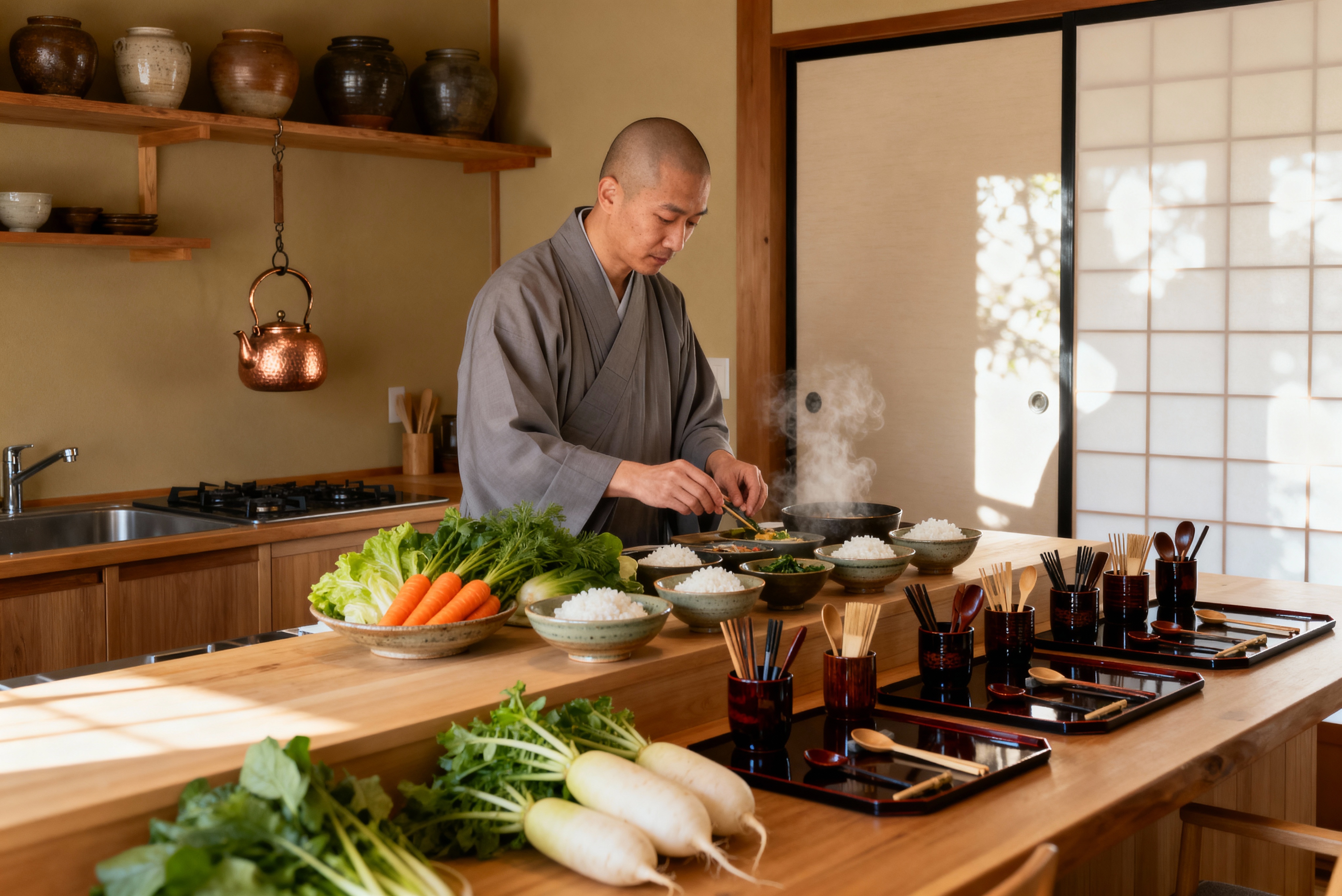
In the quiet temple kitchens of Kyoto, where Buddhist monks have practiced the sacred art of shojin ryori for over 800 years, a profound culinary philosophy unfolds that speaks directly to our modern world’s urgent need for sustainable, compassionate, and mindful approaches to food. Shojin ryori (精進料理) represents far more than vegetarian cooking—it embodies a complete philosophy of nourishment that feeds body, mind, and spirit while demonstrating how culinary practice can become spiritual discipline and environmental stewardship.
Today’s innovative chefs and conscious consumers worldwide are rediscovering these ancient principles, creating a renaissance that bridges Buddhist wisdom with contemporary concerns about health, environmental sustainability, and the ethics of food production, proving that the most revolutionary ideas often have the deepest roots.
The Sacred Foundation: Buddhism’s Culinary Wisdom
Ahimsa: The Principle of Universal Compassion
At the heart of shojin ryori lies ahimsa (非暴力)—the Buddhist commitment to non-violence that extends far beyond dietary choices:
Complete Plant-Based Approach: Strictly avoiding all animal products including dairy, eggs, and ingredients derived from animal suffering, reflecting deep respect for all sentient life.
Mindful Harvesting: Even plant ingredients are treated with reverence, utilizing every part to minimize waste and honor the life energy provided by nature.
Seasonal Harmony: Eating foods at their natural peak reduces environmental impact while aligning human consumption with natural rhythms and cycles.
Local Sourcing: Traditional emphasis on ingredients grown within temple grounds or immediate community, prefiguring modern farm-to-table movements.
The Five Contemplations: Transforming Eating into Meditation
Every shojin meal begins with five contemplations that transform ordinary eating into spiritual practice:
1. Gratitude for Interconnection: Acknowledging all beings—farmers, cooks, transporters, and natural forces—whose efforts brought food to the table, fostering deep appreciation for life’s interdependence.
2. Self-Reflection: Examining whether one’s actions and spiritual development merit receiving such nourishment, encouraging humility and continuous self-improvement.
3. Mental Purification: Approaching food without greed, anger, or ignorance, using meals as opportunities for spiritual development and mindfulness practice.
4. Medicinal Understanding: Viewing food as medicine for the body, preventing both excess and deficiency while maintaining optimal health for spiritual practice.
5. Service Dedication: Eating to support spiritual practice and service to others, not merely for pleasure or comfort, connecting nourishment to higher purpose.
Traditional Techniques: Ancient Wisdom in Practice
The Art of Transformation: Making Plants Transcendent
Shojin masters developed extraordinary techniques for creating variety and satisfaction from plant-based ingredients:
Texture Innovation: Using different cutting techniques, cooking methods, and preparation styles to create diverse mouthfeel experiences that satisfy both palate and spirit.
Umami Mastery: Long before the term was scientifically understood, shojin cooks mastered techniques for developing savory depth through fermentation, drying, and careful seasoning.
Seasonal Integration: Aligning ingredients and preparations with natural cycles, ensuring optimal nutrition while teaching appreciation for temporal rhythms.
Visual Poetry: Creating beautiful presentations that feed the eyes and spirit while demonstrating respect for ingredients and gratitude toward diners.
Essential Ingredients: The Buddhist Pantry
Traditional shojin ryori achieves remarkable variety through masterful use of plant-based staples:
Protein Foundations: Tofu in dozens of preparations, yuba (soy milk skin), fu (wheat gluten), and various legumes provide complete nutrition while offering diverse textures.
Flavor Architects: Kombu (kelp), shiitake mushrooms, and aged miso create complex umami foundations without animal products, demonstrating sophisticated flavor development.
Seasonal Vegetables: Root vegetables, mountain plants, leafy greens, and preserved foods provide nutrition and variety throughout the year while connecting meals to natural cycles.
Sacred Grains: Rice, millet, sesame, and other seeds offer energy and essential nutrients while creating satisfying, spiritually nourishing meals.
Modern Renaissance: Ancient Principles Meet Contemporary Innovation
Global Awakening to Buddhist Food Wisdom
Contemporary chefs, nutritionists, and food philosophers are rediscovering shojin principles with remarkable enthusiasm:
Environmental Resonance: Ancient emphasis on using every part of vegetables and minimizing waste perfectly aligns with modern environmental consciousness and sustainability goals.
Health Validation: Traditional understanding of food as medicine finds validation in contemporary nutritional science and wellness approaches emphasizing plant-based nutrition.
Mindfulness Movement: Buddhist eating practices offer proven alternatives to mindless consumption and processed food dependence plaguing modern society.
Ethical Evolution: Compassionate food choices reflect growing awareness of animal welfare, environmental impact, and social justice issues in food production.
Contemporary Interpretations: Innovation Within Sacred Tradition
Modern shojin practitioners skillfully balance respect for tradition with contemporary needs and possibilities:
Technical Evolution: Using modern equipment and methods to achieve traditional flavors and textures more efficiently while maintaining spiritual essence.
Global Integration: Incorporating non-Japanese vegetables and seasonings while maintaining philosophical foundations and spiritual practices.
Aesthetic Innovation: Creating visually stunning presentations that appeal to contemporary aesthetics while respecting traditional principles of beauty and reverence.
Nutritional Optimization: Applying modern nutritional knowledge to ensure complete nutrition within traditional frameworks, enhancing health benefits.
Leading Practitioners: Bridging Sacred and Contemporary
Temple-Based Innovation
Progressive temples demonstrate how ancient wisdom can embrace modern accessibility:
Tenryu-ji Temple: Offers refined shojin experiences that introduce international visitors to authentic temple cuisine philosophy while maintaining strict traditional standards.
Daitoku-ji Complex: Various sub-temples provide different approaches to traditional shojin while maintaining unwavering adherence to Buddhist principles and seasonal awareness.
Educational Programs: Many temples now offer cooking classes, philosophical discussions, and cultural immersion experiences that share shojin wisdom with broader audiences.
Contemporary Restaurant Evolution
Modern establishments apply shojin principles to create innovative dining experiences that honor tradition while serving contemporary needs:
Fine Dining Integration: Michelin-starred restaurants demonstrate how traditional shojin can achieve contemporary culinary excellence without compromising spiritual foundations.
Casual Accessibility: Modern interpretations make Buddhist food philosophy accessible to diverse diners through approachable presentations and familiar flavors.
Fusion Applications: Creative chefs integrate shojin principles into international cuisines, creating unique dishes that maintain philosophical integrity while appealing to global palates.
Health and Wellness: Ancient Wisdom Validated
Scientific Confirmation of Traditional Knowledge
Modern research increasingly validates traditional shojin principles and their health benefits:
Complete Nutrition: Properly planned plant-based diets provide all essential nutrients while significantly reducing risk of chronic diseases affecting modern populations.
Digestive Harmony: High fiber content and fermented foods support optimal gut health and immune function, validating traditional understanding of food as medicine.
Longevity Benefits: Buddhist monks historically demonstrated exceptional longevity and disease resistance, now understood to relate significantly to dietary practices.
Mental Clarity: Avoiding stimulating foods and practicing mindful eating support cognitive function and emotional stability, enhancing both physical and spiritual well-being.
Therapeutic Applications for Modern Life
Shojin principles offer particular benefits for contemporary health challenges:
Stress Reduction: Meditative food preparation and mindful consumption provide effective stress relief and mindfulness practice for busy modern lives.
Chronic Disease Prevention: Plant-based eating patterns significantly reduce risk of heart disease, diabetes, and other conditions plaguing modern society.
Environmental Health: Sustainable food choices support both personal and planetary health, addressing interconnected wellness concerns.
Spiritual Nourishment: The philosophical dimensions of shojin eating address modern spiritual hunger and search for meaning through daily practices.
Learning Shojin: Practical Application for Modern Life
Home Practice Foundations
Beginning practitioners can incorporate shojin principles gradually into daily life:
Mindful Shopping: Selecting seasonal, local ingredients with gratitude and awareness of their origins, environmental impact, and cultural significance.
Contemplative Preparation: Approaching cooking as meditation, focusing completely on each task and ingredient with reverence and attention.
Grateful Consumption: Eating slowly with appreciation for flavors, textures, and the countless efforts behind each dish, transforming meals into spiritual practice.
Waste Minimization: Using vegetable scraps for stocks, composting, and finding creative uses for all food parts, embodying respect for life and resources.
Essential Techniques for Contemporary Kitchens
Key skills for authentic shojin cooking adapted to modern homes:
Dashi Mastery: Creating flavorful broths from kombu and shiitake without animal products, forming the foundation for countless dishes.
Tofu Artistry: Learning to press, season, and prepare tofu in multiple textures and applications, transforming simple ingredients into sophisticated cuisine.
Preservation Wisdom: Pickling, fermenting, and drying vegetables for year-round variety and nutrition while connecting to traditional food security practices.
Knife Meditation: Developing precision cutting techniques that maximize ingredient potential while creating opportunities for mindful practice.
Cultural Impact: Beyond the Kitchen
Environmental Leadership
Shojin principles offer guidance for sustainable living that extends far beyond dietary choices:
Carbon Consciousness: Plant-based eating significantly reduces environmental impact compared to animal-based diets, addressing climate change through daily choices.
Resource Wisdom: Traditional emphasis on using every part of vegetables and minimizing waste supports broader sustainability goals and resource conservation.
Local Food Systems: Seasonal eating and local sourcing strengthen community food security while reducing transportation impact and supporting local economies.
Biodiversity Support: Traditional vegetable varieties and preservation techniques help maintain agricultural diversity and food system resilience.
Social and Ethical Dimensions
Buddhist food philosophy addresses contemporary ethical concerns with ancient wisdom:
Compassionate Living: Extending Buddhist non-violence principles to food choices promotes broader ethical awareness and compassionate action.
Social Justice: Sustainable food systems support fair labor practices and community food security, addressing systemic inequities in food access.
Cultural Bridge-Building: Sharing Buddhist food philosophy promotes cross-cultural understanding and cooperation around universal values of compassion and sustainability.
Educational Transformation: Teaching shojin principles offers holistic education that integrates practical skills with philosophical wisdom and environmental awareness.
Frequently Asked Questions
Q: Is modern shojin ryori suitable for people with food allergies? A: Traditional shojin is naturally free from many common allergens, though soy and gluten are prevalent. Modern practitioners can adapt techniques for various dietary restrictions while maintaining philosophical foundations.
Q: How does shojin ryori differ from regular vegetarian cuisine? A: Shojin incorporates specific Buddhist principles including mindfulness practices, avoidance of stimulating ingredients, and emphasis on spiritual development alongside nutrition.
Q: Can I learn shojin cooking techniques at home? A: Yes, many resources provide guidance for home practice. While mastering the philosophy requires understanding Buddhist principles, the techniques can be learned and adapted for personal practice.
Q: Where can I experience authentic shojin ryori in Kyoto? A: Several temples offer dining experiences, and specialized restaurants provide various levels of traditional and contemporary interpretations, from casual to fine dining.
Planning Your Shojin Discovery Journey:
- Temple Experiences: Advance reservations required for most temple dining opportunities
- Restaurant Range: Options from traditional temple settings to contemporary fine dining interpretations
- Learning Opportunities: Cooking classes and cultural workshops available at various temples and cultural centers
- Seasonal Timing: Each season offers unique ingredients and preparation styles reflecting natural cycles
- Cultural Preparation: Basic understanding of Buddhist principles enhances appreciation and respect
Continue Your Mindful Food Journey: Ready to explore more traditional food culture? Discover “Kyoto’s Living Pantry at Nishiki Market” or learn about “Seasonal Poetry in Kaiseki Cuisine.”
Leave a Reply