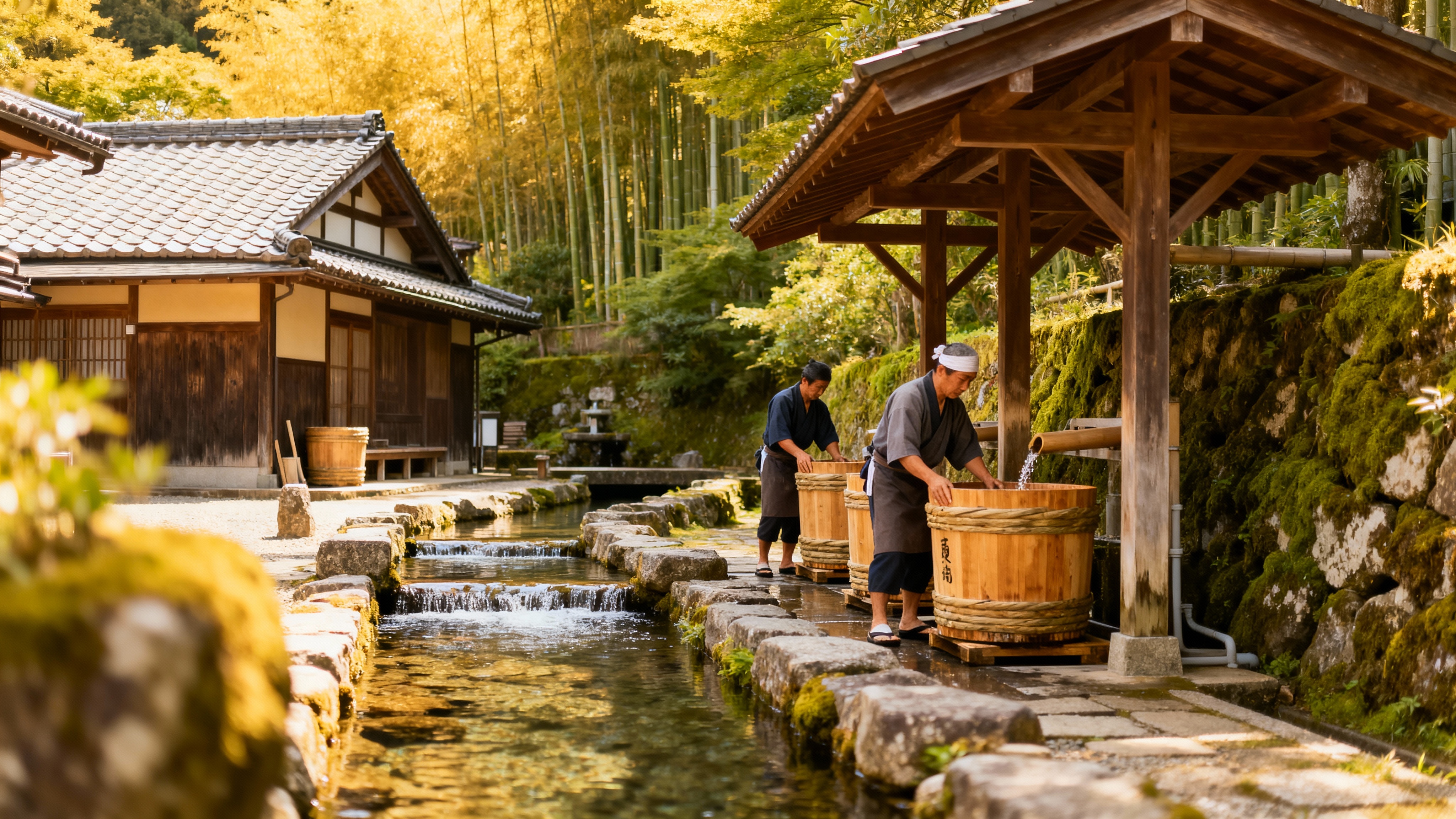
In the misty early morning hours of Kyoto’s Fushimi district, where sacred underground springs have bubbled forth for over a millennium, master brewers continue ancient rituals that transform humble rice into liquid poetry. Here, beneath the surface of this historic neighborhood, flows Gokōsui (御香水)—sacred water so pure it was once reserved for imperial tea ceremonies and temple rituals. This blessed water, combined with centuries of brewing wisdom, creates sake that captures not just alcohol, but the very essence of Japanese culture, craftsmanship, and spiritual connection to nature.
Exploring Kyoto’s sake culture through the Fushimi district offers visitors an unparalleled journey into Japan’s national beverage—where every sip tells stories of seasonal rice harvests, master craftsmen’s dedication, and the profound Japanese understanding that the finest things in life emerge from patience, purity, and respect for natural processes.
The Sacred Foundation: Fushimi’s Divine Waters
Where Gods and Sake Meet
Fushimi district’s reputation as Japan’s premier sake region springs from extraordinary natural gifts that sake brewers consider divine providence:
Sacred Water Sources: Underground springs filtered through centuries of geological layers create water so pure that Buddhist monks and Shinto priests have used it for religious ceremonies for over 1,000 years.
Mineral Perfection: The water’s unique mineral composition—low in iron and manganese, rich in potassium and phosphoric acid—creates ideal conditions for sake fermentation, producing remarkably smooth and refined flavors.
Spiritual Significance: Many springs originate near temples and shrines, leading brewers to consider their water blessed by kami (Shinto deities), adding spiritual dimension to the brewing process.
Historical Continuity: Some breweries have drawn from the same water sources for over 300 years, creating unbroken connections between past and present that define Fushimi’s brewing heritage.
The Geography of Excellence
Fushimi’s location provided perfect conditions for sake brewing development:
River Transportation: The Uji River system allowed efficient distribution of finished sake throughout Japan, establishing Fushimi as a major commercial center.
Rice Access: Proximity to Kyoto’s fertile rice-growing regions ensured steady supply of premium sake rice varieties.
Climate Advantages: Cool winters and moderate summers created optimal conditions for traditional seasonal brewing cycles.
Cultural Hub: Location near Kyoto’s imperial capital attracted sophisticated clientele demanding the highest quality sake.
Master Breweries: Temples of Liquid Art
Gekkeikan: 370 Years of Brewing Excellence
Founded in 1637, Gekkeikan represents the pinnacle of traditional Japanese sake craftsmanship:
Historical Legacy: Survived wars, natural disasters, and social upheavals while maintaining consistent quality and continuous innovation across nearly four centuries.
Traditional Methods: Continues using time-honored techniques including wooden fermentation vessels, seasonal brewing cycles, and master brewer (toji) systems passed down through generations.
Museum Experience: The Gekkeikan Okura Sake Museum offers comprehensive education about sake history, brewing processes, and cultural significance through interactive exhibits.
Tasting Opportunities: Visitors can sample various sake types while learning about flavor profiles, serving temperatures, and food pairing principles.
Kizakura: Innovation Within Tradition
This historic brewery demonstrates how traditional craftsmanship can embrace modern approaches:
Artistic Integration: Famous for incorporating traditional Japanese aesthetics into bottle design, brewery architecture, and seasonal marketing campaigns.
Seasonal Specialties: Creates limited-edition sakes celebrating specific seasons, festivals, and cultural events, maintaining deep connection to Japanese temporal awareness.
Cultural Education: Operates visitor centers that teach sake appreciation, brewing science, and cultural context through hands-on experiences.
Kappa Theme: Unique mascot and theme based on Japanese water spirits (kappa), connecting sake to mythology and water worship traditions.
Takara Shuzo: Science Meets Tradition
Demonstrates successful balance between respecting tradition and embracing modern brewing science:
Technical Excellence: Employs both traditional master brewers (toji) and modern fermentation scientists to achieve consistent quality while preserving traditional flavors.
Quality Innovation: Advanced testing and quality control ensure every bottle meets exacting standards while respecting traditional flavor profiles.
Educational Outreach: Comprehensive sake education programs serve both industry professionals and enthusiastic consumers seeking deeper understanding.
Sustainable Practices: Incorporates environmentally conscious methods without compromising traditional quality or cultural authenticity.
The Alchemy of Sake: Understanding Traditional Brewing
Seasonal Brewing: Following Nature’s Rhythm
Traditional sake production follows ancient seasonal patterns that connect brewing to natural cycles:
Winter Brewing Season: Cold temperatures provide optimal conditions for controlled fermentation, allowing subtle flavor development and preventing harmful bacteria growth.
Rice Harvest Integration: Timing aligns with autumn rice harvest, ensuring freshest ingredients for premium sake production while maintaining connection to agricultural rhythms.
Natural Temperature Control: Pre-refrigeration brewing relied on seasonal temperature changes for proper fermentation management, developing techniques still used today.
Cultural Alignment: Seasonal brewing connects sake production to traditional Japanese concepts of harmony with nature and respect for natural timing.
The Toji System: Master Craftsmen
Sake brewing relies on master brewers whose expertise cannot be replicated by machines:
Sensory Mastery: Toji use sight, smell, taste, and even sound to monitor fermentation progress and make crucial adjustments requiring decades of experience.
Intuitive Knowledge: Years of practice develop almost supernatural ability to predict and control fermentation outcomes based on subtle environmental changes.
Cultural Transmission: Master-apprentice relationships preserve traditional knowledge while allowing for gradual innovation and regional style development.
Spiritual Dimension: Many toji approach brewing as spiritual practice, incorporating meditation, purification rituals, and deep respect for ingredients.
Sake Varieties: Understanding the Spectrum
Premium Classifications
Japanese sake classification reflects brewing techniques and ingredient quality:
Junmai (純米): Pure rice sake with no added alcohol, showcasing natural rice flavors and brewery’s technical mastery.
Ginjo (吟醸): Premium sake using highly polished rice (at least 40% removed), creating elegant, fruity flavor profiles through careful fermentation control.
Daiginjo (大吟醸): Super-premium sake with rice polished to 50% or less, representing the pinnacle of brewing artistry and ingredient quality.
Seasonal Specialties: Limited-edition sakes celebrating specific seasons, festivals, or cultural events, often available only at brewery locations.
Tasting Techniques: Appreciating Liquid Culture
Proper sake appreciation involves multiple senses and cultural understanding:
Visual Assessment: Clarity, color, and viscosity provide clues about brewing methods, rice polishing levels, and aging processes.
Aromatic Evaluation: Complex fragrances reveal fermentation characteristics, rice varieties, and yeast strains used in production.
Taste Analysis: Systematic tasting reveals sweetness levels, acidity balance, umami depth, and subtle flavor nuances that distinguish quality levels.
Temperature Exploration: Different serving temperatures reveal different aspects of sake character, from chilled elegance to warm comfort.
Cultural Experiences: Immersive Sake Discovery
Brewery Tours and Educational Experiences
Fushimi offers numerous opportunities for deep sake culture immersion:
Traditional Facilities: Historic brewing buildings provide authentic atmosphere for understanding traditional methods and cultural significance.
Master Brewer Interactions: Opportunities to meet toji and learn about their craft directly from practitioners who dedicate their lives to sake perfection.
Seasonal Programs: Experiences timed to coincide with different brewing stages, rice harvest, and seasonal sake releases.
Hands-on Learning: Some breweries offer sake-making workshops where visitors can participate in traditional processes.
Sake and Food Pairing: Culinary Harmony
Understanding sake’s versatility enhances both drinking and dining experiences:
Traditional Pairings: Classic combinations with Japanese cuisine that have developed over centuries of cultural refinement.
Modern Applications: Contemporary chefs explore sake’s potential with international foods and fusion dishes.
Seasonal Coordination: Matching sake types with seasonal ingredients and preparation methods for optimal flavor harmony.
Temperature Considerations: How serving temperature affects food pairing and overall dining experience.
Planning Your Sake Journey
Practical Visiting Information
Essential details for successful brewery exploration:
Access: Fushimi area is easily accessible via Keihan Main Line to Fushimi-Momoyama or Chushojima stations.
Timing: Winter months offer active brewing observation opportunities, though tours and tastings are available year-round.
Reservations: Larger breweries often require advance booking, especially for English-language tours or group visits.
Cultural Preparation: Basic understanding of sake types and Japanese drinking etiquette enhances the experience.
Responsible Enjoyment
Guidelines for safe and respectful sake exploration:
Moderation: Sake’s smooth taste can mask high alcohol content; pace consumption appropriately.
Transportation: Use public transportation or designated drivers when visiting multiple breweries.
Cultural Respect: Follow brewery rules, photography guidelines, and traditional drinking etiquette.
Purchase Opportunities: Support breweries by purchasing unique varieties available only at source locations.
Frequently Asked Questions
Q: Do I need reservations for brewery tours? A: Most major breweries recommend advance reservations, especially for English-language tours. Smaller establishments may accept walk-ins but calling ahead is advisable.
Q: What’s the difference between sake and other rice wines? A: Japanese sake uses specific brewing techniques, rice varieties, and fermentation processes that create unique flavor profiles distinct from other rice-based alcoholic beverages.
Q: Can I purchase sake directly from breweries? A: Yes, most breweries offer direct sales including limited-edition varieties not available elsewhere, often at competitive prices.
Q: How should I store purchased sake? A: Keep sake cool, away from direct light, and consume relatively quickly as it doesn’t improve with extended aging like wine.
Planning Your Sake Discovery Journey:
- Best Season: Winter and early spring for active brewing observation
- Duration: Half-day minimum for meaningful brewery exploration
- Budget: ¥2,000-¥5,000 per person for tours and tastings
- Language: Some English-speaking guides available with advance booking
- Transportation: Fushimi area accessible by multiple train lines
Continue Your Culinary Journey: Ready to explore more Japanese food philosophy? Discover “The Sacred Philosophy of Shojin Ryori and Modern Interpretations” or learn about “Traditional Food Culture at Nishiki Market.”
Leave a Reply