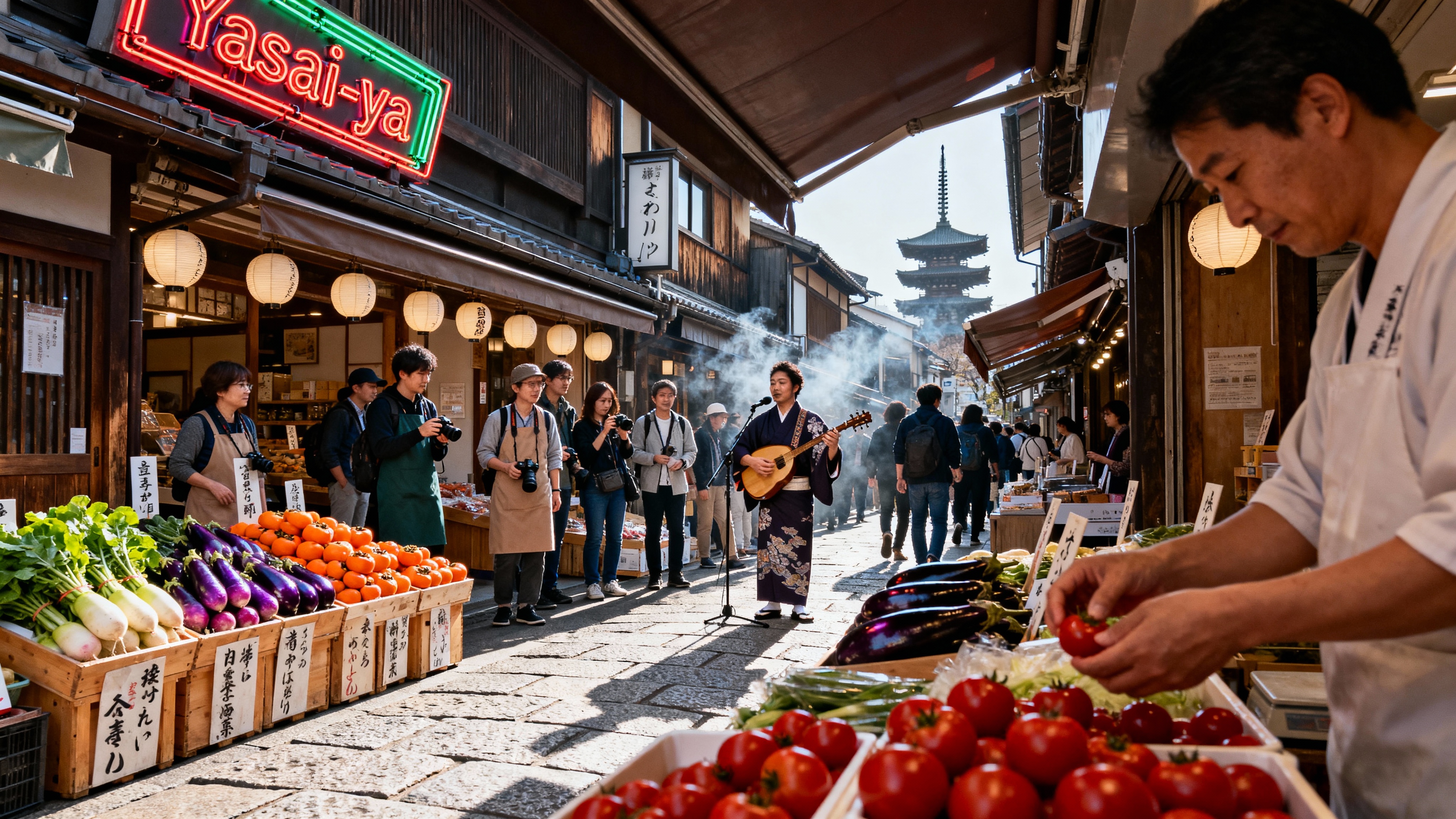
Stretching 400 meters through the heart of Kyoto like a covered culinary cathedral, Nishiki Market pulses with the living rhythm of four centuries of Japanese food culture—where the delicate aroma of handmade tofu mingles with the sharp tang of artisanal pickles, where master craftsmen shape traditional sweets using techniques passed down through twenty generations, and where every stall tells an intimate story of Japan’s culinary evolution. Known reverently as “Kyoto no Daidokoro” (京都の台所)—Kyoto’s Kitchen—this legendary market represents far more than a shopping destination; it’s a living museum where ancient food traditions meet modern innovation in an unbroken chain of cultural transmission.
Walking through Nishiki Market offers visitors direct encounter with the ingredients, techniques, and philosophies that have shaped Japanese cuisine for centuries, providing authentic taste of culinary heritage that continues to influence food culture worldwide while maintaining its distinctly Kyoto character.
Historical Tapestry: From Sacred Waters to Culinary Mecca
Four Centuries of Continuous Evolution
Nishiki Market’s extraordinary longevity reflects Japan’s remarkable ability to preserve tradition while embracing necessary change:
Edo Period Genesis (1603-1868): Beginning as a wholesale fish market serving Kyoto’s growing urban population, taking advantage of the area’s pure underground water sources essential for fish preservation and tofu production.
Imperial Connections: Proximity to Kyoto Imperial Palace created demanding clientele requiring the highest quality ingredients, establishing reputation for excellence that transcends social and economic changes.
Guild System Mastery: Merchant families developed specialized expertise in specific products, creating deep knowledge traditions passed through generations while fostering innovation within traditional frameworks.
Meiji Transformation (1868-1912): Successfully adapted to changing dietary habits and new ingredients while maintaining traditional quality standards and preparation methods that define Kyoto cuisine.
Architectural Wisdom: Form Following Function
The market’s distinctive covered design reflects sophisticated understanding of food preservation and customer experience:
Climate Control: Traditional tile roof design provides weather protection while allowing essential air circulation for optimal food quality and customer comfort.
Space Optimization: Narrow stalls maximize vendor diversity within limited space while creating intimate shopping experience that encourages personal relationships between vendors and customers.
Water Management: Traditional drainage and cleaning systems maintain hygiene standards essential for fresh food sales while preserving the market’s historic character.
Aesthetic Integration: Beautiful traditional signage, wooden architecture, and seasonal decorations create visually appealing environment that enhances both shopping experience and cultural education.
Culinary Categories: A Living Encyclopedia of Japanese Food
Kyo-yasai: Kyoto’s Heirloom Vegetables
Nishiki Market showcases Kyoto’s unique vegetable varieties developed specifically for the region’s climate and culinary traditions:
Kamo-nasu (賀茂茄子): Round eggplants with exceptionally creamy texture, perfect for traditional preparations like dengaku (miso-glazed grilling) that highlight their unique characteristics.
Kyo-ninjin (京人参): Deep red carrots with intense sweetness and vibrant color, traditionally used in New Year preparations and kaiseki cuisine for both flavor and visual impact.
Shishito-garashi (獅子唐辛子): Small green peppers with mild heat and complex flavor, essential for summer dishes and demonstrating Kyoto’s sophisticated approach to capsicum cultivation.
Mizuna (水菜): Delicate leafy greens with feathery appearance and subtle peppery flavor, used in both raw and cooked preparations throughout Kyoto cuisine.
Tsukemono Mastery: The Art of Vegetable Preservation
Kyoto’s pickle culture represents one of Japan’s most sophisticated preservation traditions:
Senmai-zuke (千枚漬け): Paper-thin turnip slices pickled in rice vinegar and kombu, creating delicate texture and complex umami flavors that epitomize Kyoto’s refined taste preferences.
Shibazuke (柴漬け): Eggplant and cucumber pickled with red perilla (shiso), creating distinctive purple color and refreshing flavor perfect for summer dining.
Suguki (すぐき): Fermented turnip preparation unique to Kyoto, requiring specific bacterial cultures and traditional techniques passed down through specialized families.
Seasonal Variations: Different vegetables pickled according to seasonal availability and traditional calendar, connecting preservation techniques to natural cycles and cultural celebrations.
Tofu and Yuba: Soy Artistry
Kyoto’s pure water creates exceptional conditions for soy-based products:
Handmade Tofu: Daily preparation using traditional methods and premium soybeans, resulting in silky texture and clean flavor impossible to achieve through industrial production.
Fresh Yuba (湯葉): Delicate soy milk skin prepared fresh throughout the day, served as sashimi-style delicacy or incorporated into cooked dishes with subtle, refined flavor.
Specialized Preparations: Dozens of tofu and yuba variations including aged, smoked, and seasoned varieties that demonstrate the sophisticated development of soy cuisine in Kyoto.
Cultural Integration: Tofu and yuba products essential for both Buddhist temple cuisine and secular Kyoto cooking, bridging religious and cultural food traditions.
Shopping Philosophy: Relationships Over Transactions
The Art of Vendor Relationships
Nishiki Market operates on traditional Japanese business principles that prioritize long-term relationships:
Personal Service: Regular customers develop intimate relationships with vendors, receiving personalized recommendations, seasonal advice, and access to special products.
Quality Assurance: Vendors stake their family reputation on product quality, providing detailed information about sourcing, preparation methods, and optimal usage.
Cultural Education: Many vendors serve as informal teachers, explaining traditional uses, seasonal significance, and preparation techniques that preserve culinary knowledge.
Community Function: The market serves as social hub where food culture knowledge is shared, preserved, and transmitted across generations through daily interactions.
Seasonal Shopping Rhythms
Market offerings change dramatically with seasons, reflecting Japanese temporal awareness and natural harmony:
Spring Awakening: Fresh bamboo shoots, cherry blossom-themed sweets, and spring vegetables celebrating renewal and growth while connecting shoppers to natural cycles.
Summer Cooling: Refreshing foods, cooling sweets, and preservation techniques adapted to hot, humid weather while maintaining nutritional and cultural value.
Autumn Abundance: Harvest celebrations featuring chestnuts, persimmons, and other seasonal specialties reflecting gratitude and preparation for winter months.
Winter Warmth: Hearty ingredients, preserved foods, and warming preparations that provide comfort during cold months while maintaining connection to seasonal rhythms.
Signature Specialties: Must-Experience Market Treasures
Iconic Nishiki Experiences
Certain vendors and products have achieved legendary status among both locals and visitors:
Aritsugu Knives (有次): 450-year-old knife shop providing tools essential for Japanese cooking, demonstrating craftsmanship that enables culinary excellence across generations.
Traditional Pickle Vendors: Multiple family-operated stalls offering regional pickle varieties that showcase Kyoto’s unique approach to vegetable preservation and flavor development.
Fresh Yuba Specialists: Artisans preparing delicate soy milk skin throughout the day, demonstrating how simple ingredients become sophisticated cuisine through skill and tradition.
Matcha Sweet Masters: Traditional and modern green tea confections reflecting Kyoto’s central role in Japanese tea culture and seasonal aesthetic awareness.
Tasting Culture: Education Through Experience
Many vendors offer sampling and immediate consumption opportunities:
Educational Tasting: Vendors explain flavors, textures, preparation methods, and cultural significance while customers experience products directly through guided tasting.
Seasonal Specialties: Limited-time offerings that provide unique experiences tied to specific seasons, festivals, or cultural events throughout the year.
Quality Demonstration: Sampling allows customers to appreciate quality differences and understand the value of traditional preparation methods versus mass production.
Cultural Bridge: Tasting experiences help international visitors understand Japanese flavor preferences and culinary philosophy through direct sensory engagement.
Modern Challenges and Adaptations
Balancing Tradition with Contemporary Needs
Contemporary pressures require careful navigation to preserve authentic character:
Tourism Management: Handling increased international attention while maintaining authentic character and continuing to serve local community needs effectively.
Economic Sustainability: Rising costs and changing consumer habits challenge traditional business models while vendors seek to preserve family enterprises.
Knowledge Transfer: Ensuring traditional techniques and cultural knowledge transfer as older vendors retire and younger generations adapt to modern circumstances.
Quality Preservation: Maintaining traditional quality standards while adapting to modern food safety regulations and evolving customer expectations.
Innovation Within Tradition
Successful vendors demonstrate how to embrace change while preserving essential character:
Technology Integration: Using modern refrigeration, payment systems, and communication tools while maintaining traditional preparation methods and customer relationships.
International Awareness: Adapting to international customers through basic English, visual displays, and cultural explanation while preserving authentic Japanese food culture.
Educational Expansion: Developing guided tours, cooking classes, and cultural experiences that support both tourism revenue and cultural preservation goals.
Collaborative Preservation: Working together to maintain the market’s collective character and cultural significance through coordinated planning and mutual support.
Visitor Experience: Navigating Kyoto’s Kitchen
Optimal Timing and Approach
Successful market visits require understanding of rhythms and cultural expectations:
Morning Excellence: Early visits (9-11 AM) provide best product selection, opportunity to observe preparation activities, and less crowded conditions for meaningful vendor interaction.
Weekday Advantages: Avoid weekend crowds while experiencing authentic local shopping patterns and having better opportunities for cultural exchange with vendors.
Seasonal Planning: Different seasons offer unique products and experiences, making repeat visits rewarding for understanding the full scope of Japanese food culture.
Cultural Preparation: Basic understanding of Japanese shopping customs, food culture, and polite interaction enhances experience for both visitors and vendors.
Respectful Engagement Guidelines
Proper market behavior enhances experience while showing respect for vendors and local customers:
Vendor Appreciation: Polite interaction, genuine interest in products, and appreciation for expertise create positive exchanges that benefit everyone involved.
Sampling Protocol: Understanding when and how sampling is appropriate, and always purchasing something when extensive tasting is offered or provided.
Photography Courtesy: Asking permission before photographing vendors, products, or preparation processes while respecting those who prefer privacy.
Space Awareness: Managing movement through narrow passages considerately, especially during busy periods when local customers are conducting daily shopping.
Frequently Asked Questions
Q: What’s the best time to visit Nishiki Market? A: Weekday mornings (9-11 AM) offer optimal conditions with best product selection, active preparation to observe, and manageable crowds for meaningful vendor interactions.
Q: Can I eat while walking through the market? A: Yes, many vendors offer foods designed for immediate consumption, though visitors should be mindful of cleanliness and dispose of waste properly in designated areas.
Q: Do vendors speak English? A: English proficiency varies by vendor, but many use simple phrases and gestures. Enthusiasm, respect, and basic Japanese politeness phrases often overcome language barriers effectively.
Q: What should I buy as authentic Kyoto souvenirs? A: Packaged specialties like traditional pickles, seasonal sweets, premium tea, local seasonings, and traditional cooking ingredients make excellent gifts representing authentic Kyoto food culture.
Q: How much should I budget for market shopping? A: Budget varies widely based on interests and purchases, but ¥2,000-¥5,000 allows for good sampling of specialties and purchasing of authentic local products.
Planning Your Nishiki Market Adventure:
- Duration: Allow 2-3 hours for thorough exploration and meaningful vendor interactions
- Access: Central Kyoto location accessible via multiple subway and bus routes near Shijo-Kawaramachi area
- Language: Basic Japanese phrases helpful but not essential; enthusiasm and respect transcend language barriers
- Storage: Bring reusable bags for purchases; some vendors provide limited packaging
- Appetite: Come hungry and prepared to try new flavors, textures, and traditional preparations
Continue Your Kyoto Food Journey: Ready to explore more culinary traditions? Discover “Seasonal Poetry in Kaiseki Cuisine” or learn about “Popular Izakaya Menu Items for International Visitors.”
Leave a Reply