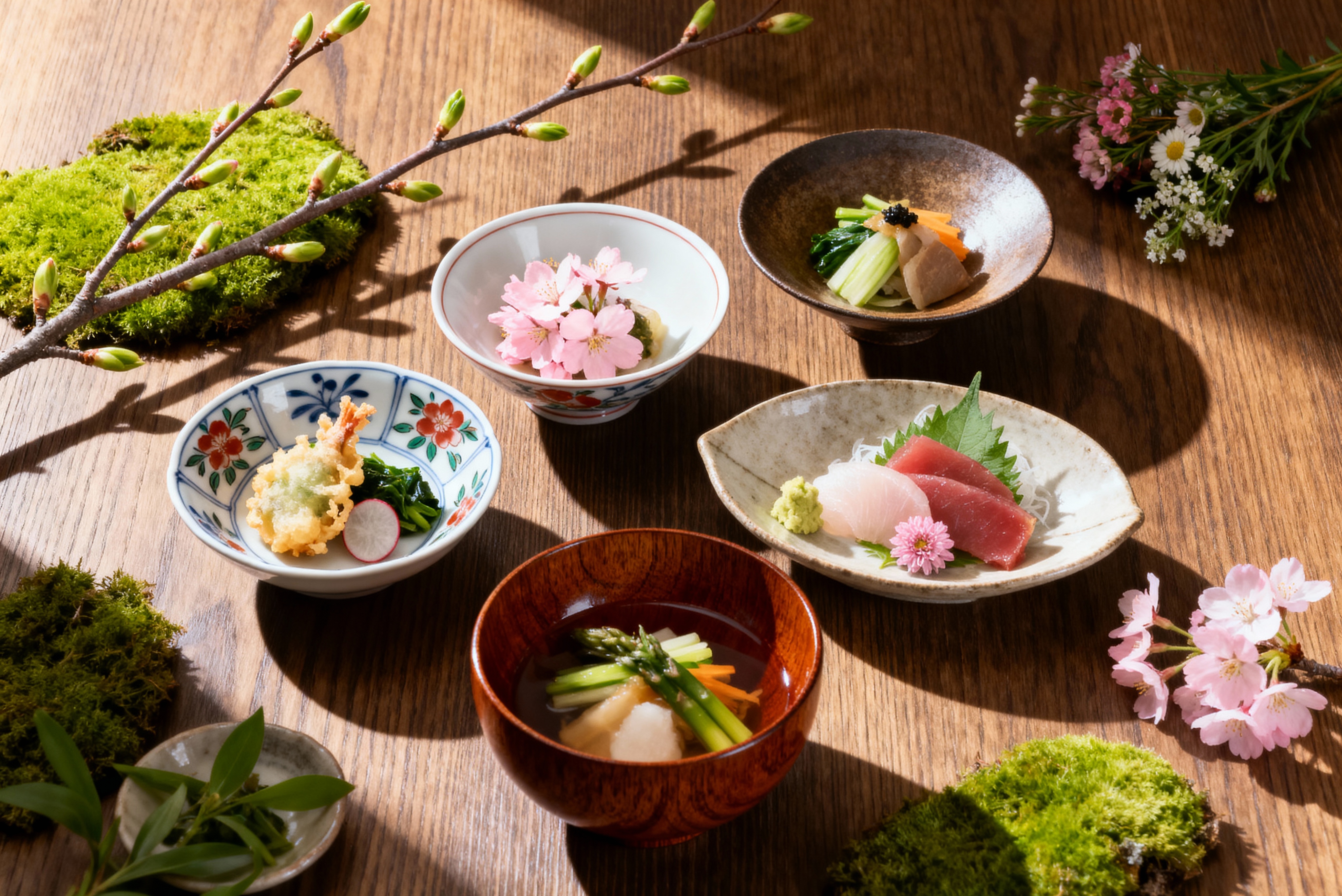
In the hushed elegance of a traditional Kyoto ryotei, where each course arrives like a carefully composed haiku written in food, kaiseki cuisine transforms the simple act of eating into a transcendent journey through Japan’s seasons, aesthetics, and cultural soul. Kaiseki (懐石) represents the absolute pinnacle of Japanese culinary artistry—a multi-course dining experience where every element, from the sequence of dishes to the choice of serving vessels, tells the profound story of nature’s eternal cycles and humanity’s harmonious place within them.
More than fine dining, kaiseki embodies a complete philosophy of nourishment that feeds not only the body but the spirit, creating edible poetry that captures the essence of fleeting seasons, the beauty of impermanence, and the deep Japanese understanding that true luxury lies not in excess but in perfect harmony with natural rhythms and cultural wisdom.
Sacred Origins: From Tea Ceremony to Culinary Art
Humble Beginnings, Transcendent Evolution
Kaiseki’s sophisticated development emerged from surprisingly humble origins in Japanese tea ceremony culture:
Cha-kaiseki Foundation: Originally simple meals served before formal tea ceremony (chanoyu) to prevent stomach upset from strong matcha, emphasizing seasonal awareness and aesthetic refinement over elaborate preparation.
Sen no Rikyu’s Vision: The great 16th-century tea master’s principles of wabi-sabi and seasonal sensitivity became foundational elements of kaiseki philosophy, establishing aesthetic principles still followed today.
Spiritual Integration: Early kaiseki embodied Buddhist principles of mindfulness, gratitude, and harmony with natural cycles, treating food preparation and consumption as spiritual practice.
Cultural Synthesis: Over centuries, kaiseki absorbed influences from imperial court cuisine (yusoku ryori) and Buddhist temple food (shojin ryori), creating sophisticated fusion of secular and sacred culinary traditions.
Kyoto’s Cultural Supremacy
Kyoto’s unique position as cultural capital created ideal conditions for kaiseki’s refinement:
Imperial Patronage: Centuries as imperial capital attracted the most skilled artisans and created demand for ultimate aesthetic refinement in all cultural expressions.
Seasonal Abundance: Access to exceptional local ingredients (kyo-yasai) and pure water sources provided perfect foundation for seasonal cuisine development.
Cultural Confluence: Intersection of Buddhist philosophy, Shinto nature worship, and courtly aesthetics created unique cultural environment fostering kaiseki’s sophisticated development.
Artisan Tradition: Generations of skilled craftsmen in ceramics, lacquerware, and textiles provided beautiful serving vessels essential to kaiseki’s visual artistry.
Seasonal Philosophy: Nature’s Calendar on the Plate
Shiki: The Four Seasons as Culinary Muse
The essence of kaiseki lies in its profound connection to shiki (四季), Japan’s four distinct seasons:
Spring (Haru): Gentle Awakening and Renewal
- Signature Ingredients: Tender bamboo shoots (takenoko), cherry blossoms (sakura), spring vegetables, young fish, and mountain plants celebrating new life
- Color Harmony: Soft pastels, fresh greens, and delicate pinks reflecting spring’s gentle energy and gradual awakening from winter dormancy
- Preparation Philosophy: Light cooking methods preserving natural flavors and textures, emphasizing freshness and vitality over complex manipulation
- Cultural References: Dishes incorporate cherry blossom motifs, poetry references, and symbols of renewal that connect diners to seasonal celebrations
Summer (Natsu): Cooling Elegance and Refreshment
- Signature Ingredients: Ayu sweetfish, cucumber, eggplant, tomatoes, and cooling vegetables providing relief from heat and humidity
- Presentation Focus: Glass and ceramic vessels creating visual cooling effects, emphasizing transparency, lightness, and refreshing aesthetics
- Preparation Techniques: Cold preparations, light broths, and refreshing textures providing both physical and psychological relief from summer heat
- Cultural Integration: Incorporating summer festival themes, cooling imagery, and references to traditional summer activities and celebrations
Autumn (Aki): Harvest Abundance and Contemplative Beauty
- Signature Ingredients: Matsutake mushrooms, chestnuts, persimmons, autumn fish, and colorful seasonal vegetables celebrating nature’s abundance
- Aesthetic Emphasis: Rich colors, abundant presentations, and maple leaf motifs reflecting autumn’s spectacular beauty and harvest gratitude
- Preparation Philosophy: Techniques concentrating flavors and creating warming, satisfying dishes preparing both body and spirit for winter
- Cultural Depth: Incorporating themes of gratitude, harvest celebration, and contemplation of life’s transient nature through seasonal awareness
Winter (Fuyu): Warming Comfort and Austere Beauty
- Signature Ingredients: Root vegetables, preserved foods, hearty fish, and ingredients providing warming energy and sustenance during cold months
- Presentation Style: Warmer colors, substantial portions, and presentations emphasizing comfort and nourishment while maintaining aesthetic refinement
- Cooking Methods: Slow-cooking techniques, warming broths, and preparations providing both physical and emotional warmth during harsh season
- Philosophical Focus: Emphasizing endurance, inner strength, and finding beauty in austerity and simplification that winter teaches
Culinary Architecture: The Structure of Kaiseki
Course Progression: A Carefully Orchestrated Symphony
Traditional kaiseki follows established sequence designed to optimize flavor progression and dining rhythm:
Sakizuke (先付): Appetizer awakening the palate and establishing seasonal theme through carefully selected ingredients and artistic presentation.
Suimono (吸物): Clear soup cleansing and preparing for subsequent courses while demonstrating chef’s skill with delicate broths and precise cutting techniques.
Mukōzuke (向付): Sashimi course showcasing peak seasonal fish, knife skills, and the chef’s understanding of ingredient quality and optimal preparation.
Yakimono (焼物): Grilled course demonstrating cooking technique and ingredient quality while providing textural contrast and temperature variation.
Nimono (煮物): Simmered course showing complex flavor development and seasonal harmony through careful balance of ingredients and cooking methods.
Agemono (揚物): Fried course, often tempura, providing textural contrast and demonstrating technical skill in achieving perfect crispy lightness.
Gohan (御飯): Rice course with accompaniments providing satisfying conclusion while honoring rice’s central role in Japanese culture and nutrition.
Mizumono (水物): Dessert course offering sweet conclusion and palate cleansing through seasonal fruits or traditional sweets.
Aesthetic Principles: Beauty as Spiritual Practice
Visual presentation in kaiseki follows sophisticated aesthetic principles rooted in Japanese cultural values:
Vessel Selection: Dishes chosen to complement food colors, textures, and seasonal themes while showcasing ceramic artistry and cultural sophistication.
Compositional Balance: Arrangements following traditional Japanese aesthetic principles of asymmetry, negative space, and natural harmony reflecting deeper philosophical understanding.
Color Harmony: Careful attention to color relationships enhancing both visual appeal and appetite stimulation while connecting to seasonal themes.
Seasonal References: Visual elements reinforcing seasonal themes and cultural connections through symbolic presentation and artistic integration.
Kyoto’s Kaiseki Masters: Where Art Meets Cuisine
Legendary Establishments
Kyoto houses some of the world’s finest kaiseki restaurants, many with generations of culinary heritage:
Kikunoi: Three-Michelin-starred institution renowned for exquisite presentation and deep reverence for seasonal ingredients, representing kaiseki at its most traditional and refined.
Hyotei: Historic three-Michelin-starred establishment with over 400 years of history, famous for morning kaiseki and signature preparations that define Kyoto cuisine.
Yoshikawa: Innovative approach incorporating modern techniques while respecting traditional philosophical foundations, demonstrating kaiseki’s ability to evolve while maintaining essence.
Gion Sasaki: Contemporary kaiseki offering counter seating and direct chef interaction, providing dynamic and personal culinary performance while maintaining traditional standards.
The Modern Evolution
Contemporary kaiseki chefs balance tradition with innovation:
Technique Integration: Incorporating modern cooking methods while maintaining traditional flavor profiles and seasonal awareness that define authentic kaiseki.
International Dialogue: Subtle integration of global ingredients and techniques while preserving Japanese aesthetic and philosophical foundations.
Dietary Adaptation: Creating versions for various dietary restrictions while maintaining kaiseki’s essential character and seasonal focus.
Cultural Education: Developing more accessible kaiseki experiences that introduce broader audiences to traditional principles without compromising quality or authenticity.
The Kaiseki Experience: Participating in Culinary Art
Proper Appreciation and Etiquette
Kaiseki appreciation involves understanding cultural protocols and aesthetic principles:
Visual Contemplation: Taking time to admire each dish’s presentation—colors, arrangement, seasonal references, and artistic vessel selection—before eating.
Aromatic Awareness: Inhaling subtle fragrances and appreciating how different ingredients contribute to overall sensory experience and seasonal atmosphere.
Mindful Tasting: Savoring each ingredient individually and in combination, understanding how flavors develop and interact throughout the course progression.
Respectful Pacing: Allowing adequate time for each course and accepting the meal’s natural rhythm rather than rushing through the artistic experience.
Cultural Openness: Approaching unfamiliar ingredients and preparation methods as opportunities for cultural learning and aesthetic education.
Seasonal Timing and Reservations
Planning kaiseki experiences requires understanding seasonal availability and restaurant practices:
Advance Booking: Top establishments require reservations weeks or months ahead, especially during peak seasons when demand exceeds capacity.
Seasonal Specialties: Each season offers unique experiences and ingredients, making multiple visits throughout the year rewarding for understanding kaiseki’s full scope.
Cultural Preparation: Learning about seasonal references, Japanese aesthetics, and basic kaiseki principles enhances appreciation and respect for the experience.
Dress Appropriately: Business casual or semi-formal attire shows respect for the restaurant, other diners, and the cultural significance of the experience.
Cultural Significance: Beyond Fine Dining
Philosophical Foundations
Kaiseki embodies core Japanese cultural values and philosophical principles:
Seasonal Consciousness: Deep connection to natural cycles and environmental changes reflecting traditional Japanese worldview and spiritual understanding.
Aesthetic Refinement: Sophisticated appreciation of beauty finding perfection in simplicity, natural harmony, and subtle cultural references.
Mindful Consumption: Approach to eating emphasizing gratitude, awareness, and appreciation for natural gifts and human craftsmanship.
Cultural Continuity: Preservation of traditional knowledge, techniques, and values through culinary practice and aesthetic education.
Educational Function
Kaiseki serves as comprehensive cultural education medium:
Seasonal Teaching: Meals provide lessons about natural cycles, seasonal ingredients, and environmental awareness through direct sensory experience.
Aesthetic Education: Presentations demonstrate traditional Japanese aesthetic principles and artistic sensibilities through practical application.
Cultural Values: Dining experiences reinforce values of patience, appreciation, respect for natural processes, and harmony with environmental rhythms.
Historical Continuity: Connecting diners with centuries of cultural development and refinement through participation in living tradition.
Frequently Asked Questions
Q: How expensive is kaiseki dining in Kyoto? A: Prices typically range from ¥15,000-¥40,000+ per person for dinner, excluding drinks. Lunch menus are often more affordable while maintaining quality and authenticity.
Q: How long does a typical kaiseki meal take? A: Traditional kaiseki meals require 2-3 hours, allowing proper time for course progression, appreciation, and cultural absorption.
Q: Can kaiseki accommodate dietary restrictions? A: Many restaurants can adapt with advance notice, though this may limit ingredient options and seasonal authenticity. Communication at booking time is essential.
Q: Is kaiseki appropriate for business dining? A: Yes, kaiseki’s emphasis on hospitality, cultural refinement, and attention to detail makes it excellent for important business relationships and cultural exchange.
Q: What should I expect from the service? A: Service embodies omotenashi principles with invisible perfection, precise timing, and cultural education provided without intruding on the dining experience.
Planning Your Kaiseki Journey:
- Advance Planning: Make reservations well ahead, especially for renowned establishments and peak seasons
- Seasonal Strategy: Each season offers unique experiences and ingredients worth experiencing multiple times
- Cultural Preparation: Learning about seasonal references and Japanese aesthetics significantly enhances appreciation
- Time Investment: Allow adequate time for full experience without rushing through this cultural and artistic journey
- Open Mindset: Approach as comprehensive cultural education and artistic experience rather than simple dining
Continue Your Culinary Exploration: Ready to explore more Japanese dining culture? Discover “Popular Izakaya Menu Items for International Visitors” or learn about “The Sacred Waters of Kyoto’s Sake Culture.”
Leave a Reply