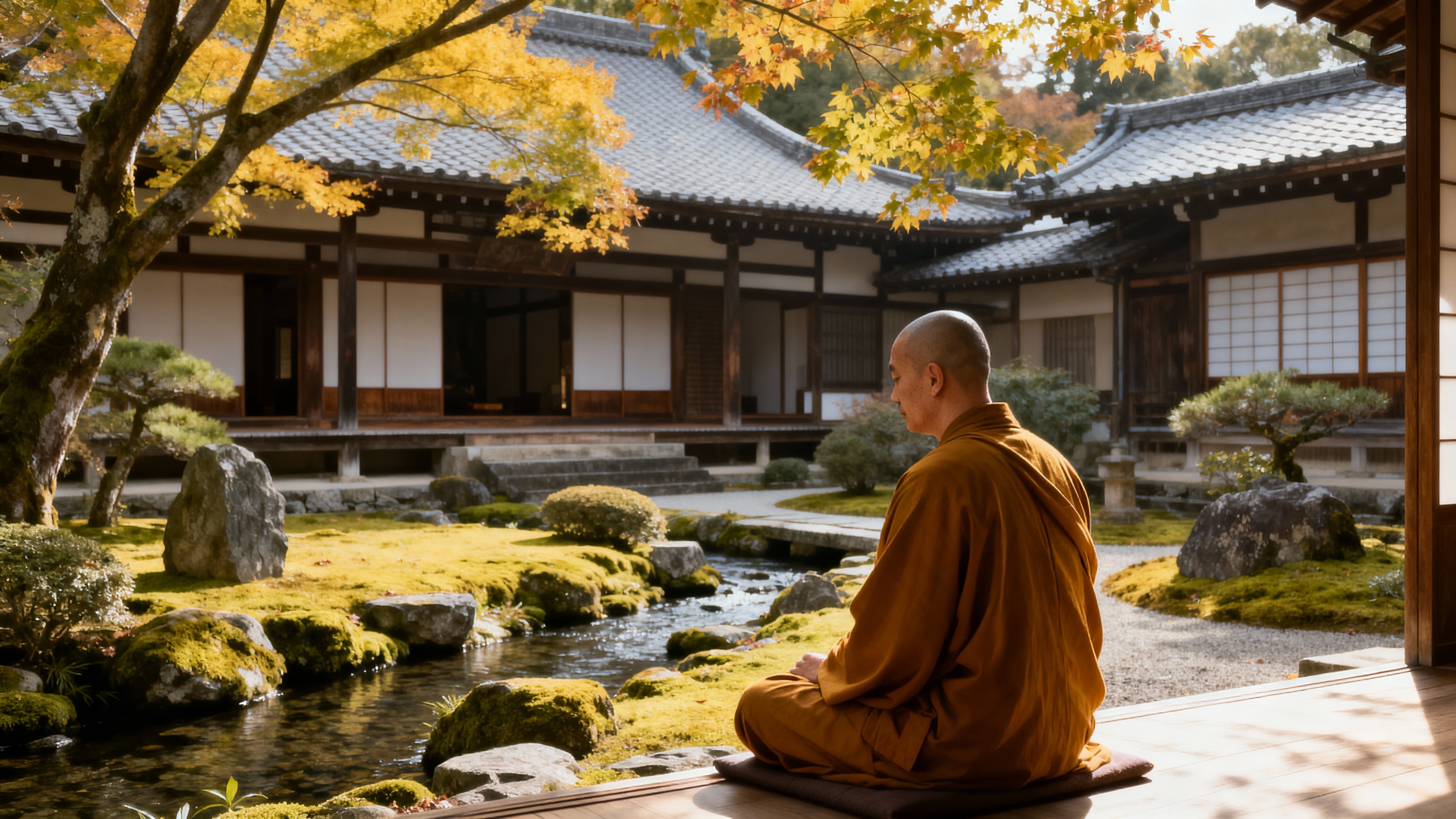
Within the vast grounds of Myoshin-ji Temple, where over 40 sub-temples create a city of Zen practice, the sound of meditation bells mingles with the rustle of ancient pines, creating an atmosphere where the living spirit of Rinzai Zen Buddhism continues to thrive after 700 years. This extraordinary temple complex represents not just historical preservation but active spiritual training ground where monks still undergo rigorous Zen discipline, visitors can experience authentic meditation practice, and the transformative power of direct spiritual realization remains as vital today as when the temple was founded in 1337.
Myoshin-ji embodies the essence of Rinzai Zen—the understanding that enlightenment cannot be achieved through intellectual study alone but requires direct experience, intensive practice, and the willingness to confront the deepest questions of existence with unwavering determination.
The Rinzai Revolution: Direct Pointing to Mind
Eisai’s Zen Introduction and Rinzai Characteristics
Rinzai Zen, introduced to Japan by Eisai in 1191, emphasized revolutionary approaches to spiritual awakening:
Direct Experience: Enlightenment comes through sudden insight (satori) rather than gradual cultivation, requiring intensive practice and direct confrontation with ultimate reality.
Koan Practice: Paradoxical questions and stories designed to exhaust rational thinking and provoke intuitive breakthrough to enlightened understanding.
Master-Student Relationship: Intensive personal guidance from accomplished teachers who can recognize and nurture authentic spiritual development.
Rigorous Discipline: Demanding meditation schedules, physical challenges, and mental training designed to break through ordinary consciousness limitations.
The Temple Complex: A City of Zen Practice
Architectural Embodiment of Zen Principles
Myoshin-ji’s design reflects sophisticated understanding of how physical environment supports spiritual practice:
Central Core: Main temple buildings house community meditation halls, teaching spaces, and ceremonial areas serving the entire complex.
Sub-temple Diversity: Over 40 individual temples (tatchū) provide specialized training environments, different teaching approaches, and varied aesthetic expressions.
Garden Integration: Each sub-temple features distinctive gardens designed to support contemplation and demonstrate Zen aesthetic principles.
Practical Functionality: All architectural elements serve both practical needs and spiritual development, avoiding unnecessary ornamentation while maintaining beauty.
Frequently Asked Questions
Q: Can beginners participate in meditation at Myoshin-ji? A: Yes, several sub-temples offer beginner-friendly meditation instruction and practice opportunities with proper guidance.
Q: What’s the difference between Rinzai and other forms of Zen? A: Rinzai emphasizes sudden enlightenment through koan practice and intensive meditation, while other schools may focus on gradual cultivation or different techniques.
Q: Is it appropriate for non-Buddhists to participate in Zen activities? A: Yes, Zen practice benefits people of all backgrounds, though participants should approach with respect and genuine interest in spiritual development.
Planning Your Zen Journey:
- Hours: Temple grounds open 6:00 AM – 5:00 PM; individual sub-temples vary
- Admission: Free for temple grounds; individual sub-temples may charge fees
- Access: JR Sagano Line to Hanazono Station, 3-minute walk
- Best Times: Early morning for meditation opportunities, any season for garden beauty
- Allow: Half-day minimum for meaningful exploration of multiple sub-temples
Continue Your Zen Exploration: Ready to deepen your practice? Discover “The Zen Philosophy Hidden in Ryoan-ji’s Stone Garden” or explore “The Revolutionary Tea Culture of Daitoku-ji Temple.”
Leave a Reply