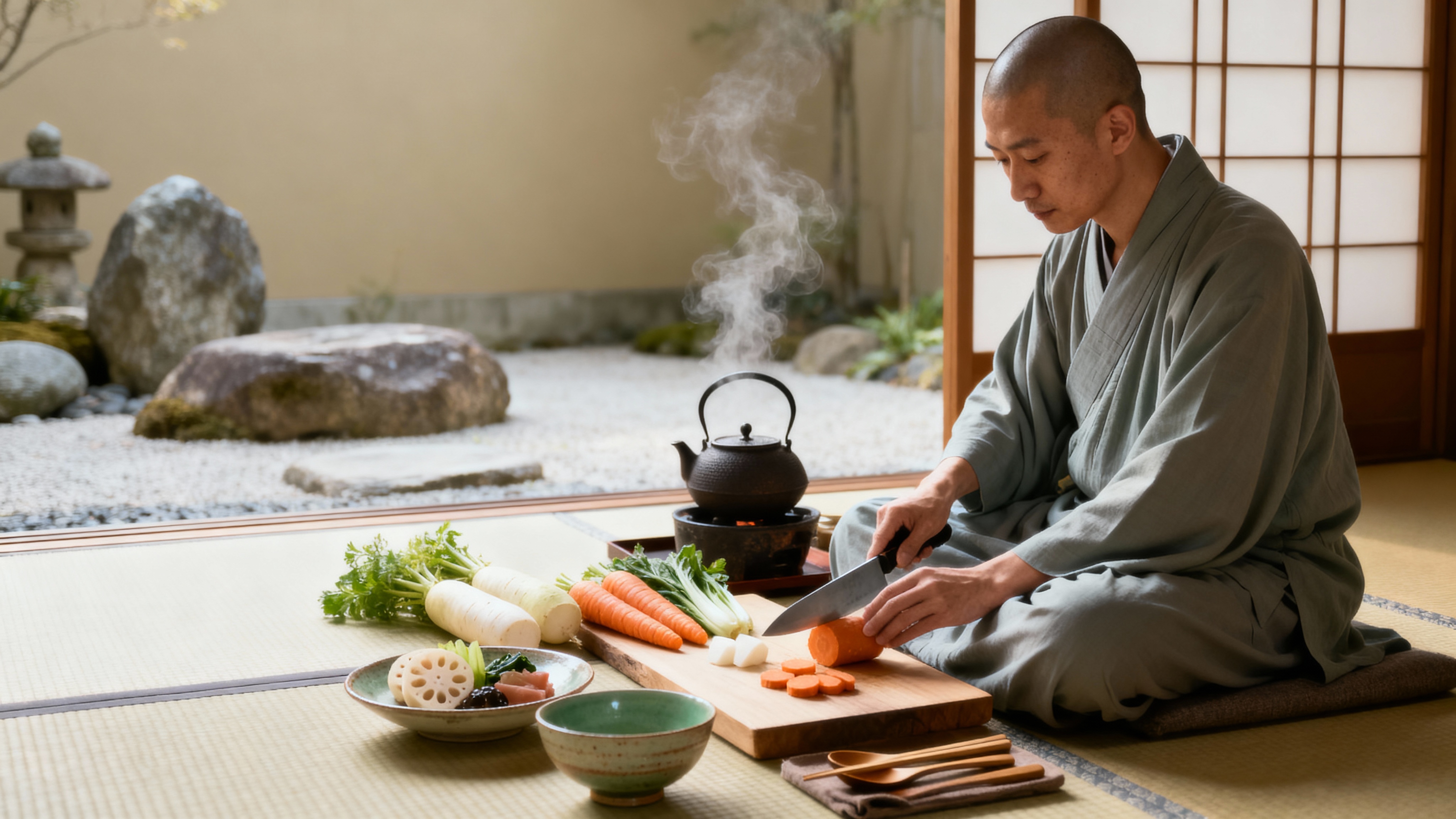
In the pre-dawn darkness of a Zen temple kitchen, as monks gather for morning meditation, the temple cook has already been working for hours—not merely preparing food, but engaging in profound spiritual practice. Every slice demonstrates compassion, every arrangement reflects impermanence, and every flavor balance teaches the interconnectedness of all life. This is shojin ryori (精進料理)—Buddhist cuisine that transforms eating from biological necessity into spiritual cultivation.
Far more than vegetarian cooking, shojin ryori represents a complete philosophy of nourishment that feeds body, mind, and spirit while honoring the Buddhist commitment to non-violence and mindful living.
The Sacred Foundation: Buddhist Principles in Every Dish
Ahimsa: The Principle of Non-Violence
Shojin ryori springs from ahimsa (非暴力)—the Buddhist commitment to non-violence toward all sentient beings. This principle extends far beyond avoiding meat:
Complete Plant-Based Approach: No animal products including dairy, eggs, or ingredients derived from animal suffering.
Respectful Plant Use: Utilizing every part of vegetables to minimize waste and honor the life energy provided.
Seasonal Harmony: Eating foods at their natural peak reduces environmental impact and aligns with natural rhythms.
Local Sourcing: Traditional emphasis on ingredients grown within temple grounds or immediate community.
The Five Precepts in Culinary Practice
Buddhist dietary practice follows the Five Precepts adapted for food preparation:
- Do Not Kill: Avoiding all animal products and minimizing harm to plant life through careful harvesting
- Do Not Steal: Using only what is needed, avoiding excess consumption or waste
- Avoid Sexual Misconduct: Excluding stimulating ingredients like garlic, onions, and strong spices that increase desire
- Do Not Lie: Honest, simple flavors without artificial enhancement or deceptive presentation
- Avoid Intoxicants: No alcohol or stimulating ingredients that cloud judgment or increase agitation
Transforming the Three Poisons Through Food
Shojin ryori specifically addresses Buddhism’s “Three Poisons”:
Greed (貪欲): Simple, modest portions that satisfy without excess, teaching contentment with sufficiency.
Anger (怒り): Avoiding stimulating ingredients that increase agitation, promoting calm mental states.
Ignorance (無明): Mindful preparation and consumption that increases awareness of interconnectedness and gratitude.
Culinary Philosophy: Food as Spiritual Practice
Gochiso: Recognizing Life’s Interconnectedness
The Japanese word “gochiso” (ご馳走) literally means “running around”—acknowledging the countless efforts required to bring food to the table:
- Farmers: Growing and harvesting with care and dedication
- Natural Forces: Sun, rain, and soil providing essential life energy
- Transportation: Networks delivering ingredients from source to kitchen
- Preparation: Cooks transforming raw materials into nourishing meals
- Community: Everyone who supports the food system’s functioning
Shojin ryori makes this interconnectedness visible, encouraging deep gratitude for the web of relationships sustaining all life.
Ichijū Sansai: The Foundation of Balance
Traditional shojin meals follow “one soup, three sides” structure (一汁三菜):
Soup (汁): Usually clear dashi broth with seasonal vegetables, representing liquid element and purification.
Three Sides (三菜):
- Main Dish: Substantial protein source from tofu, beans, or grains providing essential nutrients
- Side Dish 1: Seasonal vegetables prepared to highlight natural flavors and textures
- Side Dish 2: Pickled or fermented foods supporting digestive health and preservation traditions
This structure ensures nutritional completeness while maintaining aesthetic and spiritual harmony.
The Art of Transformation: Techniques and Sacred Ingredients
Essential Ingredients: The Buddhist Pantry
Shojin ryori creates extraordinary variety from carefully selected plant-based ingredients:
Protein Foundations:
- Tofu (豆腐): Prepared in dozens of ways from silky soft to firm and chewy
- Yuba (湯波): Delicate soy milk skin, often called “Buddhist abalone” for its texture
- Fu (麩): Wheat gluten prepared in numerous forms and textures
- Legumes: Particularly black beans, azuki, and various soybean preparations
Flavor Builders:
- Kombu (昆布): Kelp providing deep umami foundation without animal products
- Shiitake: Dried mushrooms adding earthy richness and complex flavors
- Miso (味噌): Fermented soybean paste in multiple varieties and ages
- Seasonal Vegetables: Prepared to enhance rather than mask natural essence
Sacred Cooking Techniques
Shojin preparation methods emphasize enhancing natural flavors:
Nimono (煮物): Gentle simmering that draws out ingredient essence without overwhelming natural character.
Agemono (揚げ物): Light tempura-style frying creating textural contrast while preserving nutritional value.
Sunomono (酢の物): Vinegar-based preparations that brighten flavors and aid preservation.
Shiraae (白和え): Tofu-based dressings that unify diverse ingredients into harmonious combinations.
Seasonal Awareness: Cooking with Natural Rhythms
Shojin ryori follows strict seasonal guidelines reflecting Buddhist respect for natural cycles:
Spring (春): Fresh mountain vegetables, bamboo shoots, and cherry blossom elements celebrating renewal and growth.
Summer (夏): Cooling preparations, fresh herbs, and light textures providing relief from heat while maintaining nutrition.
Autumn (秋): Root vegetables, preserved foods, and warming spices preparing for winter while celebrating harvest abundance.
Winter (冬): Hearty stews, stored vegetables, and nourishing preparations providing warmth and sustenance during cold months.
Aesthetic Philosophy: Beauty as Spiritual Practice
Wabi-Sabi in Food Presentation
Shojin ryori embodies wabi-sabi aesthetic principles:
Imperfection (不完全): Handmade pottery with subtle irregularities reflecting natural beauty and human touch.
Impermanence (無常): Seasonal ingredients highlighting life’s transient nature and encouraging present-moment appreciation.
Incompleteness (不完備): Simple presentations leaving space for contemplation and personal interpretation.
The Five Colors Philosophy (五色)
Traditional presentations incorporate five colors representing elemental balance:
- White (白): Tofu, daikon radish, rice representing purity and clarity
- Black (黒): Seaweed, black beans, sesame representing depth and grounding
- Red (赤): Tomatoes, carrots, red peppers representing vitality and warmth
- Green (緑): Leafy vegetables, herbs representing growth and renewal
- Yellow (黄): Corn, squash, yellow vegetables representing earth energy and nourishment
The Dining Experience: Eating as Meditation
Oryoki: The Buddha’s Bowl Tradition
Formal shojin dining uses oryoki (応量器)—nested bowls representing:
Moderation (中道): Eating only what is needed for health and energy, avoiding both excess and deficiency.
Gratitude (感謝): Acknowledging all beings who contributed to the meal’s creation and delivery.
Mindfulness (正念): Complete attention to the act of eating, savoring each bite with full awareness.
Cleanliness (清浄): Washing bowls with tea and consuming the washing water, wasting nothing.
Meal Rituals and Gratitude Practices
Temple meals begin and end with chanted expressions of gratitude:
Before Eating: Acknowledging the effort, sacrifice, and natural processes behind each ingredient.
During Eating: Maintaining silence and mindful attention to flavors, textures, and nourishment received.
After Eating: Expressing gratitude and commitment to use the energy wisely for beneficial purposes.
Health and Spiritual Benefits
Nutritional Completeness
Properly planned shojin ryori provides complete nutrition through:
Complementary Proteins: Combining grains, legumes, and vegetables for complete amino acid profiles.
Fermented Foods: Miso, pickles, and fermented vegetables supporting digestive health and nutrient absorption.
Mineral-Rich Ingredients: Sea vegetables and diverse plants providing essential minerals often lacking in modern diets.
Variety and Balance: Rotating ingredients seasonally ensuring comprehensive nutritional coverage.
Modern Scientific Validation
Contemporary research validates traditional shojin principles:
Longevity: Buddhist monks historically demonstrated exceptional longevity and disease resistance.
Mental Clarity: Plant-based diets support cognitive function and emotional stability.
Environmental Impact: Lower carbon footprint aligns with Buddhist environmental ethics.
Disease Prevention: Reduced risk of chronic diseases associated with plant-based eating patterns.
Experiencing Shojin Ryori in Kyoto
Temple Dining Opportunities
Authentic temple experiences available at:
Tenryu-ji Temple: Historic Zen temple offering refined shojin courses in traditional setting with garden views.
Daitoku-ji Complex: Multiple sub-temples providing intimate dining experiences with cultural education.
Nanzen-ji Area: Traditional restaurants specializing in tofu-based preparations following shojin principles.
What to Expect
Temple dining experiences typically include:
- Cultural Explanation: Understanding Buddhist dietary principles and preparation methods
- Seasonal Menu: Dishes reflecting current natural conditions and temple calendar
- Mindful Service: Staff trained in proper presentation and cultural context
- Contemplative Atmosphere: Settings designed to support mindful eating and reflection
Learning Shojin Principles at Home
Beginning Practice
Start integrating shojin principles gradually:
Meatless Days: Dedicating specific days to plant-based eating with gratitude practice.
Seasonal Awareness: Shopping for ingredients at peak season and learning about natural cycles.
Waste Reduction: Using vegetable scraps for stocks and compost, honoring all parts of ingredients.
Mindful Preparation: Approaching cooking as meditation, focusing completely on each task.
Essential Techniques for Home Practice
Master these fundamental skills:
Dashi Making: Creating flavorful broths from kombu and shiitake without animal products.
Tofu Mastery: Learning to press, drain, and prepare tofu in multiple textures and applications.
Seasonal Preservation: Pickling and fermenting vegetables for year-round variety and nutrition.
Mindful Eating: Practicing gratitude, attention, and moderation during meals.
Frequently Asked Questions
Q: Is shojin ryori suitable for all dietary restrictions? A: Traditional shojin ryori is vegan and gluten-free options are available, though soy is fundamental to most preparations.
Q: How does shojin ryori differ from regular vegetarian cuisine? A: Shojin ryori excludes stimulating ingredients like garlic and onions, emphasizes seasonal awareness, and incorporates spiritual practice into preparation and consumption.
Q: Can I learn shojin cooking techniques? A: Some temples and cultural centers offer cooking classes, though mastering the philosophy requires understanding Buddhist principles.
Q: Is shojin ryori expensive? A: Temple dining experiences range from ¥3,000-¥8,000, reflecting the quality of ingredients and cultural education provided.
Q: Do I need to be Buddhist to appreciate shojin ryori? A: No, though understanding Buddhist principles enhances appreciation of the cuisine’s deeper meaning and purpose.
Planning Your Shojin Experience:
- Advance Reservations: Required for most temple dining experiences
- Cultural Preparation: Learn about Buddhist dietary principles and eating etiquette
- Open Mindset: Approach as spiritual practice rather than mere dining
- Seasonal Timing: Each season offers unique ingredients and preparation styles
Continue Your Culinary Journey: Ready to explore more Buddhist culture? Discover “5 Kyoto Temples Offering Authentic Shojin Experiences” or learn about “The Zen Philosophy Behind Japanese Garden Design.”
Leave a Reply