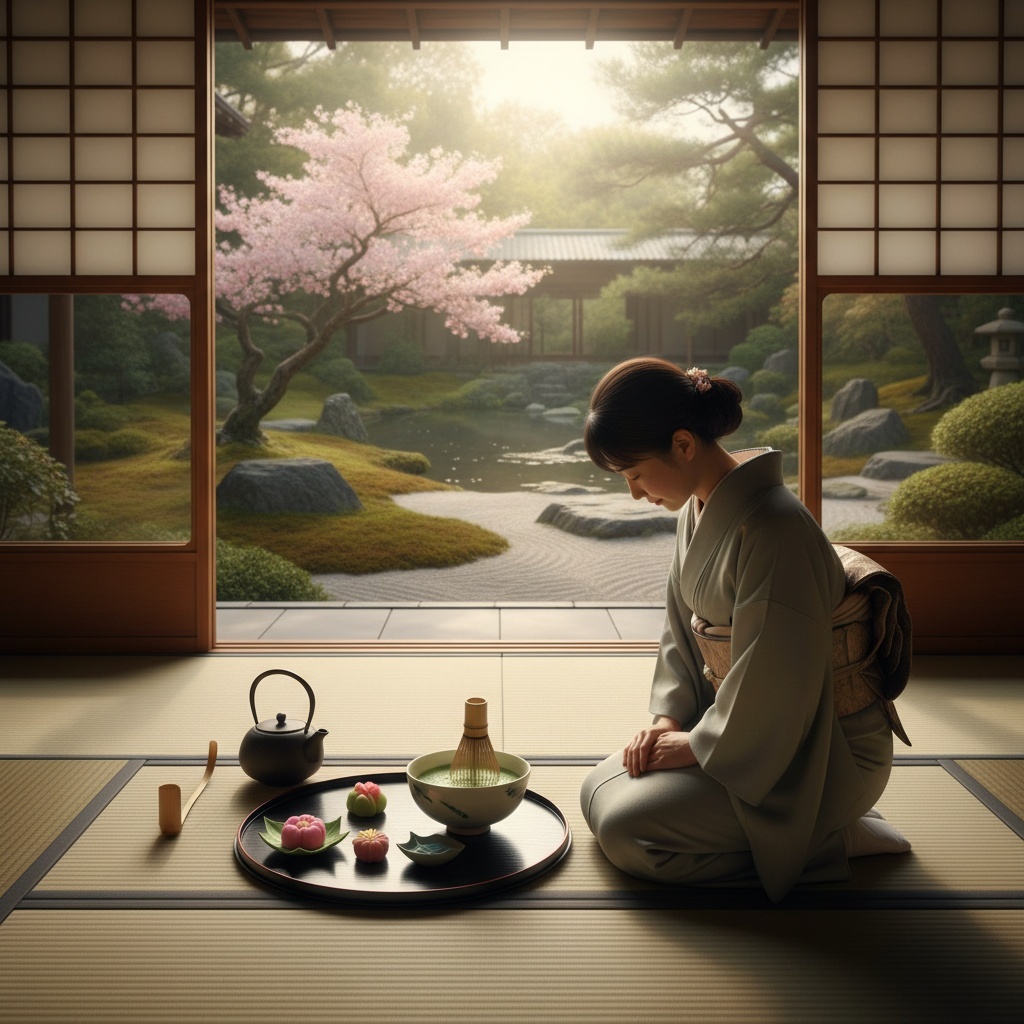
In a quiet tatami room overlooking a carefully tended garden, every movement flows with intentional grace—the precise whisking of emerald matcha, the gentle placement of a seasonal sweet, the respectful bow that acknowledges your presence as honored guest. This is omotenashi (おもてなし), Japan’s legendary approach to hospitality that transcends mere service to become an art form of anticipating needs, creating harmony, and offering selfless care.
The Japanese tea ceremony, or chanoyu (茶の湯), serves as the perfect gateway to understanding omotenashi—where every gesture embodies centuries of refined philosophy about human connection, respect, and the beauty found in life’s most intimate moments.
Understanding Omotenashi: Beyond Western Hospitality
The Philosophy of Selfless Service
Omotenashi differs fundamentally from conventional customer service through four core principles:
Anticipatory Care (先回りの心配り): The host anticipates guests’ needs before they’re expressed, creating seamless experiences that feel almost telepathic in their precision.
Wholehearted Sincerity (真心): Every action springs from genuine care rather than professional obligation, creating authentic warmth that guests immediately sense.
No Expectation of Return (見返りを求めない): True omotenashi expects nothing in return—not tips, not praise, not reciprocation—making the service pure and unconditional.
Harmony Creation (調和の創造): The ultimate goal is creating perfect harmony between host, guest, environment, and moment, where all elements align in beautiful synchronicity.
The Etymology of Deep Care
The word “omotenashi” reveals its profound meaning:
- “Omote” (表): Surface, what is visible
- “Nashi” (無し): Without, absence of
- Hidden “Ura” (裏): What lies beneath the surface
This linguistic structure reveals omotenashi’s essence: service where visible actions and invisible intentions align perfectly, with no hidden agenda or false presentation.
Tea Ceremony: Omotenashi in Sacred Action
The Four Pillars of Tea Philosophy
Sen no Rikyū (1522-1591) established four principles that define both tea ceremony and omotenashi:
Wa (和) – Harmony: Creating peaceful atmosphere where all elements—host, guests, utensils, season, and moment—work in perfect unity.
Kei (敬) – Respect: Deep reverence for guests, traditions, utensils, and the sacred nature of the shared experience.
Sei (清) – Purity: Physical cleanliness of space and utensils reflecting spiritual purity of heart and intention.
Jaku (寂) – Tranquility: The profound peace that emerges when harmony, respect, and purity combine, creating space for authentic connection.
Ichigo Ichie: The Once-in-a-Lifetime Encounter
Every tea ceremony embodies “ichigo ichie” (一期一会)—the understanding that this exact gathering of people, in this moment, with these conditions, will never occur again. This philosophy transforms simple tea service into profound spiritual practice, where host and guests commit to being fully present for this unrepeatable experience.
The Ceremony Experience: Omotenashi Step by Step
Pre-Ceremony Preparation: Invisible Excellence
Hours before guests arrive, the host begins demonstrating omotenashi:
Seasonal Awareness: Selecting scroll, flowers, and utensils that perfectly capture the current season’s essence and the day’s unique character.
Guest Consideration: Choosing tea strength, sweets, and even conversation topics based on specific guests’ preferences and current life circumstances.
Environmental Harmony: Adjusting room temperature, lighting, and acoustics to create optimal comfort without guests ever noticing the careful calibration.
Spiritual Preparation: Entering meditative state, releasing personal concerns to focus entirely on serving with pure heart.
The Ceremony Unfolds: Visible Grace
Each movement demonstrates omotenashi principles in action:
Purification Ritual: The ceremonial cleaning of utensils before guests isn’t mere tradition—it demonstrates respect for tools, process, and guests while creating anticipation.
Precise Preparation: Every motion—from measuring tea powder to whisking technique—reflects years of practice devoted to achieving perfection in service.
Attentive Serving: Presenting tea with both hands, ensuring optimal temperature and foam consistency, reading guests’ subtle reactions to adjust accordingly.
Conversational Flow: Guiding discussion to topics that bring guests joy and comfort while avoiding subjects that might create disharmony.
Modern Applications: Bringing Omotenashi to Daily Life
Personal Relationships
Tea ceremony omotenashi principles enhance all human interactions:
Active Listening: Giving complete attention to others’ spoken and unspoken needs, responding with genuine care rather than waiting for your turn to speak.
Anticipatory Kindness: Noticing what would bring others comfort or joy, then providing it without being asked or expecting recognition.
Environmental Awareness: Creating spaces and experiences that support others’ wellbeing and happiness.
Present-Moment Commitment: Treating each interaction as unique and valuable, deserving your full presence and attention.
Professional Excellence
Business applications of omotenashi philosophy:
Client Relations: Building long-term relationships through genuine care rather than transactional interactions.
Team Leadership: Supporting colleagues’ success and growth as primary goal rather than personal advancement.
Service Design: Creating systems that anticipate and fulfill needs seamlessly, removing friction from user experiences.
Quality Commitment: Pursuing excellence not for recognition but because others deserve the best you can offer.
Experiencing Tea Ceremony in Kyoto
Choosing Your Experience
Kyoto offers diverse tea ceremony opportunities:
Traditional Tea Schools:
- Urasenke Foundation: International center offering structured courses with English instruction
- Omotesenke Foundation: Formal approach emphasizing historical accuracy and precise technique
Temple Tea Ceremonies:
- Kodai-ji Temple: Zen temple combining tea ceremony with garden meditation
- Kennin-ji Temple: Historic setting with monk guidance and Buddhist philosophy integration
Cultural Centers:
- Kyoto Cultural Museum: Regular demonstrations with detailed cultural explanations
- Traditional Ryokan: Private experiences for guests in authentic historical settings
What to Expect and How to Participate
Preparation Guidelines:
- Dress Code: Modest, comfortable clothing suitable for sitting on tatami; avoid strong fragrances
- Mental Preparation: Approach with open mind and willingness to receive care
- Cultural Sensitivity: Understand you’re participating in sacred tradition deserving respect
During the Experience:
- Follow Host’s Guidance: Allow yourself to be led through unfamiliar rituals
- Express Gratitude: Acknowledge the host’s efforts through appropriate responses
- Mindful Participation: Pay attention to details—temperature, taste, visual beauty, atmosphere
- Patient Observation: Resist urge to photograph everything; be present for the experience
Seasonal Tea Experiences
Spring (March-May): Renewal and Hope
- Cherry blossom themed utensils and decorations
- Fresh spring wagashi celebrating new life and growth
- Lighter tea preparations reflecting season’s gentle energy
- Garden integration with blooming flowers visible from tea room
Summer (June-August): Cooling and Refreshment
- Morning ceremonies avoiding afternoon heat
- Cool-toned decorations creating psychological cooling effect
- Refreshing sweet combinations balancing warm tea
- Minimal arrangements reflecting summer’s natural abundance
Autumn (September-November): Harvest and Reflection
- Maple leaf motifs and warm autumn colors
- Hearty seasonal sweets celebrating harvest gratitude
- Contemplative atmosphere encouraging deeper reflection
- Extended ceremonies taking advantage of comfortable temperatures
Winter (December-February): Warmth and Intimacy
- Longer ceremonies creating cozy, warming atmosphere
- Rich, substantial sweets providing comfort during cold weather
- Intimate settings emphasizing human connection and community
- Deeper philosophical discussions suited to season’s contemplative mood
Learning from Tea Masters: Wisdom for Modern Life
The Art of Imperfection
Tea ceremony teaches that perfect omotenashi isn’t about flawless execution—it’s about sincere intention and continuous refinement. Mistakes become opportunities to demonstrate grace, humility, and the beauty of human authenticity.
Seasonal Awareness in Daily Life
The tea ceremony’s seasonal sensitivity offers lessons for modern living:
- Attention to Natural Rhythms: Aligning activities and attitudes with natural cycles
- Appreciation of Transience: Finding beauty in temporary moments and changing conditions
- Environmental Harmony: Creating spaces that reflect and celebrate current conditions
- Mindful Transitions: Acknowledging and honoring life’s constant changes
Frequently Asked Questions
Q: Do I need to know Japanese to participate in a tea ceremony? A: Many Kyoto tea ceremony experiences offer English instruction and explanation. The ceremony’s emphasis on non-verbal communication makes language less critical than respectful attention.
Q: How long does a typical tea ceremony experience last? A: Introductory experiences range from 45 minutes to 2 hours. Full formal ceremonies can last 3-4 hours including kaiseki meal.
Q: What should I expect to pay for a tea ceremony experience? A: Prices range from ¥2,000-¥10,000 depending on formality, duration, and included elements like instruction or meals.
Q: Can children participate in tea ceremony? A: Many hosts welcome well-behaved children, though the quiet, contemplative nature may be challenging for very young participants.
Q: Is photography allowed during the ceremony? A: Policies vary by location. Many allow photos before and after but not during the actual ceremony. Always ask permission first.
Planning Your Omotenashi Experience:
- Advance Booking: Reserve 2-7 days ahead, especially during cherry blossom and autumn seasons
- Cultural Preparation: Learn basic bowing etiquette and sitting positions
- Open Mindset: Approach as cultural learning rather than entertainment
- Seasonal Timing: Each season offers unique beauty and appropriate themes
Continue Your Cultural Journey: Ready to explore more Japanese hospitality? Discover “The Sacred Art of Kyoto’s Matcha Culture” or learn about “Mindful Eating Through Shojin Ryori.”
Leave a Reply