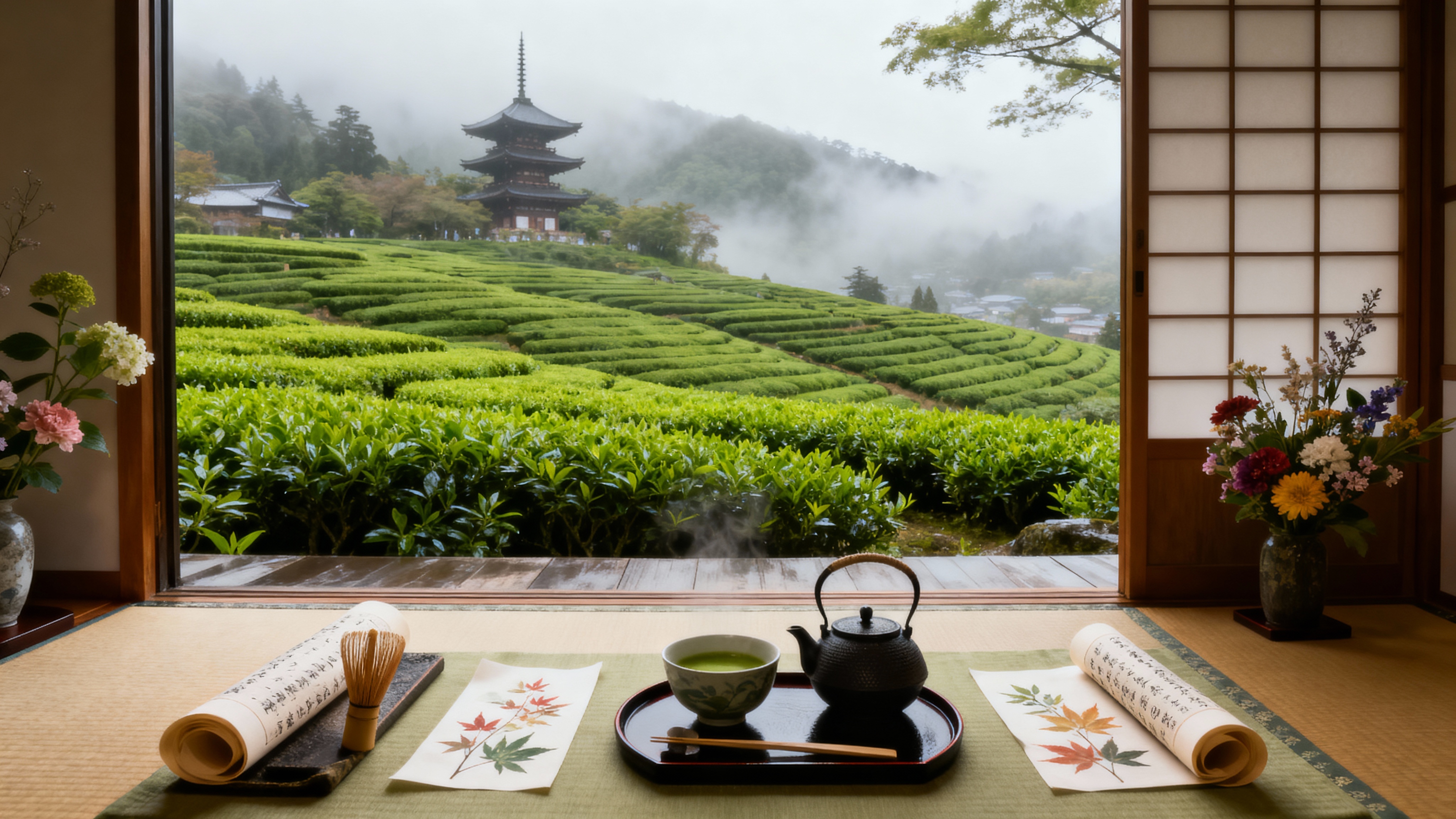
In the misty hills of Uji, just south of Kyoto, rows of carefully tended tea bushes stretch toward ancient temples, their leaves destined to become the vibrant green powder that has captivated the world. But matcha (抹茶) represents far more than a trendy beverage—it embodies centuries of spiritual practice, artistic refinement, and cultural philosophy that transforms a simple cup of tea into a profound encounter with Japanese aesthetics and Zen wisdom.
Understanding Kyoto’s matcha culture means journeying from the sacred soil where tea grows to the intimate chashitsu where it becomes meditation, discovering how this emerald powder connects earth, artisan, and spirit in an unbroken chain of reverence.
The Sacred Geography of Kyoto Tea Culture
Uji: The Birthplace of Japanese Tea Excellence
The Uji region, blessed with ideal conditions for tea cultivation, has produced Japan’s finest matcha for over 800 years:
Perfect Terroir: Morning mists from the Uji River create humidity ideal for tender leaf development, while surrounding mountains protect plants from harsh weather.
Ancient Lineage: Tea cultivation began here in 1191 when Zen monk Eisai brought seeds from China, establishing Japan’s first tea gardens.
Imperial Recognition: Since the Kamakura period, Uji tea has been prized by emperors, shoguns, and tea masters as the pinnacle of quality and refinement.
Living Tradition: Many current tea gardens trace their lineage back 400-600 years, with knowledge passed through generations of dedicated cultivators.
The Tencha Cultivation Process: Creating Premium Matcha
Authentic matcha begins with tencha leaves grown under strict traditional methods:
Shading (覆い下栽培): Plants are covered with bamboo screens and straw mats for 3-4 weeks before harvest, reducing photosynthesis and concentrating amino acids that create matcha’s distinctive umami sweetness.
Hand Harvesting: Only the youngest, most tender leaves are selected during the brief spring harvest season (late April to early May).
Steam Processing: Immediate steaming halts oxidation, preserving the leaves’ vibrant green color and delicate flavor compounds.
Stone Grinding: Dried tencha leaves are slowly ground in traditional granite mills, producing the finest powder with optimal texture and flavor release.
The Chashitsu: Sacred Architecture for Tea
Design Philosophy: Creating Perfect Harmony
Traditional tea rooms (chashitsu) embody principles that transform ordinary space into spiritual sanctuary:
Intimate Scale: Typically 4.5 tatami mats (about 9 square meters), creating intimate atmosphere where host and guests share equal space and status.
Rustic Materials: Natural woods, clay walls, and tatami floors reflect wabi-sabi aesthetics celebrating imperfection and impermanence.
Controlled Lighting: Small windows and paper screens create soft, diffused light that enhances contemplative mood and highlights tea’s natural beauty.
Seasonal Integration: Tokonoma alcoves display seasonal scrolls and flowers, connecting indoor ceremony with natural rhythms.
Essential Elements of Tea Room Design
Every chashitsu element serves both practical and spiritual functions:
Nijiriguchi (躙口): The small entrance requires guests to crawl, symbolically leaving worldly status and ego outside while entering with humility.
Tokonoma (床の間): Sacred alcove displaying seasonal art and flowers, providing spiritual focus and aesthetic inspiration.
Ro (炉): Sunken hearth for heating water, positioned to create optimal interaction between host and guests while providing practical function.
Mizuya (水屋): Preparation area hidden from guests, where host can focus on technical aspects while maintaining ceremony’s seamless flow.
The Art of Matcha Preparation: Meditation in Motion
Sacred Utensils: Tools of Transformation
Each tea ceremony implement carries centuries of refinement and spiritual significance:
Chawan (茶碗): Tea bowls, often irregular and humble, embody wabi-sabi beauty while providing perfect vessel for appreciating matcha’s color, aroma, and taste.
Chasen (茶筅): Bamboo whisks with 64-120 prongs, handcrafted to create optimal foam texture and thorough powder integration.
Chashaku (茶杓): Bamboo tea scoops, each individually carved, for measuring precise amounts of precious matcha powder.
Natsume (棗): Lacquered containers protecting matcha from light and moisture while adding aesthetic beauty to preparation ritual.
The Whisking Technique: Creating Liquid Meditation
Proper matcha preparation requires mastery of specific techniques developed over centuries:
Water Temperature: Precisely 70-80°C (158-176°F)—hot enough to release flavors without destroying delicate compounds or creating bitterness.
Powder Measurement: Approximately 2 grams (1.5 chashaku scoops) for usucha (thin tea) or 4 grams for koicha (thick tea).
Whisking Motion: M-shaped pattern creating frothy surface while preventing powder clumping and ensuring smooth integration.
Timing and Rhythm: Swift, confident movements that demonstrate respect for ingredients while creating meditative focus through repetitive action.
Seasonal Matcha Culture: Tea Through the Year
Spring (March-May): Renewal and First Harvest
Spring brings matcha culture’s most sacred season:
Shincha Season: First harvest produces the year’s most prized tea, celebrated with special ceremonies and premium prices reflecting superior quality.
Cherry Blossom Integration: Tea ceremonies incorporate sakura motifs in utensils and sweets, connecting tea culture with Japan’s most beloved seasonal celebration.
Temple Festivals: Many Kyoto temples hold special tea gatherings celebrating spring renewal and the year’s first premium matcha.
Summer (June-August): Cooling Traditions
Summer matcha practices adapt to seasonal needs:
Morning Ceremonies: Earlier timing avoids afternoon heat while capturing cool morning energy and optimal mental clarity.
Cooling Presentations: Chilled matcha preparations and summer wagashi provide refreshing respite while maintaining ceremonial dignity.
Simplified Settings: Reduced formality and lighter preparations acknowledge season’s casual energy while preserving essential spiritual elements.
Autumn (September-November): Contemplative Depth
Autumn deepens matcha’s contemplative aspects:
Harvest Gratitude: Ceremonies acknowledge the year’s agricultural gifts and express gratitude for nature’s abundance.
Deeper Flavors: Koicha (thick tea) becomes more prominent, its concentrated richness matching autumn’s introspective mood.
Extended Gatherings: Cooler weather allows longer ceremonies with deeper philosophical discussion and enhanced community bonding.
Winter (December-February): Intimate Warmth
Winter transforms matcha into source of physical and spiritual warmth:
Hearth Ceremonies: The ro (sunken hearth) creates focal point for intimate gatherings emphasizing human connection and shared warmth.
New Year Traditions: Special matcha preparations mark calendar transitions and express hopes for the coming year’s prosperity and health.
Contemplative Practice: Long winter evenings provide optimal conditions for deep tea meditation and philosophical reflection.
Kyoto’s Premier Matcha Experiences
Historic Tea Houses and Cultural Centers
Authentic matcha experiences available throughout Kyoto:
Urasenke Foundation Headquarters: The international center of tea culture offering formal instruction, demonstrations, and cultural education in multiple languages.
Omotesenke Fushin-an: Traditional tea school providing structured learning opportunities and authentic ceremony experiences.
Kodai-ji Temple: Zen temple combining matcha ceremony with garden meditation and Buddhist philosophical instruction.
Gion District Tea Houses: Historic ochaya offering refined matcha service in traditional geisha district atmosphere.
Premium Matcha Shopping and Tasting
Kyoto’s finest matcha sources:
Ippodo Tea: 300-year-old shop offering premium Uji matcha with expert guidance and tasting opportunities.
Tsuen Tea: The world’s oldest tea shop (1160 AD) in nearby Uji, providing direct access to historic tea cultivation traditions.
Kyoto Station Matcha Street: Convenient access to multiple premium brands with comparison tasting and cultural education.
Temple Gift Shops: Many temples sell matcha produced from their own tea gardens, offering unique terroir expressions.
Frequently Asked Questions
Q: What’s the difference between matcha and regular green tea? A: Matcha involves consuming the entire leaf ground into powder, while regular tea steeps leaves in water. Matcha provides more concentrated nutrients and requires specific preparation techniques.
Q: How can I tell high-quality matcha from lower grades? A: Ceremonial-grade matcha has vibrant jade-green color, fine texture, sweet aroma, and smooth taste without bitterness. Lower grades appear yellowish and taste bitter.
Q: Do I need expensive equipment to enjoy matcha properly? A: While quality tools enhance the experience, basic chawan and chasen allow proper preparation. Start with mid-range equipment and upgrade as appreciation develops.
Q: Can I learn tea ceremony without speaking Japanese? A: Many Kyoto tea schools and cultural centers offer instruction in English. The ceremony’s emphasis on non-verbal communication makes language less critical than respectful attention.
Planning Your Matcha Journey:
- Season Consideration: Spring offers first harvest experiences, while winter provides intimate ceremony atmosphere
- Experience Level: Begin with café experiences before attempting formal ceremonies
- Cultural Preparation: Learn basic etiquette and ceremony principles for enhanced appreciation
- Quality Investment: Purchase authentic equipment and premium matcha for home practice
Continue Your Tea Culture Exploration: Ready to deepen your understanding? Discover “The Heart of Omotenashi Through Tea Ceremony” or explore “Seasonal Wagashi: Sweets That Capture Japan’s Four Seasons.”
Leave a Reply