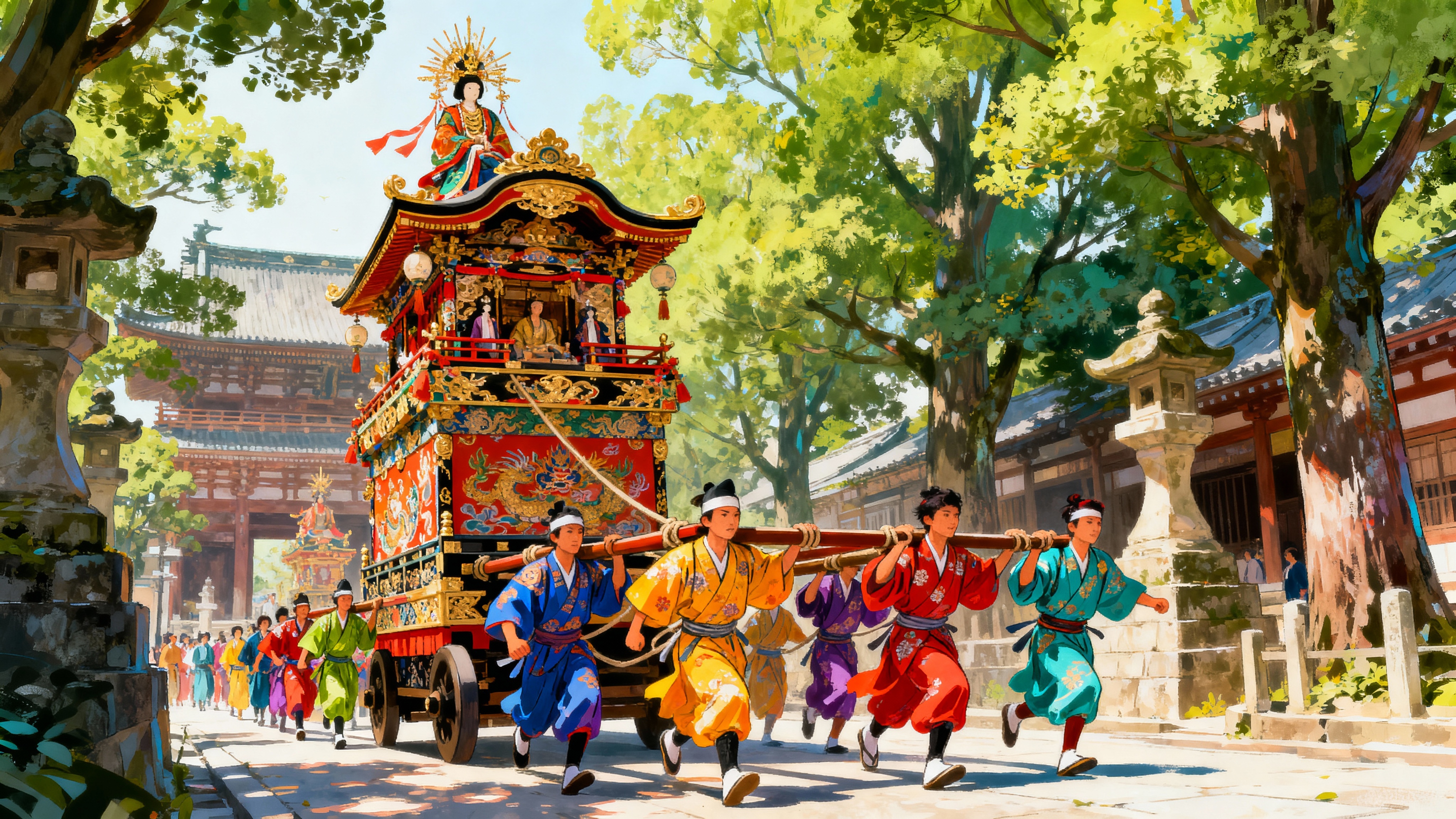
Every July, Kyoto transforms into a spectacular theater of tradition as Gion Festival unfolds with towering yamaboko floats, elaborate tapestries, and hundreds of thousands of participants. But this magnificent celebration began in desperate circumstances—as a community’s terrified response to a deadly plague that was decimating the ancient capital over 1,150 years ago.
The festival’s transformation from fearful supplication to joyous celebration reveals how Japanese culture transforms crisis into beauty, creating enduring traditions that serve both spiritual and social needs across generations.
869 AD: When Death Stalked the Capital
The story begins in 869 AD when a devastating epidemic—likely smallpox or typhoid—swept through Heian-kyō (ancient Kyoto). Court records describe bodies piling up in the streets, entire families wiped out, and even the imperial palace threatened by disease.
Emperor Seiwa’s court, following advice from onmyōji (court diviners), determined that the plague represented divine punishment for societal sins. The solution required a grand gesture of communal purification and divine appeasement through what became known as Gion Goryo-e (祇園御霊会)—a “pacification ritual for angry spirits.”
Yasaka Shrine: The Spiritual Heart of Protection
Yasaka Shrine (originally called Gion Shrine) served as the ritual’s spiritual center. Established in 656 AD, the shrine venerates Susanoo no Mikoto—the Shinto deity of storms, purification, and protection against evil spirits. His association with purifying storms made him the ideal deity to invoke against epidemic disease.
The first Gion Festival involved:
- Creating 66 hoko (decorated spears) representing Japan’s provinces
- Parading portable shrines (mikoshi) through city streets
- Community prayers for divine intervention
- Offerings to transform malevolent spiritual energy into protective power
The ritual worked—or appeared to work. Historical records show the plague subsided after the first festival, establishing the event’s reputation for spiritual efficacy.
Evolution from Ritual to Cultural Masterpiece
Heian Period (794-1185): Imperial Patronage
Emperor Daigo formalized the festival in 970 AD, establishing it as an annual summer observance. The timing wasn’t coincidental—July and August historically saw the highest rates of epidemic disease, making this when divine protection was most urgently needed.
Medieval Period: Merchant Innovation
As Kyoto’s merchant class gained power, they transformed simple decorated spears into elaborate wheeled floats. Wealthy families and craft guilds competed to create the most magnificent displays, incorporating:
- Imported textiles from China, India, and Europe
- Intricate wood carvings by master craftsmen
- Sophisticated mechanical elements (karakuri ningyo)
- Religious and historical narratives in visual form
The Modern Festival: Living Cultural Heritage
Today’s Gion Festival spans the entire month of July, culminating in two major processions:
Saki Matsuri (July 17): 23 massive floats parade through central Kyoto Ato Matsuri (July 24): 10 additional floats complete the spiritual cycle
The Yamaboko Floats: Mobile Art Galleries
Two types of floats serve different spiritual functions:
Hoko (鉾): Towering floats up to 25 meters tall, weighing 10-12 tons, representing the original spear-weapons used to capture evil spirits
Yama (山): Smaller floats depicting specific legends or mountains, each telling cultural stories through elaborate decorations
Construction without nails: Like traditional temple architecture, floats use intricate rope binding, allowing flexibility during procession while demonstrating master craftsmanship.
The Spiritual Technology of Community Protection
Gion Festival operates as sophisticated social technology:
Community Cohesion: Months of collaborative preparation create social bonds that enhance collective resilience during actual crises.
Cultural Transmission: Each generation learns traditional crafts, music, and spiritual practices through festival participation.
Economic Vitality: The festival historically supported Kyoto’s merchant economy and continues to drive cultural tourism.
Spiritual Renewal: Annual repetition reinforces community identity and connection to protective spiritual forces.
Experiencing the Living Tradition
Yoiyama Evenings (July 14-16)
Streets close to traffic as illuminated floats create magical atmosphere. Local houses display family treasures in the “Byōbu Matsuri” (folding screen festival).
Yamaboko Junko Processions
The morning processions showcase traditional techniques:
- Tsujimawashi: Dramatic 90-degree turns using bamboo levers and water
- Gion Bayashi: Haunting festival music on flutes, drums, and gongs
- Chigo: Sacred children representing divine purity
Mikoshi Togyo
Portable shrines carry Yasaka Shrine’s deities through city streets, blessing the community and maintaining spiritual protection.
Cultural Impact and Global Recognition
UNESCO recognized Gion Festival as Intangible Cultural Heritage in 2009, acknowledging its role as:
- Living tradition maintaining 1,150 years of continuity
- Masterpiece of traditional craftsmanship
- Model of community-based cultural preservation
- Integration of spiritual practice with artistic expression
Frequently Asked Questions
Q: How many people participate in Gion Festival? A: Over 100,000 people participate directly in various roles, with millions attending as spectators throughout July.
Q: Are the floats really pulled by hand? A: Yes, the massive hoko floats are pulled entirely by human power using traditional rope techniques, with no modern mechanical assistance.
Q: Can visitors participate in the festival? A: While core roles are reserved for community members, visitors can attend public events, purchase festival items, and experience the cultural atmosphere.
Q: How much do the floats cost to maintain? A: Each major float costs hundreds of thousands of dollars annually to maintain, funded through community contributions and donations.
Planning Your Visit:
- Festival Dates: July 1-31 annually (main events July 14-17, 21-24)
- Best Viewing: Arrive early for procession routes; Yoiyama evenings for cultural atmosphere
- Yasaka Shrine: Open 24 hours, free admission
- Access: Multiple train/bus routes serve Gion district
Continue Your Cultural Journey: Explore “The Sacred Foxes of Fushimi Inari” for more Shinto traditions, or discover “Kyoto’s Seasonal Festivals” for year-round celebrations.
Leave a Reply