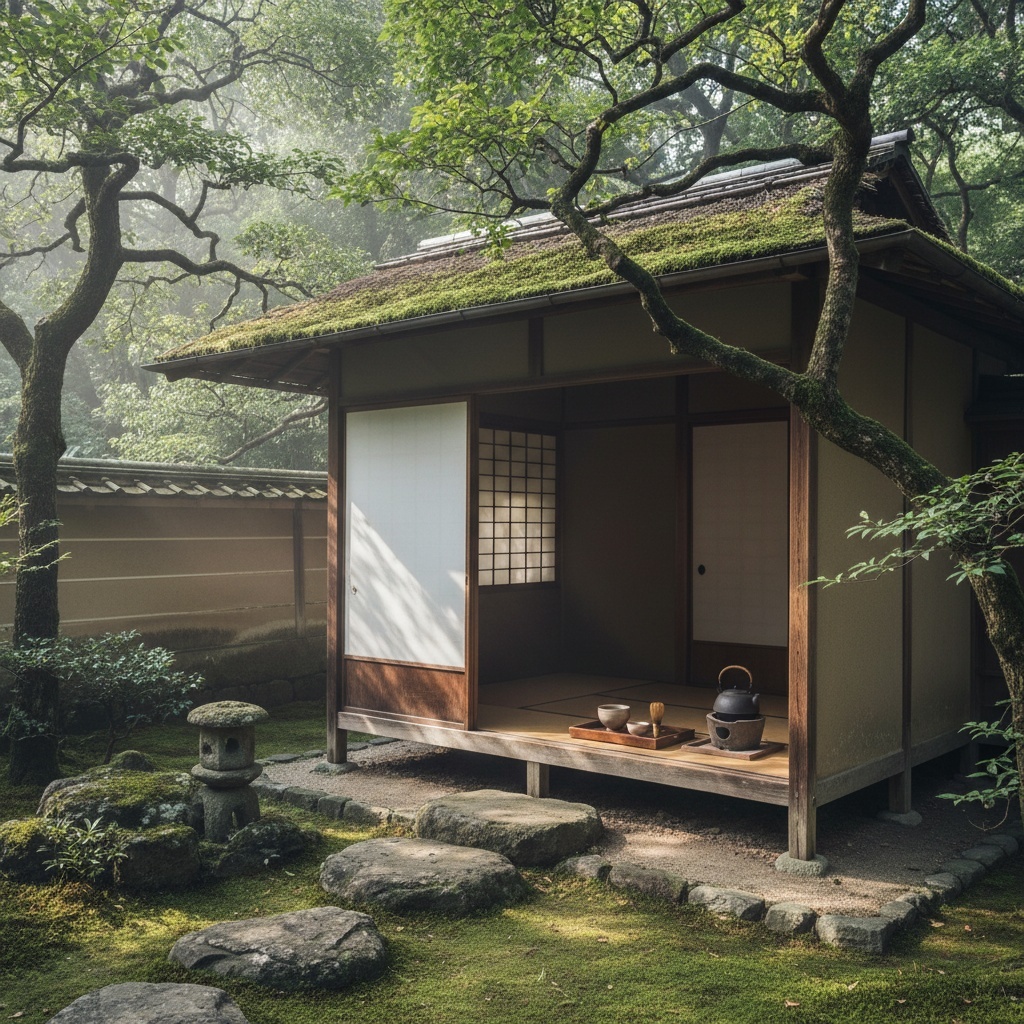
In the austere halls of Daitoku-ji Temple, where Zen monks practiced meditation in deliberate poverty, a merchant’s son named Sen no Rikyu would forge a cultural revolution that transformed Japanese aesthetics forever. Here, among the temple’s sub-temples and meditation gardens, Rikyu developed the profound philosophy of wabi-sabi tea ceremony—an approach to beauty that found perfection in imperfection, elegance in simplicity, and spiritual depth in the humblest of materials.
The relationship between Daitoku-ji and Rikyu represents one of history’s most significant cultural partnerships, where Buddhist spiritual practice merged with artistic innovation to create the Japanese tea ceremony as we know it today—a practice that continues to influence everything from architecture to hospitality, from garden design to the very way Japanese people understand beauty itself.
The Sacred Ground: Daitoku-ji as Zen Cultural Center
A Temple Complex of Extraordinary Influence
Daitoku-ji, founded in 1319, became the epicenter of Zen cultural development in medieval Japan:
Imperial Patronage: Despite periods of imperial disfavor, the temple consistently attracted support from emperors, shoguns, and cultural elites seeking authentic Zen experience.
Scholarly Excellence: The temple developed into Japan’s premier center for Zen learning, attracting brilliant monks who combined religious practice with cultural innovation.
Artistic Innovation: Unlike temples focused purely on religious practice, Daitoku-ji encouraged integration of spiritual discipline with artistic expression, creating unique cultural synthesis.
Sub-temple Diversity: The complex’s numerous sub-temples (tatchu) provided intimate spaces where tea masters could develop their practice away from worldly distractions.
Sen no Rikyu: The Revolutionary Tea Master
From Merchant Background to Cultural Genius
Rikyu’s background as merchant’s son positioned him uniquely to revolutionize aristocratic tea culture:
Social Outsider Status: Not bound by court traditions, Rikyu could innovate freely while drawing from merchant class practical wisdom and aesthetic sensibilities.
Economic Understanding: His commercial background provided insight into materials, craftsmanship, and value that enriched his aesthetic philosophy.
Cultural Synthesis: Rikyu combined Zen spiritual practice with merchant pragmatism, creating tea ceremony approach accessible to multiple social classes.
Artistic Vision: His genius lay in recognizing beauty in humble materials and finding profound meaning in simple actions.
The Four Principles: Wa, Kei, Sei, Jaku
At Daitoku-ji, Rikyu articulated the four foundational principles that continue to define authentic tea ceremony:
Wa (和) – Harmony: Creating perfect balance between host, guests, environment, and season through careful attention to all elements.
Kei (敬) – Respect: Deep reverence for participants, utensils, traditions, and the sacred nature of shared time and space.
Sei (清) – Purity: Both physical cleanliness and spiritual purification, preparing heart and environment for meaningful encounter.
Jaku (寂) – Tranquility: The profound peace that emerges when harmony, respect, and purity combine, creating space for authentic connection.
The Wabi-Sabi Revolution: Beauty in Imperfection
Challenging Aristocratic Aesthetics
Rikyu’s wabi-sabi philosophy represented radical departure from prevailing aesthetic standards:
Rejecting Ostentation: Instead of Chinese-influenced luxury and perfection, Rikyu celebrated Japanese rustic beauty and natural imperfection.
Embracing Impermanence: Rather than seeking permanent beauty, wabi-sabi found meaning in transience, aging, and seasonal change.
Honoring Humble Materials: Rough pottery, weathered wood, and simple flowers became vehicles for expressing profound aesthetic and spiritual truths.
Democratic Beauty: Wabi-sabi made authentic aesthetic experience accessible to those without wealth, finding richness in simplicity rather than expense.
Daitoku-ji’s Living Legacy
Sub-temples Where Tea Culture Flourished
Koto-in: Features a beautiful moss garden and simple tea room embodying Rikyu’s aesthetic. The tranquil atmosphere invites quiet contemplation and demonstrates wabi-sabi principles in architectural form.
Daisen-in: While not directly a Rikyu tea room, its exquisite dry landscape garden provides perfect backdrop for understanding principles that inspired wabi-cha philosophy.
Zuiho-in: Built by a Christian daimyo, features unique dry garden blending traditional Zen with subtle influences, reflecting the cultural openness of Rikyu’s era.
Frequently Asked Questions
Q: Can visitors participate in authentic tea ceremonies at Daitoku-ji? A: Yes, several sub-temples offer tea ceremony experiences, though advance reservations are typically required and some knowledge of basic etiquette is helpful.
Q: What makes Daitoku-ji’s tea culture different from other temples? A: Daitoku-ji maintains direct connection to Sen no Rikyu’s revolutionary wabi-sabi philosophy, emphasizing simplicity and spiritual depth over elaborate performance.
Q: Is it necessary to understand Zen Buddhism to appreciate tea ceremony? A: While helpful, Zen knowledge isn’t required. Tea ceremony’s emphasis on mindfulness, respect, and present-moment awareness can be appreciated by anyone with sincere interest.
Planning Your Tea Culture Journey:
- Hours: Temple grounds 9:00 AM – 4:30 PM; tea ceremony times vary by sub-temple
- Admission: ¥400 for main temple; additional fees for sub-temples and tea experiences
- Access: Kyoto City Bus #206 to Daitoku-ji-mae stop
- Best Times: Spring and autumn for garden beauty; early morning for contemplative atmosphere
- Allow: 2-4 hours to explore several sub-temples and experience tea culture
Continue Your Cultural Revolution Journey: Ready to explore more transformative figures? Discover “The Mystical World of Seimei Shrine and Onmyodo Magic” or learn about “The Dancing Buddha: Kuya’s Revolutionary Buddhism.”
Leave a Reply