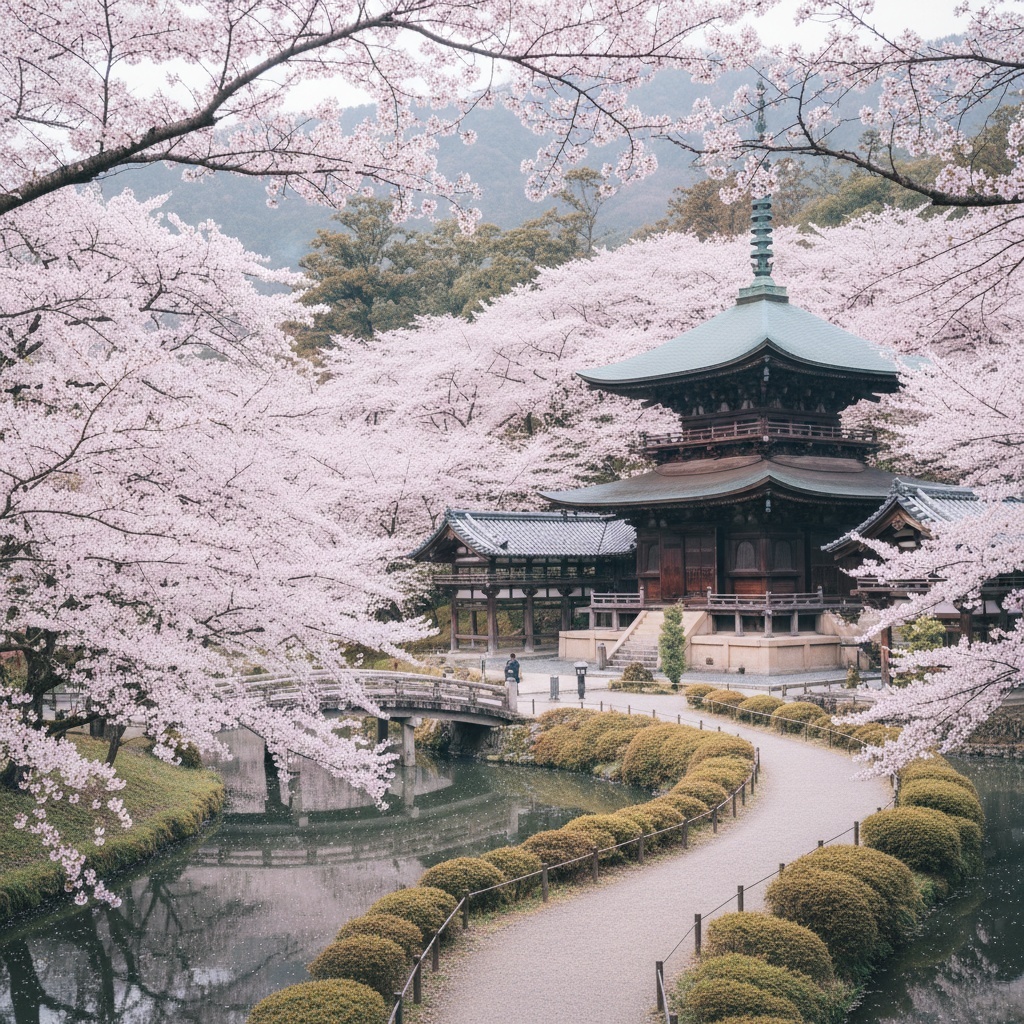
On April 20, 1598, the most powerful man in Japan orchestrated the most extravagant cherry blossom viewing party in history. Toyotomi Hideyoshi, the peasant who became ruler of unified Japan, transformed Daigo-ji Temple into a stage for displaying his absolute power through the ephemeral beauty of 700 transplanted cherry trees and 1,300 guests dressed in their finest silks.
This legendary “Daigo no Hanami” (醍醐の花見) represents more than lavish entertainment—it embodies the intersection of political power, aesthetic refinement, and cultural symbolism that defined Japan’s transition from medieval warfare to early modern stability, all expressed through the fleeting beauty of cherry blossoms.
The Man Behind the Legend: Hideyoshi’s Rise to Supreme Power
From Peasant to Ruler: An Unprecedented Ascent
Hideyoshi’s background made his cherry blossom party even more remarkable:
Humble Origins: Born to a peasant family, Hideyoshi rose through military service under Oda Nobunaga, demonstrating exceptional strategic intelligence and political acumen.
Unprecedented Achievement: In a rigidly hierarchical society, his rise from foot soldier to supreme ruler represented the ultimate social revolution.
Unification Accomplishment: By 1590, Hideyoshi had unified Japan under his control, ending over a century of civil warfare and establishing centralized authority.
Cultural Patron: Despite his military background, Hideyoshi became a sophisticated patron of arts, architecture, and cultural refinement.
The Political Context: Displaying Power Through Beauty
The 1598 hanami occurred during a critical political moment:
Succession Concerns: Hideyoshi’s son Hideyori was still a child, making the succession uncertain and requiring demonstrations of continued strength and legitimacy.
Economic Strain: Recent military campaigns in Korea had exhausted resources, making the party’s extravagance a deliberate display of wealth and stability.
Social Integration: The event brought together former enemies and rivals in peaceful cultural celebration, demonstrating Hideyoshi’s ability to transform warriors into courtiers.
Cultural Legitimacy: By staging sophisticated aesthetic events, Hideyoshi claimed cultural authority traditionally reserved for aristocratic and religious elites.
The Legendary Hanami: Spectacle and Symbolism
Scale and Extravagance: Power Made Visible
The 1598 hanami surpassed all previous cultural events in scope and luxury:
Massive Guest List: 1,300 carefully selected participants including family members, military commanders, court nobles, wealthy merchants, and cultural figures.
Transplanted Paradise: 700 cherry trees transplanted from throughout Japan created artificial cherry blossom paradise demonstrating control over nature itself.
Architectural Preparations: Temporary buildings, bridges, and viewing platforms constructed specifically for the event, showing resources available for single day’s entertainment.
Costume Requirements: Detailed dress codes specified appropriate attire for different social ranks, creating visual hierarchy reflecting political order.
Frequently Asked Questions
Q: Did Hideyoshi’s hanami really happen as described in legends? A: Historical records confirm the 1598 event occurred with extraordinary scale and luxury, though some details may have been embellished over time.
Q: Why is this hanami considered so significant? A: It demonstrated political power through cultural sophistication, established inclusive hanami traditions, and represented the peak of Hideyoshi’s authority.
Q: Can visitors see remnants of Hideyoshi’s party today? A: While temporary structures are gone, the temple buildings, some cherry trees, and cultural traditions continue from that era.
Planning Your Daigo Experience:
- Hours: 9:00 AM – 5:00 PM daily (extended during cherry blossom season)
- Admission: ¥600 for temple grounds; additional fees for special areas during peak season
- Access: Subway Tozai Line to Daigo Station, then bus or 30-minute walk
- Best Times: Early April for cherry blossoms, early morning for fewer crowds
Continue Your Historical Journey: Ready to explore more powerful figures? Discover “Nijo Castle’s Political Messages in Stone and Wood” or learn about “The Rise of Toji’s Five-Story Pagoda as Kyoto’s Symbol.”
Leave a Reply