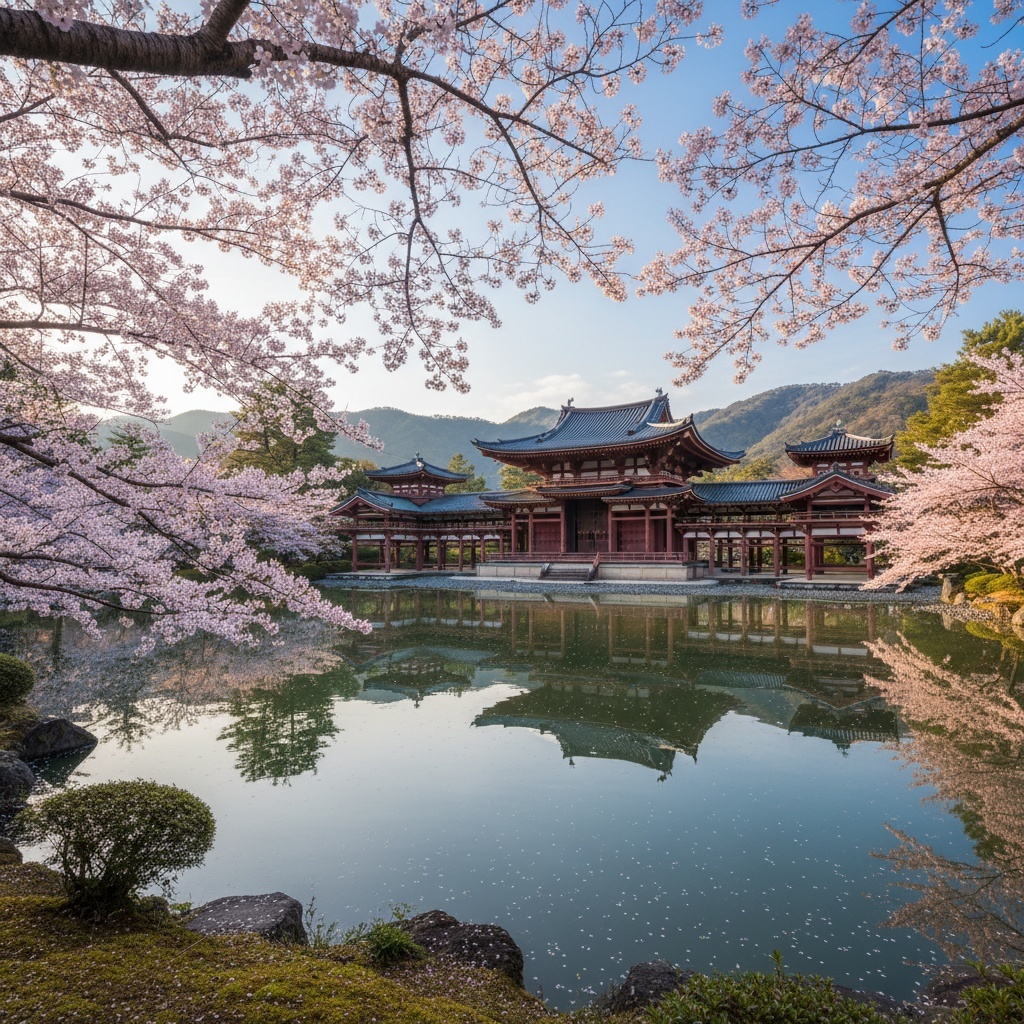
Reflected in the still waters of a sacred pond, the Phoenix Hall of Byodo-in appears to float between earth and heaven—a vision of Buddhist paradise made manifest in wood, gold, and divine artistry. Built nearly 1,000 years ago by the powerful Fujiwara clan, this architectural masterpiece represents humanity’s most ambitious attempt to create the Pure Land of Amida Buddha on earth.
More than beautiful building, Phoenix Hall embodies the spiritual yearnings of an entire era, when Japan’s aristocrats sought to guarantee their salvation by constructing perfect replicas of paradise itself, complete with golden Buddhas, celestial musicians, and architectural forms that seem to defy earthly gravity.
The Vision of Paradise: Pure Land Buddhism in the Heian Court
Fujiwara Yorimichi’s Spiritual Ambition
In 1053, Fujiwara no Yorimichi, regent to the emperor and the most powerful man in Japan, undertook a project that would define Buddhist architecture for centuries:
Personal Salvation: As Yorimichi aged, he became increasingly concerned with securing favorable rebirth in Amida Buddha’s Pure Land paradise.
Family Legacy: The hall served as both religious monument and political statement, demonstrating the Fujiwara clan’s wealth, taste, and spiritual devotion.
Cultural Synthesis: The project represented the peak of Heian court culture, combining Chinese Buddhist theology with Japanese aesthetic sensibilities and architectural innovation.
Earthly Paradise: Yorimichi’s vision was audacious—to create a perfect replica of Amida’s western paradise that would guarantee salvation for himself and future generations.
Pure Land Theology: The Promise of Salvation
Phoenix Hall embodies core Pure Land Buddhist beliefs that transformed Japanese spiritual life:
Mappo Consciousness: Heian aristocrats believed they lived in the “Latter Age of Dharma,” when traditional Buddhist practice could no longer guarantee enlightenment.
Amida’s Compassion: Pure Land teaching promised that sincere faith in Amida Buddha would ensure rebirth in his western paradise, regardless of personal spiritual attainment.
Visualization Practice: Detailed descriptions of paradise in Buddhist sutras inspired attempts to recreate these visions in architectural and artistic form.
Democratic Salvation: Unlike esoteric Buddhism requiring years of training, Pure Land offered salvation to anyone with sincere faith, making it appealing to court nobles and commoners alike.
The Central Vision: Amida Buddha and Celestial Court
The Magnificent Amida Statue
At Phoenix Hall’s heart sits one of Japan’s greatest Buddhist sculptures:
Artistic Mastery: Created by the master sculptor Jocho, the 2.4-meter statue represents the pinnacle of Heian Buddhist art and technical achievement.
Golden Radiance: Covered in gold leaf and lacquer, the statue glows with divine light, representing Amida’s infinite compassion and wisdom.
Meditative Pose: Amida sits in meditation posture with hands in the mudra of concentration, demonstrating the peaceful state of enlightenment.
Facial Expression: The serene, compassionate expression embodies Amida’s promise to save all beings who call upon his name with sincere faith.
The Celestial Musicians: Art Depicting Paradise
Surrounding the central Amida are extraordinary artistic treasures:
Flying Bodhisattvas: Fifty-two wooden sculptures of celestial beings appear to dance and play music around Amida, representing the constant celebration in paradise.
Musical Instruments: Each figure holds different instruments—biwa, flutes, drums, and cymbals—creating visual symphony of paradise’s eternal music.
Dynamic Movement: Unlike static Buddhist art, these figures display flowing robes and graceful poses suggesting movement and joy.
Individual Artistry: Each bodhisattva has unique facial features and expressions, demonstrating extraordinary artistic skill and spiritual imagination.
Frequently Asked Questions
Q: What is the Pure Land that Phoenix Hall represents? A: The Pure Land is Amida Buddha’s western paradise, a realm of perfect beauty and spiritual peace where beings can achieve enlightenment more easily than in our world.
Q: Why is it called Phoenix Hall? A: The building’s shape resembles a phoenix with outstretched wings, and the phoenix symbolizes rebirth and transformation, key themes in Pure Land Buddhism.
Q: Can visitors enter the hall interior? A: Interior viewing is limited and requires separate tickets. Advanced reservations are recommended, especially during peak seasons.
Q: What makes the Amida Buddha statue special? A: Created by master sculptor Jocho using innovative techniques, it represents the pinnacle of Heian Buddhist art and embodies Pure Land spiritual ideals.
Planning Your Paradise Visit:
- Hours: 8:30 AM – 5:30 PM (varies seasonally)
- Admission: ¥600 for gardens; ¥300 additional for interior viewing (limited capacity)
- Access: Keihan Uji Line to Uji Station, 10-minute walk
- Best Times: Lotus season (July-August), autumn colors (November)
- Reservations: Interior viewing requires advance booking, especially during peak seasons
Continue Your Pure Land Journey: Ready to explore more Buddhist paradise visions? Discover “The Sacred Sustenance of Shojin Ryori” or learn about “Mount Hiei’s Spiritual Fortress Against the Demon Gate.”
Leave a Reply