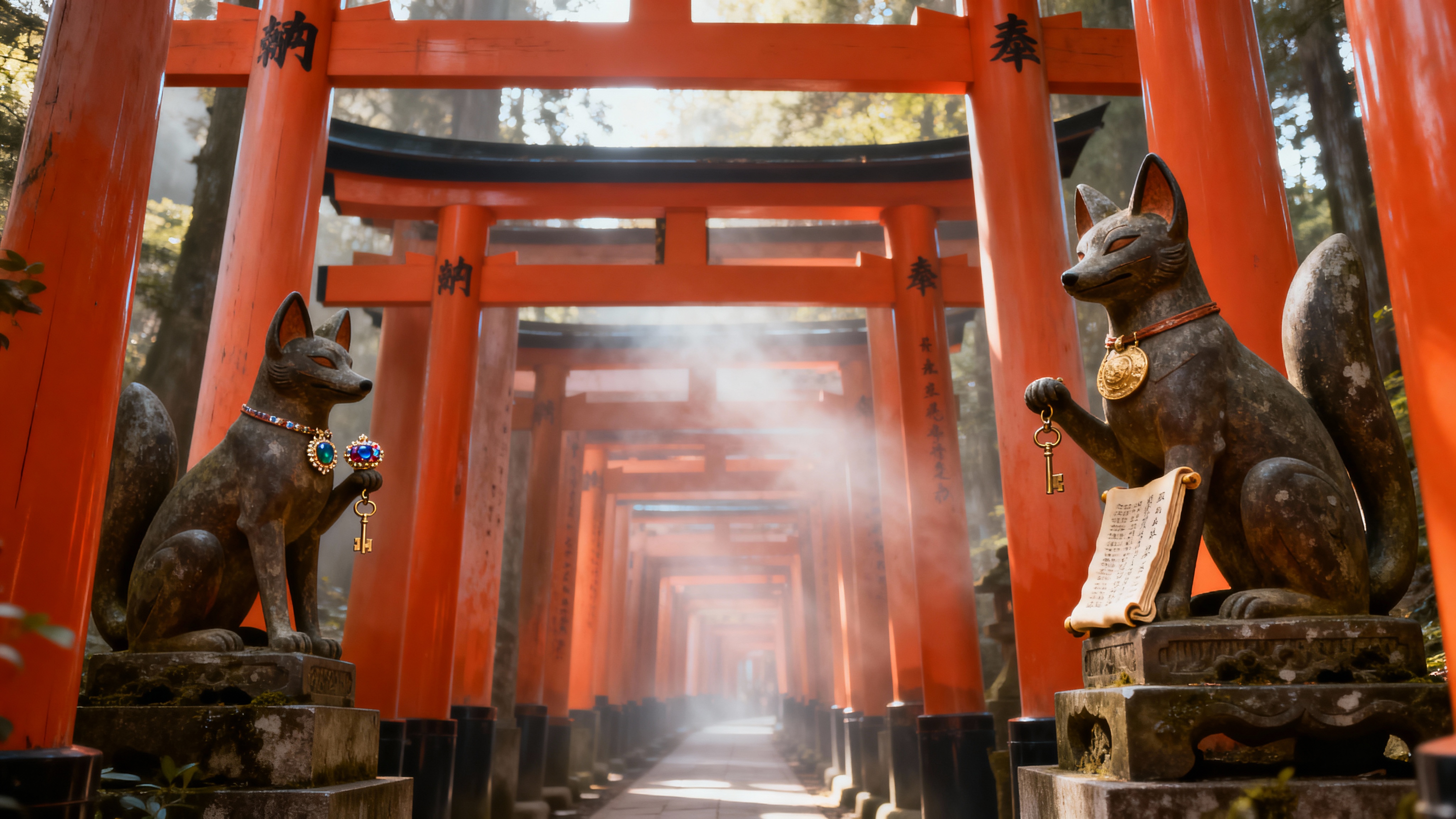
Walking through the vermillion tunnel of 10,000 torii gates at Fushimi Inari Shrine, you’ll encounter thousands of fox statues standing sentinel along the sacred pathways. These aren’t decorative elements—they represent one of Japan’s most sophisticated spiritual partnerships between divine beings, animal spirits, and human prosperity. But why foxes? What ancient wisdom created this extraordinary alliance between Inari, the rice god, and these intelligent creatures?
The answer reveals profound understanding of natural systems, spiritual intelligence, and the delicate balance required for agricultural abundance that sustained Japanese civilization for over 1,300 years.
Inari Ōkami: The Multifaceted Deity of Abundance
Inari (稲荷) literally means “rice bearer,” but this ancient Shinto deity encompasses all forms of abundance: successful harvests, thriving businesses, fertility, prosperity, and transformation of potential into manifest wealth.
Inari’s expanding influence through history:
- 8th century: Agricultural deity protecting rice cultivation
- Heian period: Patron of sake brewing and food production
- Kamakura period: Guardian of merchants and craftspeople
- Edo period: Protector of commerce and business success
- Modern era: Deity of prosperity and positive transformation
Inari’s gender fluidity reflects comprehensive divine nature—manifesting as male, female, or androgynous, representing the understanding that true prosperity requires both active effort and receptive cultivation.
The Practical Foundation: Foxes as Agricultural Allies
The fox-Inari partnership began with careful observation of natural relationships. Ancient Japanese farmers noticed that foxes naturally protected rice fields from rodents and other crop-destroying pests. This beneficial relationship led to recognition of foxes as essential allies in agricultural prosperity.
But the spiritual significance transcends pest control. Foxes demonstrated divine qualities that ancient Japanese recognized:
Intelligence and Adaptability: Foxes solved complex problems and adapted to changing circumstances—essential for successful farming and business
Boundary Crossing: Moving freely between forest and field, wild and cultivated spaces, representing navigation between different realms of opportunity
Transformation Ability: Seasonal coat changes and seemingly magical behavior suggested supernatural intelligence
Social Cooperation: Fox families showed strong bonds and mutual care, modeling community values necessary for agricultural success
The Mythology of Sacred Transformation
Japanese fox mythology describes sophisticated spiritual evolution:
The Kitsune Hierarchy
Yako (野狐) – Wild Foxes: Natural intelligence without supernatural powers—raw potential
Zenko (善狐) – Benevolent Foxes: Spiritually developed foxes serving positive purposes as divine messengers
Myōbu (命婦) – Court Foxes: Highly evolved spirits serving directly under Inari with shape-shifting and prophetic abilities
Tenko (天狐) – Celestial Foxes: Fully enlightened fox spirits with pure white/golden fur and nine tails, representing complete divine wisdom
The Nine-Tail Progression
Tail number indicates spiritual advancement:
- 1-3 tails: Young fox spirits with basic abilities
- 4-6 tails: Mature spirits with significant wisdom and power
- 7-8 tails: Advanced spirits capable of major transformations
- 9 tails: Fully enlightened spirits with divine status
This system teaches that spiritual development requires patience and gradual cultivation—qualities essential for sustainable prosperity.
Fushimi Inari: The Sacred Mountain of Prosperity
Origin and Divine Vision
Established in 711 AD by the Hata clan, Korean immigrants who became successful sake brewers and rice cultivators. Inari Ōkami appeared in dreams requesting a shrine on Mount Inari in exchange for continued prosperity.
The location wasn’t coincidental—Mount Inari sits at river confluences creating ideal rice cultivation conditions. The mountain was considered sacred before the shrine’s establishment, representing the spiritual power of the land itself.
The Torii Tunnel: Architectural Spirituality
The 32,000 torii gates (popularly called “10,000”) create sophisticated spiritual technology:
Color Psychology: Vermillion (shu-iro) represents life force, protection against evil, and sacred boundaries between ordinary and divine realms
Rhythmic Progression: Walking through gates creates meditative rhythm promoting spiritual receptivity
Perspective Transformation: Tunnels create forced perspective making the mountain appear more mysterious than ordinary perception suggests
Community Investment: Each gate represents gratitude for answered prayers, creating physical manifestation of collective faith
The Fox Statues: Guardians and Guides
Throughout the shrine complex, fox statues serve multiple spiritual functions:
Symbolic Objects and Meanings
Key (in mouth): Unlocking prosperity and protection of the rice granary Jewel (Hōju): Wish-fulfilling spiritual power and precious abundance
Scroll: Divine wisdom and messages from Inari Rice Sheaves: Direct symbol of agricultural prosperity and harvest success
These objects transform foxes from simple animals into sophisticated spiritual messengers capable of conveying specific types of divine assistance.
Modern Business Culture and Inari Worship
Corporate Shrine Tradition
Contemporary Japanese businesses maintain deep Inari connections:
Company Shrines: Many corporations maintain Inari shrines on premises seeking divine business protection
New Year Ceremonies: Business leaders regularly visit Inari shrines for annual prosperity prayers
Product Blessing: New ventures often receive Inari blessing before market launch
Employee Welfare: Companies organize group shrine visits for team building and spiritual protection
Entrepreneurial Fox Spirit
Inari worship appeals to entrepreneurs because it embodies business success qualities:
Adaptability: Like foxes, successful businesses adapt quickly to market changes Intelligence: Success requires both analytical thinking and intuitive opportunity recognition Community Relationships: Prosperity depends on beneficial relationships with all stakeholders Ethical Behavior: Traditional teaching emphasizes that unethical prosperity ultimately fails
Seasonal Festivals and Ritual Practices
Hatsuuma Festival: The Fox New Year
The first Horse Day of February celebrates renewal of the human-fox-divine partnership:
Traditional Observances:
- Inari-zushi offerings: Sweet rice in fried tofu pouches (foxes’ favorite food)
- Sake libations: Rice wine representing successful material transformation
- Business prayer ceremonies: Entrepreneurs seeking annual blessings
- Community feasts: Shared meals strengthening collective prosperity bonds
Monthly Observances
Serious devotees maintain regular spiritual practices:
- 1st and 15th monthly offerings: Fresh flowers, food, and prayers to fox statues
- Full moon ceremonies: Nighttime rituals honoring lunar cycles and prosperity timing
- Seasonal transitions: Special observances acknowledging natural cycles affecting success
The Spiritual Technology of Fox Partnership
Psychological Functions
The fox-Inari relationship provides important psychological benefits:
Externalized Intuition: Relating to fox spirits helps people access intuitive wisdom about opportunities and optimal timing
Responsibility Sharing: Partnership with spiritual messengers provides support while maintaining personal accountability
Patience Cultivation: Working with fox spirits requires developing long-term thinking essential for sustainable prosperity
Community Connection: Shared fox worship creates mutual support networks enhancing collective success
Experiencing Fox-Inari Spirituality
Pilgrimage Preparation
Approaching Inari shrines with proper understanding:
Clarify Intentions: What prosperity do you genuinely need? How will you use abundance responsibly?
Acknowledge Partnership: Success requires collaboration between personal effort, divine support, and community assistance
Prepare Offerings: Traditional items include inari-zushi, sake, rice, flowers, and small fox statues
The Mountain Pilgrimage Experience
Fushimi Inari offers multiple levels of spiritual engagement:
Lower Shrine (1-2 hours): Main buildings, primary fox statues, ceremonial spaces Middle Mountain (2-3 hours): Dense torii tunnels, sub-shrines, panoramic views Summit Circuit (4-6 hours): Complete mountain experience, remote shrines, deepest spiritual encounter
Frequently Asked Questions
Q: Are the foxes at Fushimi Inari real animals? A: While wild foxes inhabit Mount Inari, the shrine foxes are statues representing divine messengers. Real foxes are rarely seen due to human activity levels.
Q: Why do fox statues wear red bibs? A: Red bibs (yodarekake) are offerings from worshippers expressing gratitude for answered prayers. Red symbolizes protection and life force in Shinto tradition.
Q: Can foxes be malevolent in Japanese folklore? A: In general folklore, kitsune can be tricksters or malevolent. However, Inari’s fox messengers are always benevolent divine servants and guardians.
Q: What’s the best time to visit Fushimi Inari? A: Early morning (before 8 AM) or evening (after 5 PM) offer fewer crowds and mystical atmosphere. The shrine is open 24 hours.
Planning Your Visit:
- Hours: Open 24 hours daily, free admission
- Access: JR Inari Station (directly at shrine) or Keihan Fushimi-Inari Station (5-minute walk)
- Allow: 2-6 hours depending on mountain climbing extent
- Best Experience: Early morning or late afternoon for atmospheric lighting
Continue Your Shinto Exploration: Discover “Yasaka Shrine and Gion Festival Origins” for more Shinto traditions, or explore “The Scholarly God of Kitano Tenmangu” for academic success prayers.
Leave a Reply