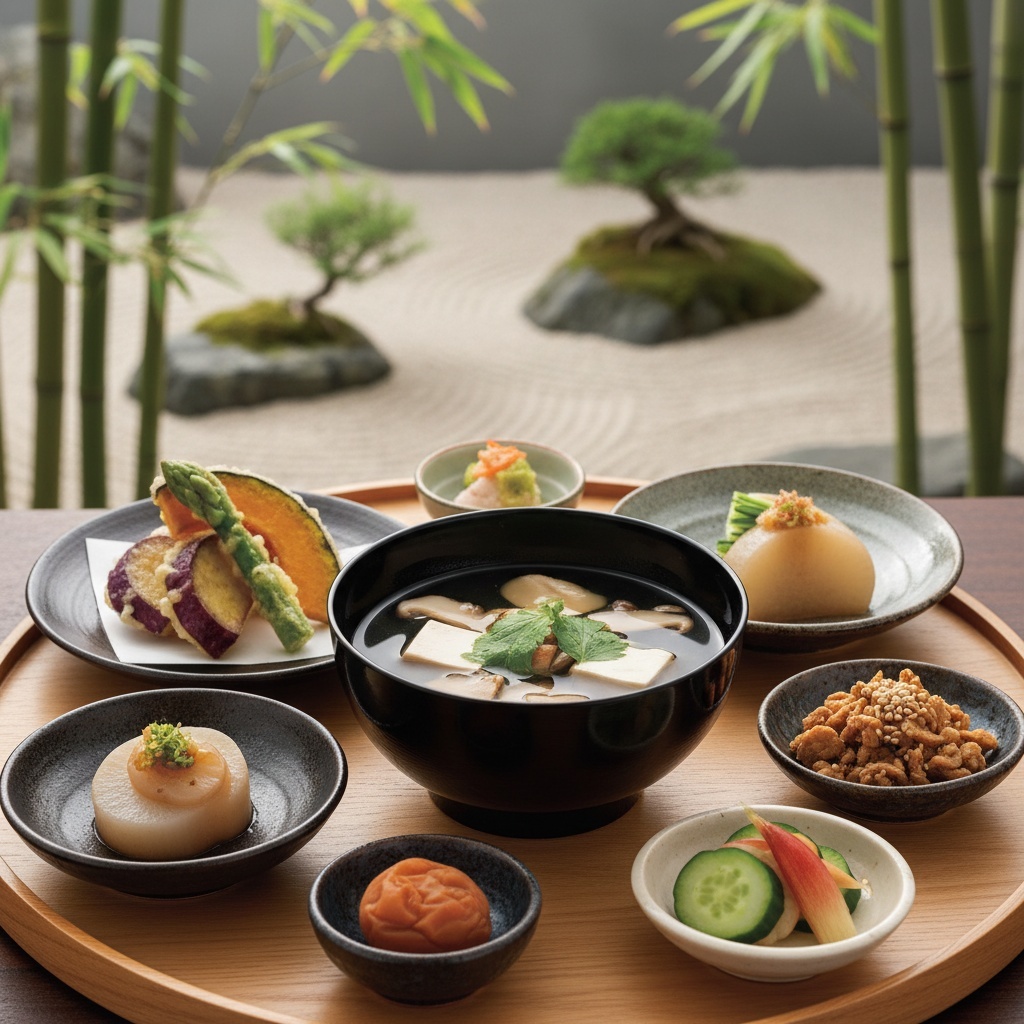
Learn Zen Through Food: Shojin Ryori Cooking Class Experience
In the serene kitchen of a Buddhist temple, every chop of the knife becomes meditation, every stir of the pot transforms into prayer. Shojin ryori (精進料理) – Japan’s ancient Buddhist vegetarian cuisine – represents far more than plant-based cooking; it embodies a complete philosophy of mindful living, compassion, and harmony with nature. This extraordinary culinary tradition offers modern practitioners a path to nourishment that feeds both body and spirit.
The Philosophy of Temple Cuisine:
Shojin ryori, literally meaning “devotion cuisine,” developed alongside Buddhism’s arrival in Japan over 1,300 years ago. This cooking style embodies core Buddhist principles: avoiding harm to sentient beings, practicing gratitude for nature’s gifts, and finding spiritual enlightenment through mindful daily activities. The complete absence of animal products stems not from dietary restrictions, but from deep compassion and respect for all life.
The cuisine follows the principle of “ichijū-sansai” (one soup, three dishes), creating nutritionally balanced meals that satisfy both physical needs and aesthetic sensibilities. Each meal must incorporate five colors (white, black, red, green, yellow) and six flavors (sweet, sour, bitter, spicy, salty, mild), ensuring complete nutrition while creating visual harmony that nourishes the spirit.
Seasonal Ingredients and Mindful Preparation:
Shojin ryori celebrates natural rhythms through strict adherence to seasonal ingredients. Spring brings tender bamboo shoots and wild mountain vegetables, summer offers cooling tofu and cucumber dishes, autumn features hearty root vegetables and persimmons, while winter showcases preserved foods and warming stews. This seasonal approach connects practitioners to natural cycles while ensuring optimal nutrition and flavor.
The preparation process itself becomes meditation. Vegetables must be cleaned with complete attention, cut with precise mindful movements, and cooked with full awareness of temperature, timing, and transformation. Waste is considered disrespectful to ingredients’ sacrifice, so every part finds purpose – roots, leaves, peels all contribute to the meal’s completeness.
Traditional Techniques and Flavor Development:
Master chefs have developed sophisticated techniques to create complex flavors using only plant-based ingredients. Kombu seaweed and shiitake mushrooms provide the umami depth typically associated with meat or fish. Fermented soybean products like miso and shoyu add layers of complexity developed through months or years of careful aging.
Tofu appears in countless forms, from silky varieties that dissolve on the tongue to firm textures that provide substantial satisfaction. Yuba (the delicate skin forming on heated soymilk) offers protein with ethereal lightness. These ingredients require masterful technique – overcooking or improper handling destroys their subtle qualities.
The Cooking Class Experience:
Your shojin ryori workshop begins with meditation and mindfulness exercises that prepare students for sacred food preparation. You’ll learn to approach each ingredient with gratitude, understanding its journey from earth to table. Traditional knife techniques emphasize precision, safety, and respect for both ingredients and tools.
The cooking process moves at deliberate pace that contrasts sharply with modern rushed meal preparation. Students practice constant tasting, gradual seasoning adjustment, and careful attention to ingredient transformation during cooking. The collaborative nature creates community while maintaining individual meditative focus.
Typical dishes you’ll prepare include kombu-shiitake dashi (the foundation broth), nimono (gently simmered seasonal vegetables), goma-dofu (sesame tofu custard), and various aemono (lightly dressed seasonal greens). Each technique teaches patience, precision, and deep appreciation for simple ingredients transformed through skillful preparation.
Nutritional and Spiritual Benefits:
Modern nutritional science confirms ancient wisdom: plant-based diets rich in seasonal vegetables, fermented foods, and minimal processing promote longevity and mental clarity. High fiber content, abundant antioxidants, and absence of processed ingredients support both physical health and the mental clarity necessary for meditation practice.
Beyond nutrition, shojin ryori teaches valuable life lessons about gratitude, mindfulness, and finding satisfaction in simplicity. The discipline required to create flavorful, satisfying meals without rich ingredients develops creativity and appreciation for subtle pleasures that extend far beyond the kitchen.
Official Image Recommendations:
- Shojin ryori meal presentation: Temple media libraries or Wikimedia Commons (Category: Shojin ryori)
- Traditional temple kitchen: Buddhist temple official photography collections
- Seasonal ingredients preparation: JNTO cultural photography archives
FAQ:
Q: Is the class suitable for complete beginners?
A: Yes, techniques emphasize mindfulness over complexity, making them accessible to all skill levels.
Q: How long does a typical class last?
A: Most experiences run 2-3 hours including preparation, cooking, and shared meal.
Q: Are recipes provided to take home?
A: Most classes include printed or digital recipes with ingredient substitution guidance.
Leave a Reply