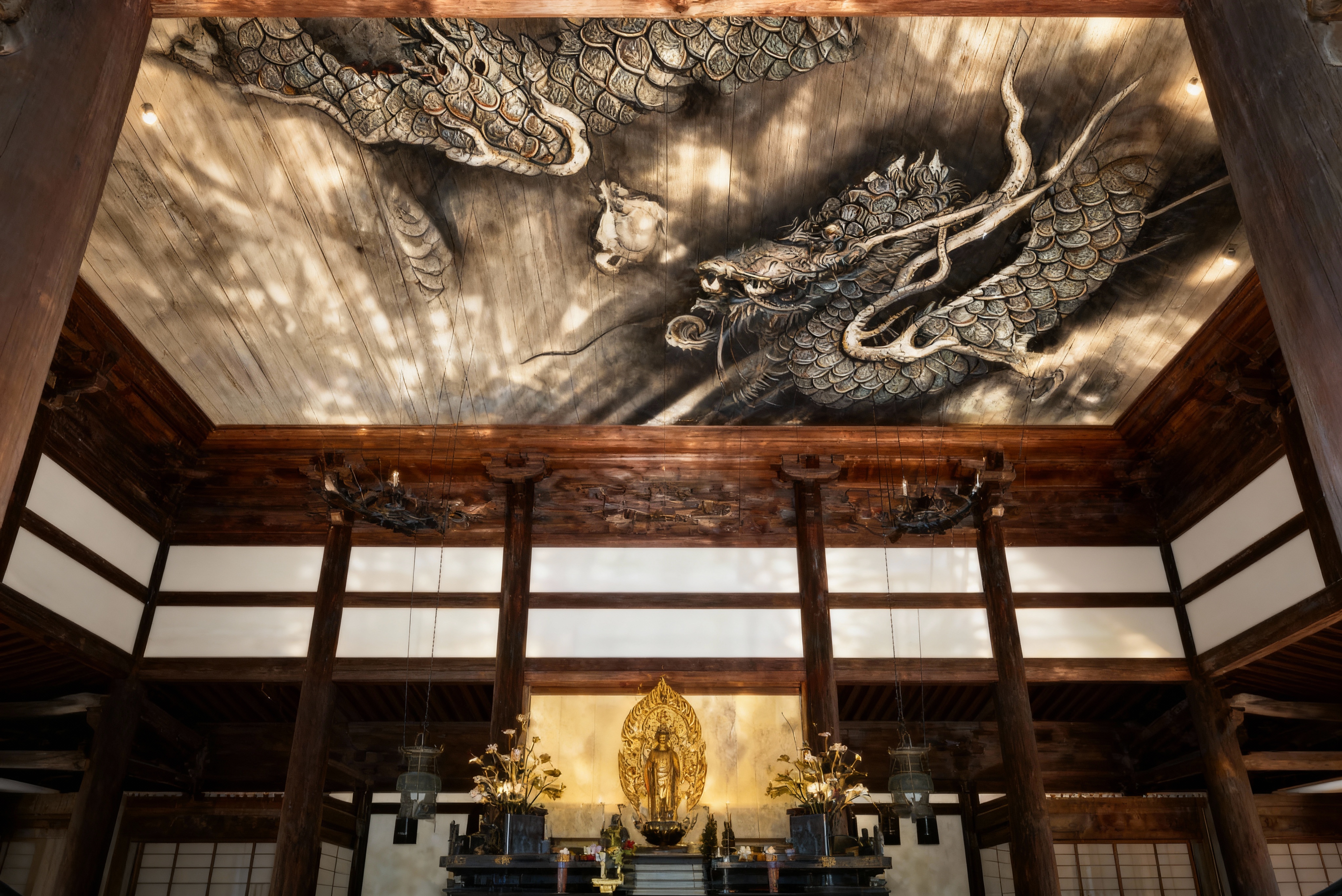
Above the meditation hall of Tofuku-ji Temple, a magnificent dragon swirls through painted clouds, its eyes blazing with spiritual fire as it emerges from and dissolves back into the cosmic mists of enlightenment. This extraordinary ceiling painting represents one of Japan’s most powerful expressions of Zen Buddhist philosophy through art—where the dragon’s dynamic movement through clouds symbolizes the awakened mind’s ability to manifest wisdom and compassion while remaining unattached to fixed forms.
The dragon ceiling at Tofuku-ji offers visitors a profound meditation on the nature of enlightenment itself, where ancient Buddhist symbolism meets artistic mastery to create a visual teaching that continues to inspire spiritual seekers and art lovers alike.
The Zen Context: Tofuku-ji as Rinzai Powerhouse
A Temple of Uncompromising Zen Practice
Tofuku-ji, established in 1236, developed into one of Japan’s most important Rinzai Zen temples:
Rigorous Training: The temple maintained reputation for demanding meditation practice and uncompromising spiritual discipline.
Scholarly Excellence: Generations of accomplished Zen masters developed sophisticated understanding of Buddhist philosophy and teaching methods.
Artistic Integration: Unlike temples that separated art from spiritual practice, Tofuku-ji understood visual beauty as integral to Zen realization.
Cultural Influence: The temple’s approach to combining aesthetic refinement with spiritual depth influenced Japanese culture far beyond religious circles.
Dragon Symbolism: Power, Wisdom, and Transformation
The Buddhist Dragon Tradition
Dragons in Buddhist iconography carry profound symbolic meaning:
Wisdom Manifestation: Dragons represent the dynamic aspect of enlightened wisdom that can appear in any form necessary to help beings achieve awakening.
Transformative Power: The dragon’s ability to change shape symbolizes the enlightened mind’s skillful means in adapting to different circumstances and needs.
Protective Energy: Dragons serve as guardians of Buddhist teachings and practitioners, using their power to overcome obstacles to spiritual development.
Cosmic Consciousness: The dragon’s movement through sky and clouds represents consciousness that transcends ordinary limitations of space and time.
Cloud Symbolism: The Formless Form
The clouds surrounding Tofuku-ji’s dragon carry equally important meaning:
Emptiness Doctrine: Clouds represent śūnyatā (emptiness)—the Buddhist teaching that all phenomena lack fixed, independent existence.
Impermanence Visualization: Constantly changing cloud formations demonstrate the transient nature of all conditioned existence.
Mind-Like Nature: Clouds serve as metaphor for consciousness itself—formless yet capable of manifesting infinite appearances.
Enlightenment Process: The dragon emerging from and returning to clouds symbolizes how wisdom arises from and dissolves back into fundamental awareness.
Seasonal Experience: The Dragon Through the Year
Changing Light, Changing Revelation
Different seasons reveal different aspects of the dragon ceiling:
Spring Light: Soft illumination emphasizes the dragon’s gentle aspects and the renewal symbolism of emergence from winter clouds.
Summer Intensity: Bright light reveals fine details and creates dramatic contrast between dragon and cloud elements.
Autumn Contemplation: Mellower light supports deeper contemplative viewing and philosophical reflection on impermanence themes.
Winter Clarity: Crisp light emphasizes the dragon’s fierce wisdom aspects and the clarity that comes from sustained practice.
Frequently Asked Questions
Q: Can visitors meditate in the hall beneath the dragon ceiling? A: While formal meditation sessions may not be available to casual visitors, respectful contemplative viewing is encouraged and appreciated.
Q: What’s the best time to view the dragon ceiling? A: Late morning provides optimal natural lighting for viewing details, while late afternoon creates more dramatic atmospheric effects.
Q: Is photography allowed of the dragon ceiling? A: Photography policies vary and should be confirmed with temple staff. Even when allowed, flash photography is typically prohibited to preserve the artwork.
Planning Your Dragon Encounter:
- Hours: 9:00 AM – 4:30 PM (April-October), 9:00 AM – 4:00 PM (November-March)
- Admission: ¥600 for temple grounds; additional fees for special halls during peak seasons
- Access: JR Nara Line to Tofuku-ji Station, 10-minute walk
- Best Times: Late morning for optimal lighting, autumn for garden beauty
- Special Considerations: The dragon ceiling may not always be accessible; confirm viewing availability
Continue Your Zen Art Journey: Ready to explore more Buddhist symbolism? Discover “The Sacred Forest Mysteries of Shimogamo Shrine” or learn about “The Mystical Arts of Seimei Shrine.”
Leave a Reply