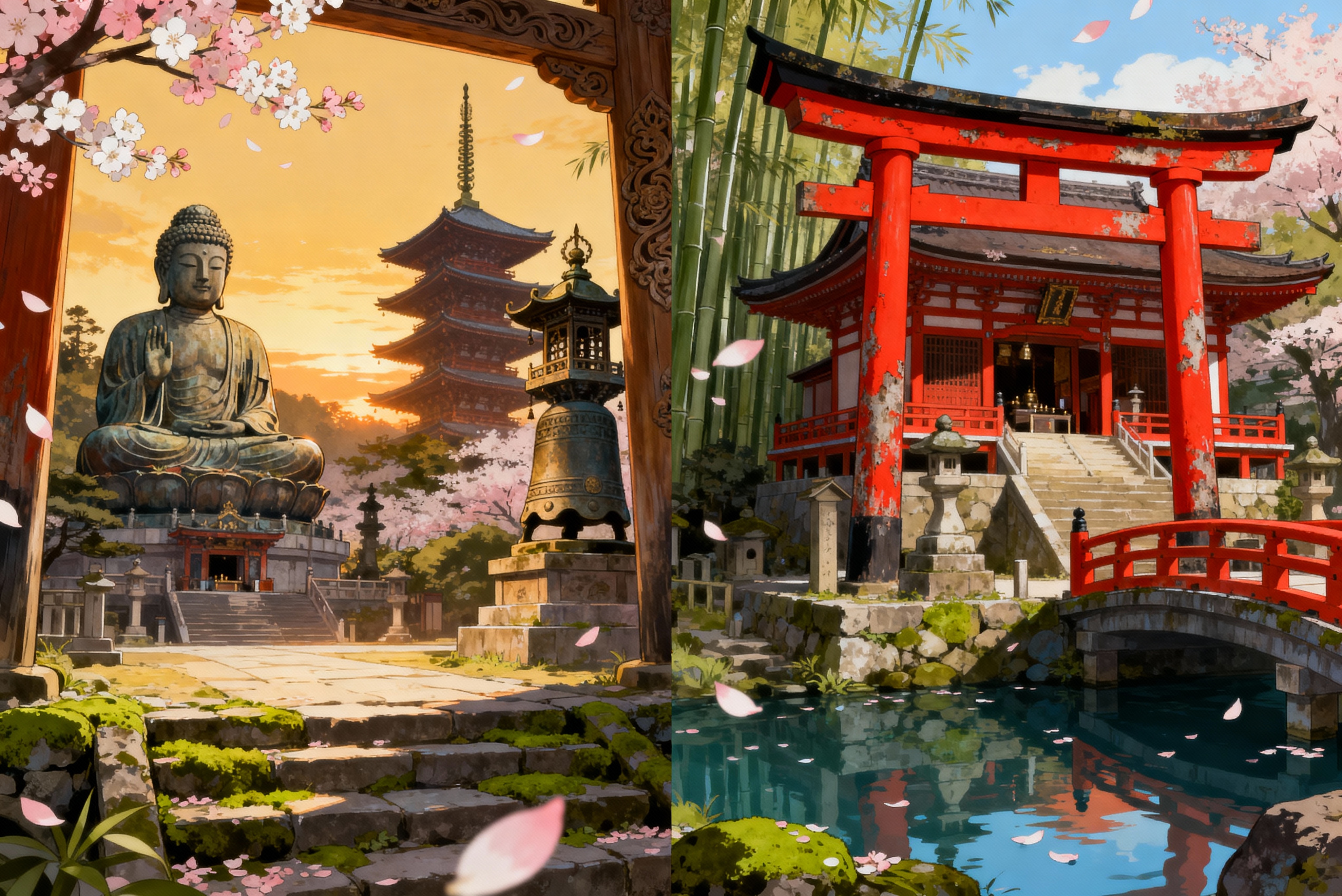
Standing before a magnificent sacred building in Kyoto, many visitors wonder: “Am I at a temple or a shrine?” This question opens the door to understanding two profound spiritual traditions that have shaped Japanese culture for over 1,400 years. The answer affects not just what you’re seeing, but how you should behave, what you can expect to experience, and the deeper cultural significance of your visit.
Understanding the difference between Buddhist temples (寺, tera/ji) and Shinto shrines (神社, jinja) transforms casual sightseeing into meaningful cultural engagement. These sacred spaces represent different worldviews, architectural philosophies, and spiritual practices that continue to influence modern Japanese life.
The Fundamental Spiritual Divide
Buddhist Temples: The Path to Enlightenment
Buddhist temples serve as places for spiritual practice aimed at achieving enlightenment and liberation from suffering. Established in Japan during the 6th century, temples focus on:
Core Purpose: Teaching Buddha’s dharma (teachings) and providing spaces for meditation, study, and spiritual development
Afterlife Focus: Temples handle funeral rites, memorial services, and ancestor veneration, helping souls navigate death and rebirth cycles
Community Role: Serving as centers for education, cultural preservation, and social welfare throughout Japanese history
Spiritual Goal: Ultimately achieving enlightenment (satori) and liberation from the cycle of rebirth
Shinto Shrines: Harmony with Divine Nature
Shinto shrines celebrate Japan’s indigenous spiritual tradition, honoring kami (divine spirits) present in nature, ancestors, and sacred places. Shrines focus on:
Core Purpose: Maintaining harmony between humans, nature, and divine spirits through ritual purification and offerings
Life Celebration: Handling births, marriages, festivals, and life milestone celebrations
Community Protection: Serving as spiritual guardians for local communities, ensuring prosperity and protection from misfortune
Spiritual Goal: Achieving purification (kegare o harau) and maintaining harmonious relationships with kami
Architectural Identification: Reading Sacred Buildings
Temple Architecture: Buddhist Symbolism
Buddhist temples display distinctive architectural elements immediately identifying their religious affiliation:
Main Hall (Hondo/Kondō): Central building housing principal Buddha statue, often elevated on stone platform
Pagoda (Tō): Multi-story tower representing Buddhist cosmology and housing sacred relics
Gates (Mon): Elaborate entrance gates often housing guardian statues (Niō) protecting sacred space
Cemetery (Bochi): Graveyards with stone monuments and memorial tablets for deceased community members
Bell Tower (Shōrō): Houses large bronze bell rung for ceremonies and to mark time
Shrine Architecture: Shinto Sacred Design
Shinto shrines feature distinctive elements reflecting indigenous Japanese aesthetics:
Torii Gates: Iconic vermillion or wooden gates marking transition from ordinary to sacred space
Main Shrine (Honden): Sacred building housing kami, typically elevated and often inaccessible to general public
Worship Hall (Haiden): Where visitors pray and make offerings, usually open and accessible
Purification Area (Temizuya): Water basin for ritual hand and mouth cleansing before worship
Sacred Elements: Shimenawa (rope with paper streamers), mirrors, and natural objects
Worship Practices: Different Paths to the Sacred
Temple Worship: Buddhist Rituals
Buddhist temple worship involves contemplative practices focused on spiritual development:
Prayer Method:
- Light incense at designated area
- Place hands together in prayer position (gassho)
- Bow respectfully to Buddha statue
- Offer silent prayers or meditation
- Make monetary offering if desired
Appropriate Prayers: Requests for wisdom, spiritual guidance, peace for deceased relatives, and personal spiritual development
Shrine Worship: Shinto Rituals
Shinto shrine worship emphasizes purification and communication with kami:
Prayer Method:
- Purify hands and mouth at temizuya
- Approach worship hall
- Bow twice deeply
- Clap hands twice
- Make silent prayer
- Bow once more
Appropriate Prayers: Requests for health, success, protection, good fortune, and gratitude for blessings received
Cultural Functions in Modern Japan
Temples: Life’s Deeper Questions
Buddhist temples traditionally handle life’s most profound spiritual needs:
- Death and mourning ceremonies
- Spiritual education and meditation
- Cultural preservation
- Historical scholarship
Shrines: Life’s Celebrations and Protections
Shinto shrines focus on life’s joyful milestones:
- Birth and growth ceremonies
- Marriage celebrations
- Community festivals (matsuri)
- Daily protection and good fortune
Practical Visiting Guidelines
Universal Etiquette
Both temples and shrines require:
- Modest dress covering shoulders and knees
- Quiet, respectful behavior
- Following designated pathways
- Observing photography restrictions
- Making small offerings when appropriate
Site-Specific Protocols
At Temples:
- Remove hats when entering buildings
- Light incense where provided
- No clapping during prayers
- Observe meditation periods quietly
At Shrines:
- Perform purification ritual before worship
- Follow bow-clap-bow prayer sequence
- Ring bells if provided
- Participate respectfully in festivals
Mixed Complexes: Historical Syncretism
Many Japanese sacred sites combine both Buddhist and Shinto elements, reflecting centuries of religious syncretism. Examples include:
- Fushimi Inari Shrine: Primarily Shinto but includes Buddhist elements
- Kiyomizu-dera: Buddhist temple with Shinto shrine (Jishu Shrine) on grounds
- Yasaka Shrine: Shinto shrine with historical Buddhist connections
Frequently Asked Questions
Q: Can I visit both temples and shrines in one day? A: Absolutely! Most visitors experience both traditions, as they offer complementary aspects of Japanese spirituality.
Q: Do I need to be religious to visit? A: Not at all. Respectful visitors of all backgrounds are welcome at both temples and shrines.
Q: Is photography allowed? A: Generally yes for exteriors and gardens, but many main halls prohibit interior photography. Always check for signs.
Q: Should I make offerings? A: Small monetary offerings (¥5-¥100) are common but not required. They support temple and shrine maintenance.
Continue Your Cultural Journey: Ready to put your knowledge into practice? Explore our “Complete Temple and Shrine Etiquette Guide” for detailed worship protocols, or discover “The Hidden Meanings Behind Kyoto’s Golden and Silver Pavilions” for deeper cultural insights.
Leave a Reply