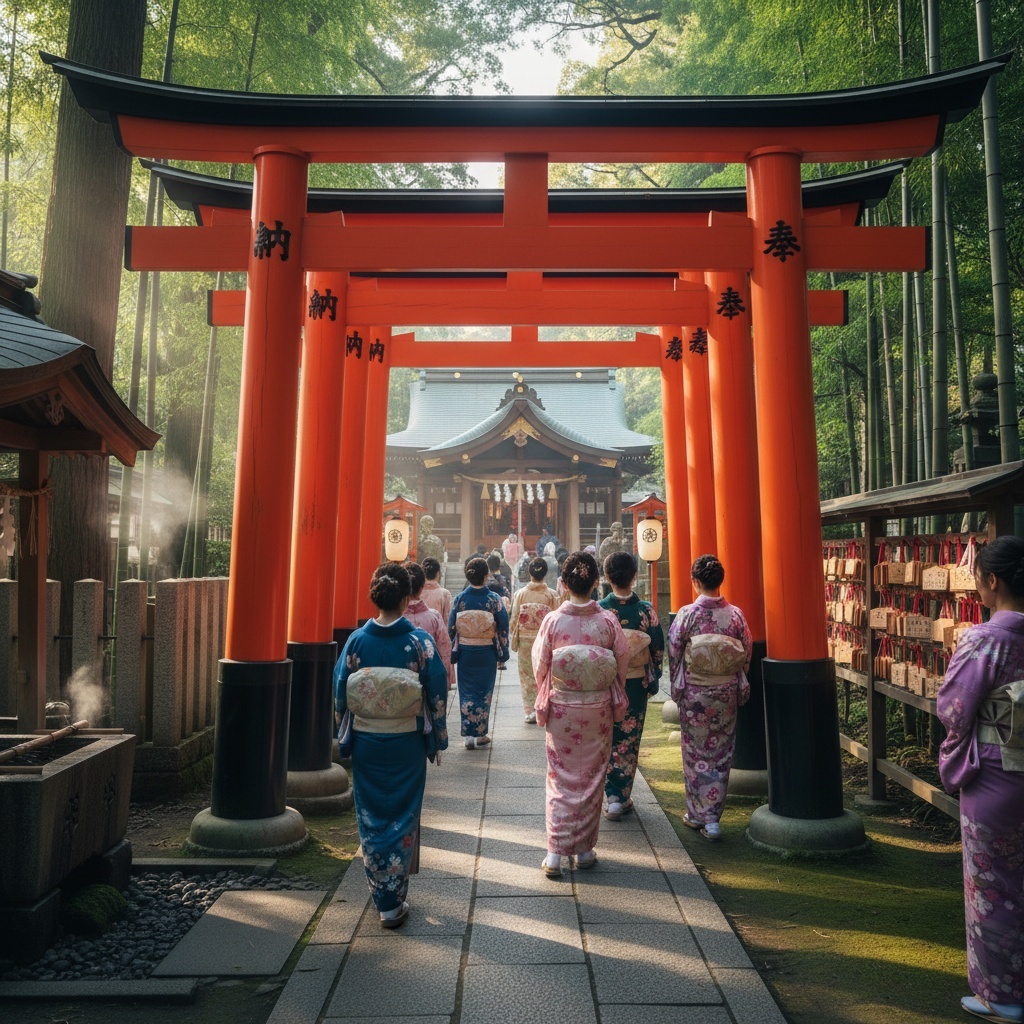
As midnight bells ring across Kyoto on New Year’s Eve and the first light of January 1st breaks over the ancient capital’s rooftops, millions of Japanese begin their most sacred annual journey—hatsumode, the first shrine visit of the New Year that sets the spiritual foundation for the coming twelve months. In Kyoto, where spiritual traditions run deeper than anywhere else in Japan, this pilgrimage transforms into something transcendent: a collective prayer for renewal, prosperity, and divine protection that connects contemporary seekers with over 1,000 years of continuous tradition.
These five extraordinary shrines offer more than New Year’s blessings—they provide gateways to understanding Japan’s spiritual heart, where ancient prayers for health, success, and wisdom continue to resonate with millions of believers seeking divine guidance for life’s journey ahead.
The Sacred Foundation: Understanding Hatsumode’s Spiritual Power
More Than Tradition: A Spiritual Technology for Renewal
Hatsumode represents sophisticated spiritual practice that serves essential psychological and cultural functions:
Temporal Purification: The first shrine visit creates clean spiritual slate for the new year, washing away accumulated spiritual impurities from previous year’s challenges and mistakes.
Divine Connection: Establishing relationship with protective kami (Shinto deities) provides spiritual support and guidance for navigating the year’s uncertainties.
Community Solidarity: Participating alongside millions in shared ritual creates powerful sense of cultural belonging and collective spiritual energy.
Intentional Beginning: The practice transforms arbitrary calendar change into meaningful spiritual transition through deliberate sacred action.
Traditional Rituals and Their Deeper Meanings
Essential hatsumode practices carry profound spiritual significance:
Purification Sequence: Hand and mouth cleansing at temizuya represents removing spiritual impurities before approaching divine presence.
Prayer Protocol: The “two bows, two claps, one bow” sequence creates formal communication with kami while demonstrating proper respect and humility.
Omikuji Fortune-Telling: Drawing sacred lots provides divine guidance for the year ahead while encouraging reflection on personal goals and spiritual development.
Sacred Purchases: Obtaining new omamori (protective amulets) and hamaya (demon-breaking arrows) creates tangible connections to divine protection throughout the year.
The Sacred Five: Kyoto’s Most Powerful New Year Destinations
1. Fushimi Inari Taisha: The Prosperity Pilgrimage
Why Millions Choose the Fox God’s Domain: As Japan’s head shrine for Inari Okami, the deity governing rice, sake, and business prosperity, Fushimi Inari attracts unprecedented New Year crowds seeking economic abundance and professional success.
The Midnight Mountain Experience:
- Illuminated Pathway: Thousands of vermillion torii gates lit by lanterns create magical corridor through the sacred mountain
- Prosperity Prayers: Business leaders, entrepreneurs, and workers seek Inari’s blessing for financial success and career advancement
- Fox Messenger Worship: Sacred fox statues receive special New Year offerings as divine intermediaries carrying prayers to Inari Okami
- Mountain Pilgrimage: Climbing toward the summit becomes metaphor for ascending toward prosperity and spiritual elevation
Strategic Visiting Guide:
- Optimal Timing: 2:00-6:00 AM on January 1st avoids peak midnight crowds while maintaining sacred atmosphere
- Preparation: Warm clothing essential; comfortable shoes for mountain paths; small coins for offerings
- Duration: Allow 3-4 hours for complete mountain circuit and contemplative prayer time
- Cultural Focus: Prepare specific business or prosperity goals for focused prayer and petition
Access: JR Inari Station (directly at shrine entrance) What to Pray For: Business success, financial stability, career advancement, abundant harvests
2. Yasaka Shrine: Guardian of Gion’s Sacred Energy
Why Kyoto Locals Trust Their Community Protector: Located in the heart of Gion district, Yasaka Shrine serves as spiritual guardian for Kyoto’s traditional communities, offering protection from misfortune and blessings for health and relationships.
The Community Experience:
- Okera Mairi Ritual: Sacred flames from the shrine light ropes that visitors carry home for first cooking fire, ensuring year-long health protection
- Gion District Atmosphere: Traditional architecture and geisha district ambiance create authentic Japanese New Year cultural immersion
- Health and Beauty Focus: Special prayers for physical wellness, longevity, and aesthetic harmony attract diverse visitors
- All-Night Celebration: Shrine remains open throughout New Year’s Eve, creating festive countdown atmosphere
Strategic Visiting Guide:
- Midnight Experience: Participate in Okera Mairi on New Year’s Eve for unique cultural encounter
- Morning Alternative: 6:00-8:00 AM visits provide balance of spiritual atmosphere and manageable crowds
- Cultural Integration: Observe local customs and participate respectfully in community traditions
- Seasonal Beauty: January plum blossoms enhance aesthetic appeal and spiritual symbolism
Access: Keihan Gion-Shijo Station or Hankyu Kyoto-Kawaramachi Station What to Pray For: Physical health, family harmony, protection from misfortune, community relationships
3. Kitano Tenmangu: The Scholar’s Sacred Beginning
Why Students and Intellectuals Gather Here: Dedicated to Sugawara no Michizane (Tenjin-sama), the deified scholar and deity of learning, Kitano Tenmangu attracts students, educators, and professionals seeking intellectual achievement and academic success.
The Academic Experience:
- Scholarly Prayers: Students preparing for entrance exams and professionals seeking career advancement gather for educational blessings
- Plum Blossom Beauty: Famous plum groves provide spectacular early spring beauty during New Year visits, connecting learning to natural renewal
- Ox Statue Ritual: Touching bronze ox heads believed to transfer wisdom and academic ability to devotees
- Ema Dedication: Special wooden plaques allow detailed academic goal-setting and spiritual commitment
Strategic Visiting Guide:
- Student Timing: Mid-morning visits (9:00-11:00 AM) coincide with optimal plum viewing and comfortable crowd levels
- Academic Preparation: Bring specific educational goals for focused prayer and spiritual petition
- Seasonal Coordination: February-March visits combine New Year blessings with peak plum blossom beauty
- Cultural Context: Research Sugawara no Michizane’s story for enhanced spiritual connection
Access: Kyoto City Bus #50 or #101 to Kitano Tenmangu-mae What to Pray For: Academic success, examination victory, intellectual growth, creative inspiration
4. Heian Shrine: Imperial Grandeur and Cultural Renewal
Why Culture Enthusiasts Choose Imperial Magnificence: Built to commemorate Kyoto’s imperial heritage, Heian Shrine attracts visitors seeking blessings for creative endeavors, cultural preservation, and aesthetic refinement.
The Imperial Experience:
- Architectural Grandeur: Magnificent recreation of Heian period imperial palace creates sense of cultural continuity and historical connection
- Spacious Grounds: Vast courtyards provide comfortable New Year experience with manageable crowds and ample prayer space
- Garden Beauty: Spectacular traditional gardens offer contemplative spaces for reflection on beauty, creativity, and cultural values
- Cultural Focus: Artists, craftspeople, and cultural workers seek blessings for creative projects and cultural preservation
Strategic Visiting Guide:
- Comfortable Timing: Late morning visits (10:00 AM-12:00 PM) provide optimal lighting and crowd balance
- Garden Integration: Combine shrine visit with garden exploration for complete aesthetic experience
- Creative Preparation: Bring artistic or cultural goals for focused prayer and spiritual support
- Imperial Context: Learn about Heian period culture for enhanced historical appreciation
Access: Subway Tozai Line to Higashiyama Station What to Pray For: Creative success, cultural preservation, aesthetic refinement, artistic achievement
5. Kamigamo Shrine: Ancient Wisdom and Natural Harmony
Why Seekers of Ancient Wisdom Choose Primeval Power: As one of Kyoto’s oldest shrines, surrounded by sacred forest, Kamigamo offers connection to Japan’s most ancient spiritual traditions and harmony with natural forces.
The Ancient Experience:
- Primeval Forest Approach: Walking through Tadasu no Mori creates natural purification experience before reaching shrine buildings
- UNESCO Heritage: World Heritage status recognizes the shrine’s exceptional cultural and spiritual significance
- Natural Harmony: Forest setting provides opportunity for meditation on relationship with natural world and environmental consciousness
- Ancient Lineage: Over 1,300 years of continuous worship creates powerful spiritual presence and cultural authority
Strategic Visiting Guide:
- Forest Meditation: Early morning forest walks (7:00-9:00 AM) provide optimal natural experience and spiritual preparation
- Environmental Focus: Use forest setting for reflection on personal relationship with nature and ecological responsibility
- Traditional Participation: Observe and respectfully participate in ancient purification rituals and seasonal ceremonies
- Combination Visit: Pair with nearby Shimogamo Shrine for comprehensive Kamo shrine experience
Access: Kyoto City Bus #4 to Kamigamo-jinja-mae What to Pray For: Longevity, natural harmony, environmental protection, spiritual purification
Crowd Management and Cultural Etiquette
Strategic Timing for Meaningful Experience
Peak Avoidance Strategies:
- January 2-3 Alternative: Often provide better experiences than midnight/early January 1st while maintaining full spiritual significance
- Dawn Advantage: 6:00-8:00 AM visits offer spiritual atmosphere with manageable crowds
- Weekday Extension: January 4-7 maintain New Year spiritual power with significantly fewer visitors
Cultural Sensitivity Guidelines:
- Respectful Participation: Approach as participant in living spiritual tradition rather than tourist spectacle
- Quiet Reverence: Maintain contemplative atmosphere appropriate for sacred space and community worship
- Photography Ethics: Avoid flash and respect restrictions while focusing on personal spiritual experience
- Community Integration: Observe local customs and participate respectfully in traditional practices
Frequently Asked Questions
Q: Can international visitors participate meaningfully in hatsumode? A: Absolutely! Shrines welcome respectful visitors of all backgrounds. Sincere intention and cultural respect matter more than religious belief or perfect ritual execution.
Q: What should I pray for during my first shrine visit? A: Focus on genuine personal goals, gratitude for past blessings, and positive aspirations rather than purely material requests. Health, relationships, personal growth, and community harmony are traditional themes.
Q: Is it necessary to visit on January 1st specifically? A: While January 1st is traditional, visits throughout “matsu no uchi” (January 1-7) maintain full spiritual significance with often better crowd conditions and enhanced contemplative opportunities.
Leave a Reply