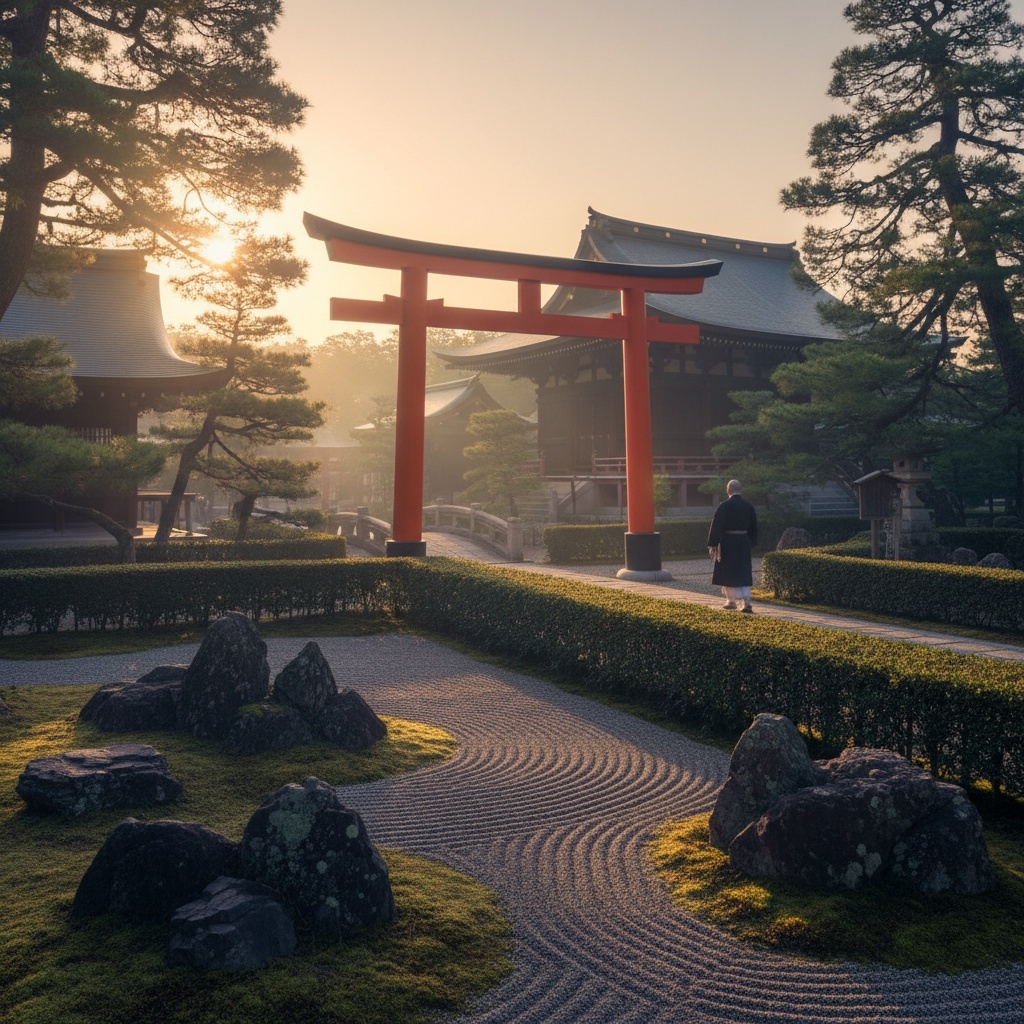
In the hushed moments before Kyoto awakens, when morning mist rises from temple gardens and the first rays of sunlight pierce through ancient cedars, a different city reveals itself—one where the sound of wooden clappers marks morning prayers, where stone lanterns cast long shadows across empty courtyards, and where visitors can experience the profound peace that drew monks to these sacred spaces over a millennium ago. Dawn temple visits offer something increasingly precious in modern Kyoto: the opportunity to encounter these sacred spaces as they were meant to be experienced, in contemplative silence broken only by the natural sounds of awakening birds and distant temple bells.
This guide reveals the secret rhythm of Kyoto’s morning, sharing the temples where dawn visits transform tourist sightseeing into genuine spiritual encounters with Japan’s living religious traditions.
The Sacred Hour: Understanding Temple Dawn Rhythms
Monastic Morning Schedule
Kyoto’s active temples follow ancient daily rhythms that create unique opportunities for respectful visitors:
Pre-Dawn Preparation (4:30-5:30 AM): Monks begin daily routines with personal meditation, cleaning rituals, and preparation for morning services.
Morning Service (5:30-6:30 AM): Formal sutra chanting and meditation sessions that visitors can sometimes observe respectfully from designated areas.
Garden Maintenance (6:30-7:30 AM): Groundskeeping activities that demonstrate the integration of physical work with spiritual practice.
Public Opening (7:00-8:00 AM): Official opening times when temples welcome visitors into spaces prepared through hours of mindful activity.
The Spiritual Benefits of Dawn Visits
Early morning temple visits offer unique spiritual and cultural advantages:
Natural Meditation Environment: The quiet atmosphere naturally promotes contemplative states impossible during busy tourist hours.
Authentic Monastic Atmosphere: Witnessing or hearing actual religious practice provides genuine insight into living Buddhist traditions.
Seasonal Beauty: Morning light reveals temple architecture and gardens in optimal conditions, with mist, dew, and golden sunlight creating ethereal beauty.
Cultural Respect: Visiting during quiet hours demonstrates understanding and respect for temples’ primary religious function.
Three Dawn Pilgrimage Routes: Sacred Circuits for Peaceful Souls
Route A: Eastern Awakening (6:00-10:00 AM)
The Higashiyama Dawn Circuit: Experience Kyoto’s most famous eastern temples in morning tranquility
6:00-7:00 AM: Kiyomizu-dera Temple
- Sunrise Stage: The famous wooden platform faces east, providing spectacular sunrise views over awakening Kyoto
- Sacred Waters: Otowa Waterfall flows peacefully in morning quiet, allowing contemplative interaction with this sacred element
- Monk Activities: Witness temple staff preparing for the day and occasional monk activities in usually crowded areas
- Access: First buses around 5:30 AM or taxi to arrive for 6:00 AM opening
7:15-8:00 AM: Sannenzaka and Ninenzaka Lanes
- Historic Atmosphere: Traditional stone-paved streets nearly empty of tourists, revealing authentic architectural details
- Photography Opportunities: Capture historic streetscapes without crowds obscuring traditional shop fronts and architecture
- Local Life: Observe shopkeepers preparing for the day, setting up traditional displays
8:15-9:15 AM: Kodai-ji Temple
- Zen Garden Meditation: Sophisticated rock and moss gardens reveal full beauty in morning light and mist
- Tea House Serenity: Historic tea houses within grounds create intimate spaces for quiet reflection
- Seasonal Specialties: Different seasons offer unique morning experiences with varied atmospheric conditions
9:30-10:00 AM: Maruyama Park and Yasaka Shrine
- Natural Transition: From temple architecture to park setting, maintaining peaceful morning atmosphere
- Shrine Rituals: Observe local worshippers conducting morning prayers and traditional purification rituals
Route B: Northern Mysteries (6:30-11:00 AM)
The Kurama-Ohara Mountain Circuit: Venture into Kyoto’s sacred mountains for profound morning experiences
6:30-8:30 AM: Sanzen-in Temple (Ohara)
- Mountain Mist: Morning fog creates ethereal atmosphere in famous moss gardens with sunlight filtering through ancient trees
- Pilgrimage Atmosphere: Mountain setting and early hour create genuine pilgrimage experience rather than tourist activity
- Monk Encounters: Respectful visitors may observe monks conducting morning maintenance and spiritual activities
- Transportation: Kyoto Bus #17 first departure around 6:00 AM reaches Ohara by 7:00 AM
9:00-11:00 AM: Kurama-dera Temple
- Mountain Spirituality: Cable car’s first run (9:00 AM) provides quiet ascent with spectacular mountain views
- Hiking Meditation: Mountain path between Kurama and Kibune becomes walking meditation in morning solitude
- Temple Bells: Morning temple bells resonate across mountain valley, creating powerful spiritual atmosphere
Route C: Central Sanctuaries (7:00-10:30 AM)
The Urban Temple Morning Circuit: Discover peaceful moments within Kyoto’s city center
7:00-8:00 AM: Chion-in Temple
- Monastic Grandeur: Enormous Sanmon gate appreciated in peaceful contemplation impossible during busy periods
- Garden Secrets: Multiple gardens offer varied morning experiences with different lighting and seasonal effects
- Active Community: As Jodo Buddhism headquarters, morning activities provide insight into living religious community
8:15-9:15 AM: Shoren-in Temple
- Imperial Elegance: Former imperial residence offers refined morning experiences in sophisticated garden settings
- Architectural Harmony: Traditional palace architecture integrated with temple functions demonstrates Japanese aesthetic refinement
- Cultural Education: Combination of imperial and religious history provides rich context for contemplative visits
9:30-10:30 AM: Konkai-Komyoji Temple (Kurotani-san)
- Elevated Serenity: Sprawling temple complex on hillside ensures ample space for solitude even with few other visitors
- Panoramic Views: From elevated position, enjoy serene views of Kyoto waking up, often shrouded in morning mist
- Variety of Gardens: Explore several beautiful gardens, each offering quiet corners for personal reflection
Morning Meditation Practices
Temple Etiquette for Dawn Visitors
Respectful Behavior Guidelines:
- Whisper-level voices: Locals commute and pray during these hours
- No flash photography: Follow posted restrictions and use natural lighting only
- Mindful movement: Walk slowly and deliberately, maintaining contemplative atmosphere
- Trash awareness: Carry in/carry out policy; leave no trace of your visit
Enhancing Your Spiritual Experience
Contemplative Techniques:
- Breathing awareness: Use temple atmosphere to practice mindful breathing
- Sensory meditation: Notice sounds, scents, and visual details without judgment
- Gratitude practice: Acknowledge the privilege of experiencing these sacred spaces
- Present moment focus: Resist urge to photograph everything; be fully present
Practical Planning Guide
Transportation and Access
Early Morning Options:
- Public Transport: First trains and buses typically begin around 5:30-6:00 AM
- Taxi Services: Available 24 hours but more expensive; book in advance for very early departures
- Walking Routes: Plan walking distances and routes in advance; carry small flashlight for pre-dawn navigation
- IC Cards: Ensure cards are loaded with sufficient funds for early morning travel
Safety and Preparation
Essential Considerations:
- Weather Appropriate Clothing: Mornings can be significantly cooler; dress in layers
- Comfortable Footwear: Temple grounds may have uneven surfaces; prioritize comfort and safety
- Emergency Contacts: Carry phone with emergency numbers and translation apps
- Hydration and Snacks: Convenience stores open early; cafés typically start service around 8-9 AM
Seasonal Morning Experiences
Spring Dawn (March-May)
Cherry Blossom Mornings: Experience sakura season without overwhelming crowds
- Optimal timing: Peak bloom mornings offer spectacular beauty with manageable visitor numbers
- Temperature considerations: Cool mornings require warm clothing despite later seasonal warmth
- Photography opportunities: Soft morning light enhances cherry blossom colors and temple architecture
Summer Dawn (June-August)
Cool Morning Relief: Escape summer heat while experiencing temple beauty
- Early advantage: Beat heat and humidity while enjoying comfortable temperatures
- Garden freshness: Morning dew and mist enhance green landscapes and garden features
- Extended daylight: Longer days allow for more comprehensive morning temple circuits
Autumn Dawn (September-November)
Maple Morning Magic: Experience autumn colors in peaceful solitude
- Color saturation: Morning light enhances autumn foliage colors and creates dramatic contrasts
- Mist effects: Cool mornings often produce atmospheric mist that enhances autumn scenery
- Comfortable conditions: Ideal temperatures for extended outdoor contemplation and walking
Winter Dawn (December-February)
Austere Beauty: Discover temples’ essential character in winter’s simplicity
- Architectural focus: Bare trees reveal temple architecture and garden structure more clearly
- Snow possibilities: Winter precipitation creates magical temple landscapes when conditions align
- Intimate atmosphere: Fewer visitors and stark beauty create profound contemplative experiences
Frequently Asked Questions
Q: Are temples safe to visit alone in early morning? A: Yes, major temples in Kyoto are generally very safe during early morning hours. However, exercise normal urban caution and stay on designated paths.
Q: Can I participate in morning temple services? A: Most temples welcome respectful observers of morning services. Maintain silence, follow staff guidance, and observe from designated areas without participating unless invited.
Q: What if I encounter monks during morning visits? A: Offer respectful bows, maintain quiet behavior, and give them space to conduct their duties. Most monks appreciate respectful visitors who understand temple rhythms.
Q: How should I prepare for very early temple visits? A: Check weather conditions, dress warmly in layers, bring small flashlight, ensure phone is charged, and plan transportation in advance.
Planning Your Dawn Temple Journey:
- Advanced Preparation: Research specific opening times and seasonal variations
- Flexible Scheduling: Allow extra time for transportation and unexpected discoveries
- Contemplative Mindset: Approach as spiritual practice rather than sightseeing activity
- Cultural Sensitivity: Remember these are active religious sites deserving reverent behavior
- Physical Preparation: Ensure adequate rest, appropriate clothing, and comfortable footwear
Continue Your Peaceful Kyoto Exploration: Ready to discover more tranquil experiences? Explore “Secret Hermitages and Their Sacred Stories” or learn about “Hidden Garden Walks Through Unknown Landscapes.”
Leave a Reply